
Beyond the Brew: Why Everyone is Adding Fungi to Their Morning Routine
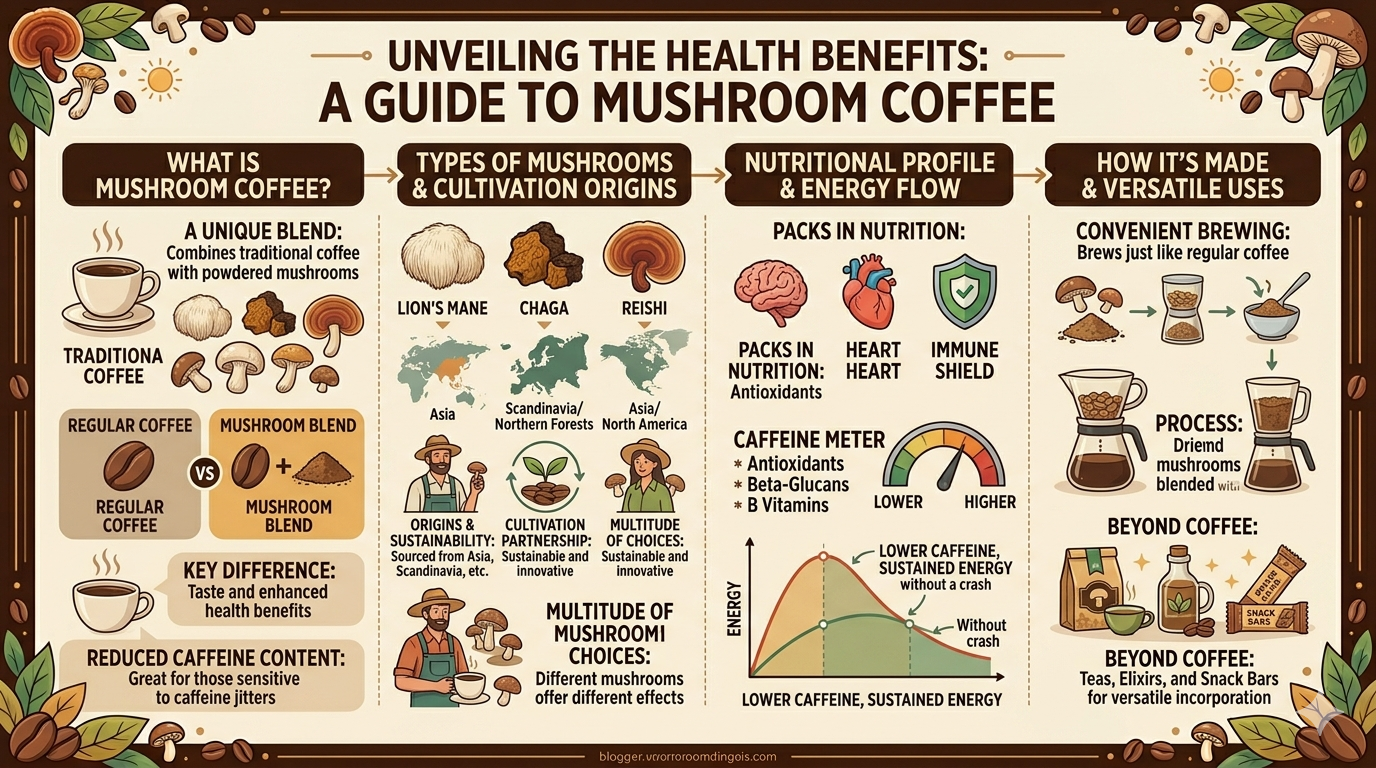
Mushroom coffee is creating quite a stir in the wellness scene. This unique blend generally combines traditional coffee beans with powdered mushrooms such as chaga, lion’s mane, and reishi. But how does it stack up against your regular cup? The key difference lies not just in taste but also in the health benefits and reduced caffeine content, making it a great choice for those sensitive to caffeine jitters.
The origins of mushroom coffee trace back to regions where these mushrooms naturally grow, such as parts of Asia and Scandinavia. Farmers cultivate the mushrooms alongside coffee beans, creating a partnership that is both sustainable and innovative. The type of mushroom used can affect the flavor profile and health benefits, offering a multitude of choices for enthusiasts.
On the nutritional front, mushroom coffee doesn’t disappoint. It’s typically lower in caffeine than regular coffee, which means it can provide energy without the usual crash. Beyond that, it packs in several health-boosting compounds, including antioxidants, beta-glucans, and some B vitamins that offer a nice bonus for your daily nutrition intake.
To make mushroom coffee consumable, the mushrooms are dried and then finely ground, often blended with coffee that’s either been freeze-dried or in instant form. This blend is then brewed just like regular coffee, providing a convenient way to enjoy the health benefits without changing your daily routine too much.
Many people wonder if mushrooms can take a form beyond coffee, and they absolutely can. Mushrooms are being transformed into teas, elixirs, and snack bars, making it easier than ever to incorporate these fungi into your diet. Whether you’re craving coffee or looking for something different, mushrooms offer versatility in a health-conscious lifestyle.
The Benefits of Mushroom Coffee
Switching from regular coffee to mushroom coffee brings a host of potential health benefits to the table. Many fans tout its lower caffeine content as a primary advantage, especially for those who experience jitters or anxiety from traditional coffee. Mushroom coffee aims to minimize these while still delivering a gentle energy boost.
The addition of adaptogenic mushrooms like lion’s mane can support mental clarity and cognitive function, making it a favorite among those looking to enhance focus and productivity. Meanwhile, reishi and chaga bring their unique anti-inflammatory and immune-boosting properties, contributing to overall wellness. These features make mushroom coffee more than just a morning pick-me-up — it’s a part of a health-conscious lifestyle.
It’s not just about what’s inside the mug. The versatility of mushroom coffee means it fits right into various settings — from a quiet morning meditation session to an afternoon brain-fog combat session at work. Because of the purported relaxation benefits of certain mushrooms, it might also complement an evening wind-down routine without disturbing sleep schedules.
Incorporating adaptogens into your routine isn’t a new phenomenon, but mushroom coffee represents a new wave in functional foods. Those looking for alternatives to traditional coffee may find this an appealing option. Its unique blend of nutrients and low caffeine level cater to people who are more health-conscious or looking to experiment with new kinds of energy boosters without the crash.
For those planning to switch or try it out, it’s suggested to start slow and observe how it affects your body and mind. With the varied types of mushrooms blended in, different brands might resonate differently with each person. Consider experimenting with a few to find your favorite mix, ensuring you get the balance of flavor and benefits that suit you best.
Safety and Concerns: Is Mushroom Coffee for You?
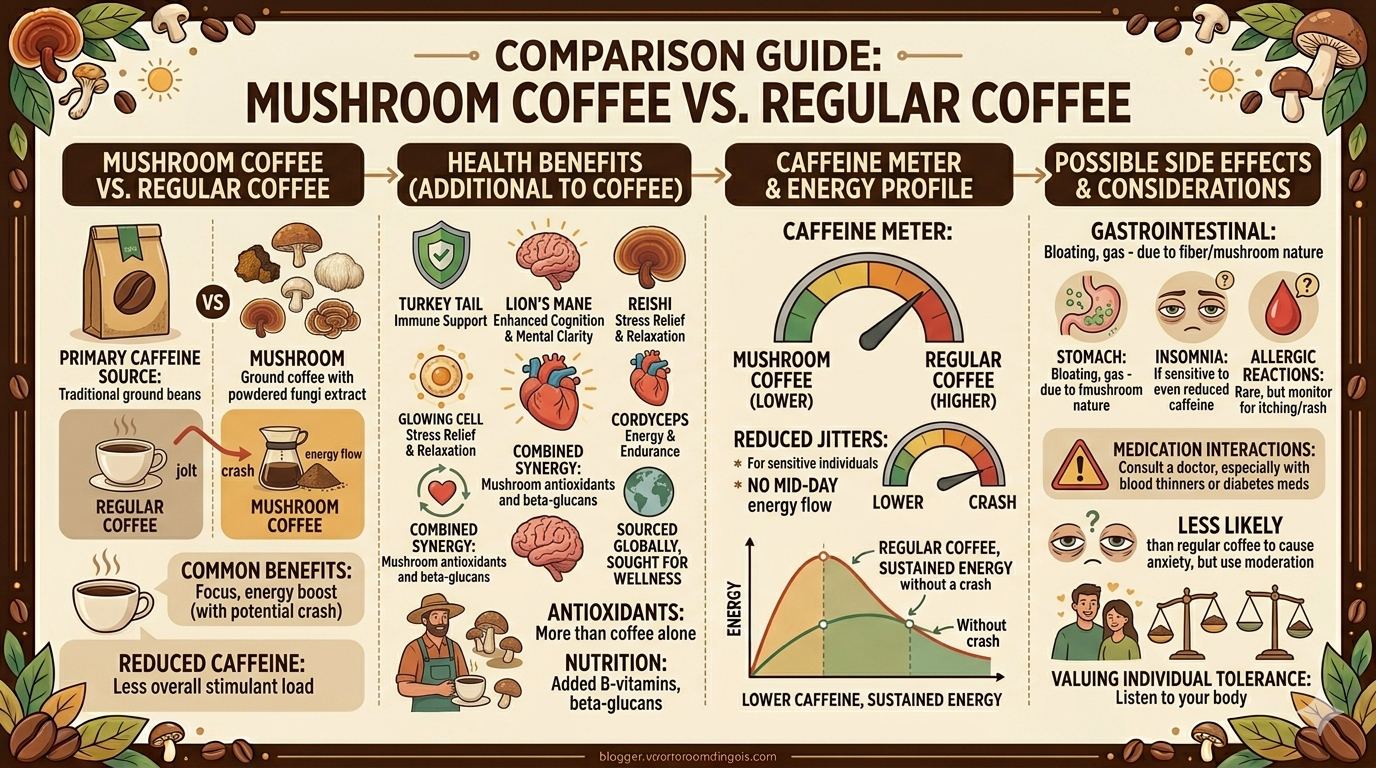
When it comes to trying something new like mushroom coffee, being informed is a must. Generally, it’s considered safe for most folks, but there are a few things to keep in mind. If you’re prone to allergies, especially related to fungi, it might be wise to consult with a healthcare professional before diving in. The mushrooms used in these coffees, while packed with benefits, can be potential allergens for some.
Potential side effects are usually mild and might include an upset stomach or feeling light-headed if you aren’t used to the unique composition. Moderation is key. Start small, maybe with just half a cup, to see how your body reacts before making it a staple. The recommended safe limit isn’t defined by hard science yet, but as with regular coffee, it’s often a matter of personal tolerance and preference.
For those with existing health conditions or who are pregnant or nursing, checking with a doctor before adding new elements to your diet can prevent unwanted surprises down the road. It’s all about ensuring what’s best for your health and aligning it with your dietary choices.
One important note is regarding interactions. Some mushrooms, like those in the adaptogenic category, can interact with medications, affecting how they work. So, it’s essential to review any potential interactions or conflicts with your current medication if you’re on prescriptions.
Even with all the potential perks, security comes first. By taking these proactive steps, you can enjoy mushroom coffee’s possible benefits while minimizing risks, making it a satisfying and secure part of your wellness journey.
Mushroom Coffee Health Benefits
The Path to Popularity: Mushroom Coffee’s Journey Through Time
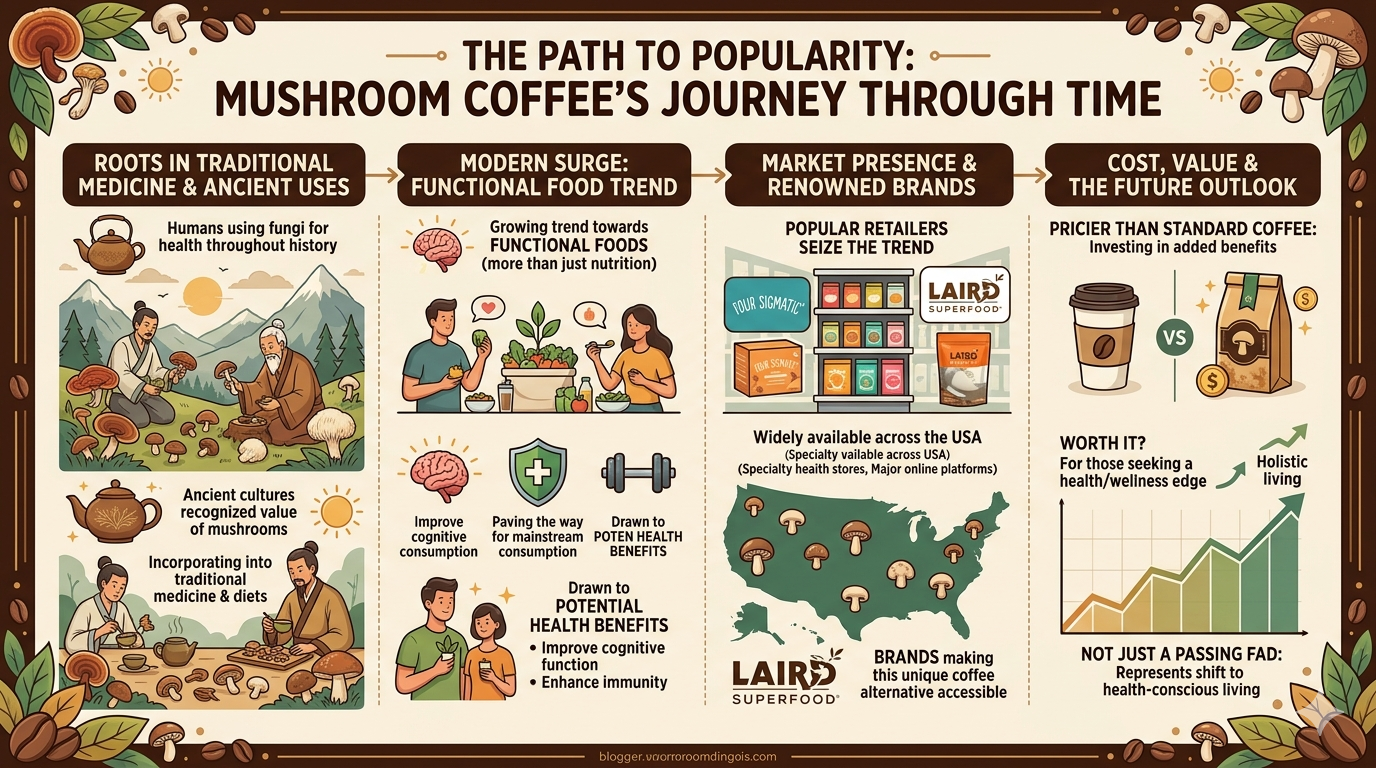
Mushroom coffee’s roots run deeper than many realize, with humans using fungi for health purposes throughout history. Ancient cultures, particularly in Asia, have long recognized the value of mushrooms, incorporating them into traditional medicine and dietary practices. The recent coffee blend is a modern twist on these age-old practices.
The surging interest in recent years can be chalked up to a few factors. A growing trend towards functional foods — those that offer more than just nutritional value — has paved the way for mushroom coffee to enter mainstream consumption. Many are drawn to its potential health benefits, hoping to improve cognitive function or enhance immunity.
Popular retailers have seized this trend, and now mushroom coffee is widely available across the USA. From specialty health stores to major online platforms, the options for getting your hands on some are plentiful. Renowned brands like Four Sigmatic and Laird Superfood have made significant strides in making this unique coffee alternative accessible to a broad audience.
Cost-wise, mushroom coffee tends to be a bit pricier than your standard cup of joe. You’re not just paying for coffee; you’re investing in the added benefits these mushrooms bring. For those seeking an edge in terms of health or wellness, that extra price might be worth it. Evaluating if it’s the right fit for your budget depends on what you value in a morning brew.
As trends continue to evolve, mushroom coffee isn’t just a passing fad. It represents a shift towards more holistic and health-conscious living. By understanding its origins, current popularity, and market presence, you can make a well-informed choice about whether this trendy beverage will find a place in your own daily routine.
Pros, Cons, and Context: Making the Mushroom Coffee Decision
Weighing the pros and cons of mushroom coffee is crucial when deciding if it fits into your lifestyle. For those who want to cut down on traditional coffee’s caffeine while still savoring a rich, aromatic brew, this alternative offers an inviting solution. The added health perks, such as potential cognitive support and immune benefits, can make it an attractive option for wellness enthusiasts.
However, it’s not for everyone. Some people might find the earthy taste of mushroom coffee a bit unconventional, especially if you prefer the boldness of traditional coffee. Also, given its higher price point, it might not be the best fit for everyone’s budget. It’s essential to balance the costs against the potential benefits you might gain from it.
Mushroom coffee shines in environments where focus, calm, and functionality are the goals — like a bustling office or during a restful weekend brunch. Some even find it a comforting choice for evening relaxation without the sleep disruption typical of high-caffeine drinks.
Considering sustainability is also part of the equation. Mushroom cultivation tends to have a smaller footprint compared to large-scale coffee farming, which may appeal to the environmentally conscious consumer.
Ultimately, deciding if mushroom coffee is right for you involves considering when and how you like to enjoy your coffee. Whether you’re seeking a healthier lifestyle or simply up for trying something new, understanding your own preferences and priorities will guide you to the right choice.
Best Places to buy mushroom coffee on the web:
MUD\WTR™: A Coffee Alternative

I found the article very informative and appreciated how it explains what mushroom coffee actually is and how it differs from regular coffee by including powdered mushrooms like chaga, lion’s mane, and reishi blended with coffee beans. It’s interesting that the post highlights potential benefits like lower caffeine and added antioxidants, as well as how adaptogenic mushrooms might support focus and immunity. I liked how it balances the benefits with safety tips for people who might want to try it. After reading, I’m curious about something: have you noticed any differences in taste or health effects between different types of mushroom coffee blends, especially when it comes to adaptogens and how they impact energy or stress levels?
Thanks Hanna! I’ve only really dabbled in the more approachable mushroom coffee so far. Feel better drinking it, but it could just be mental. Seems like a little caffeine kick, but don’t get jittery or restless. I have my radar out to try as many as I can now.