
Beginner Gardening Guide: Easy Steps to Grow Fresh Food from Seed to Salad”
Spring is a season of renewal, a perfect time to start gardening and bring fresh growth into your life. As winter’s grey gives way to vibrant colors, the garden becomes an oasis of possibility. Gardening isn’t just about flowers and vegetables. It’s a simple way to boost your mental health, reduce stress, and connect with nature.
For those new to gardening, the benefits extend beyond the obvious. Tending to plants can be a great boost for mental health, offering peace and a sense of accomplishment. You’ll also be contributing to sustainability by growing your own food, reducing the demand on commercial agriculture, and decreasing food miles. Plus, there’s nothing quite like the taste of fresh produce you’ve grown yourself.
The good news is you don’t need acres of land or years of experience under your belt. Whether you have a cozy balcony, a small backyard, or just some sunny windowsills, gardening can start anywhere. It’s about making the most of the space you have and getting creative.
Diving into gardening might feel intimidating, but it doesn’t have to be. With a little guidance and patience, anyone can become a successful gardener. This guide will show you the ropes, from planning your space to selecting the right tools and plants. Ready to take that first step? Let’s make the most of spring and grow together.
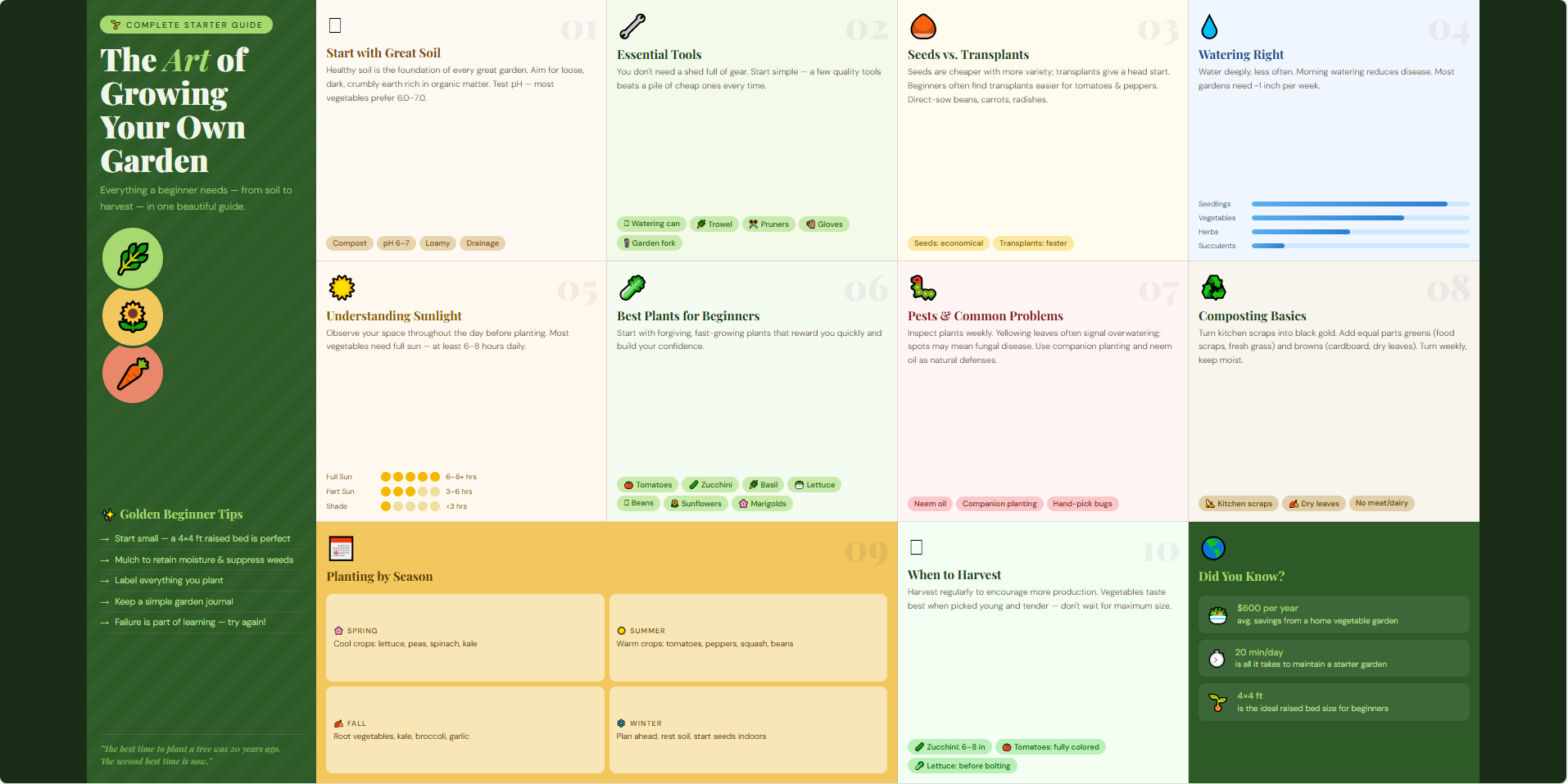
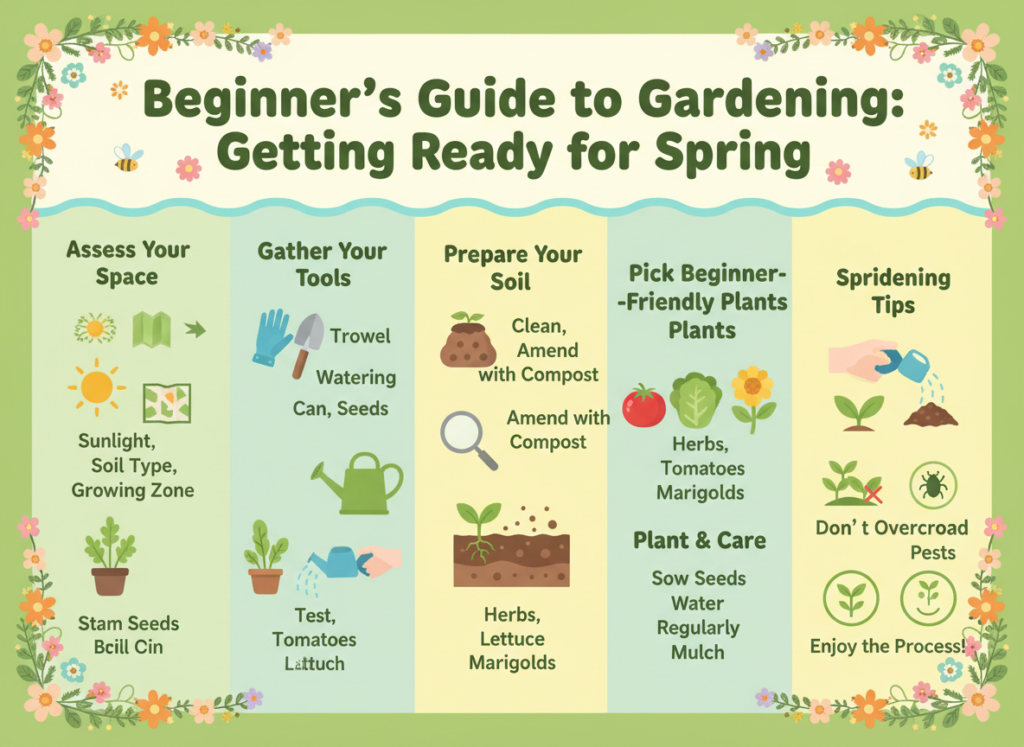
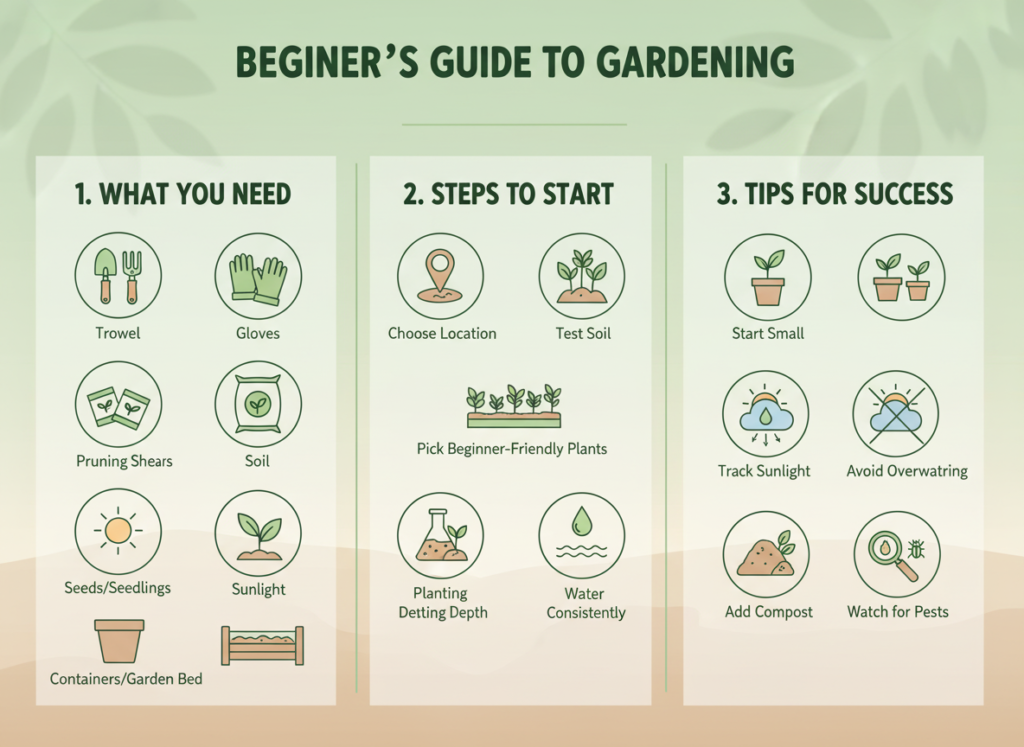
Assess and Innovate: Understanding Your Gardening Space
Before planting the first seed, it’s crucial to get a handle on your gardening space. A successful garden starts by knowing a few key details about your environment. Understanding what your local climate zone (USDA, Zone Guides) is and keeping an eye on frost dates makes a big difference in planning when and what to plant. Each zone has its own quirks, so a bit of research can save time and hassle later.
Next, evaluate your intended gardening spot for sunlight, soil quality, and the available area for plants to grow. Sun exposure varies throughout the day, and different plants have different needs, so matching plants to their preferred conditions is important. Grab a spade and get familiar with your soil, noting its type and health. This knowledge helps in laying the groundwork for a flourishing garden.
Choosing a gardening style is another exciting part of the process. Whether you go for container gardening on a balcony, a small raised bed, or traditional in-ground plots, each option has its perks. Container gardening is great for limited spaces and mobility, while raised beds offer better control over soil conditions.
Once you’ve figured out the essentials, sketching a simple garden plan becomes manageable. It doesn’t have to be a detailed blueprint; a basic layout helps visualize plant placement and optimizes space use. This step sets a solid foundation for a thriving garden, aligning your vision with practical details to make your gardening journey smooth and enjoyable.
Equipping the Gardener’s Toolkit: Essentials for Success
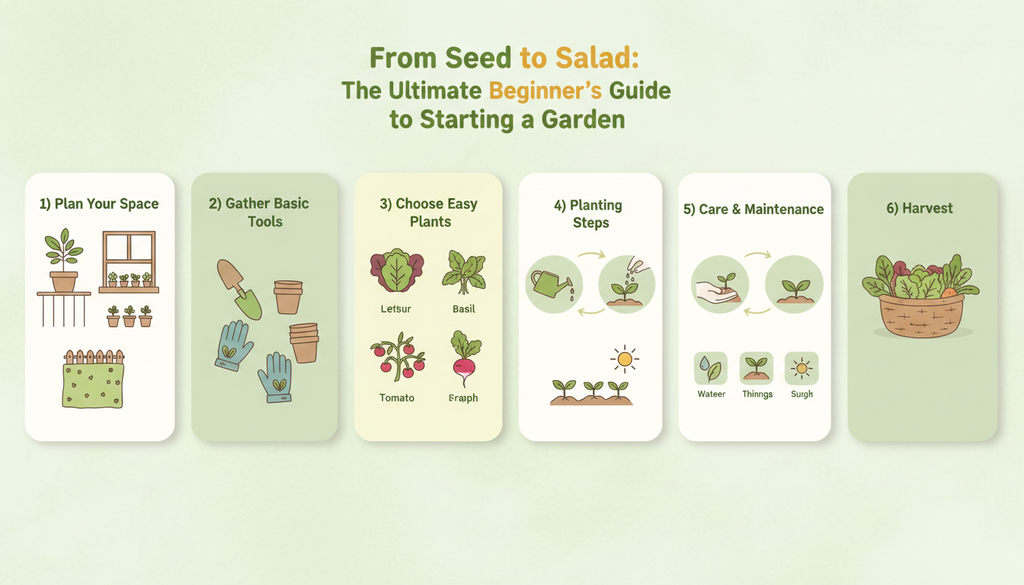
Starting off on the right foot means having the right tools and supplies. A well-prepared gardener is a successful one, so it’s important to gather some basic equipment before you dig in. A sturdy trowel, a pair of comfortable gloves, and a trusty watering can make up the core of your toolkit. These might seem simple, but they’re essential for most gardening tasks.
Quality matters when it comes to the foundation of your garden, so investing in good soil is key. Bagged soil and compost can provide a great start, offering the nutrients and texture plants need to thrive. The type of soil you choose should match your plants’ preferences, ensuring they have the best start.
Deciding between seeds and starter plants can be an important choice. Seeds are budget-friendly and offer a wide variety of options, but they require more patience and care. Starter plants, on the other hand, provide a head start and can be easier for beginners to manage. Weigh your time and enthusiasm when making this decision.
Don’t overlook the opportunity to make your garden eco-friendly. Composting can reduce waste and enrich your soil, while collecting rainwater and using organic fertilizers help cultivate a sustainable garden environment. These practices not only benefit your plants but also the planet, adding another layer of reward to your gardening efforts.
Cultivate the Canvas: Preparing Your Soil for Growth
Preparing your soil is like setting the stage for a successful performance. Before planting anything, you need to clear away the remnants of winter — getting rid of any debris and tackling those pesky weeds. This step is crucial to ensure your plants get a clean slate to start from.
Once the area is cleared, it’s time to get to know your soil’s health. Testing for pH levels and essential nutrients can give you insights into what your garden might be lacking. You can pick up a simple soil test kit at most gardening centers, and knowing your soil’s strengths and weaknesses allows you to amend it accordingly.
Adding compost or organic matter is a great way to boost soil fertility. Compost enriches the soil, improves its structure, and encourages beneficial organisms to thrive. Whether you use your homemade compost or buy some from a store, this natural boost can make a world of difference when it comes to growth.
Next up, give the soil some much-needed air. Loosening the soil with a fork or tiller helps improve its structure, ensuring good drainage and aeration. Roots need this space to stretch out and absorb nutrients efficiently, so don’t skip this vital step.
Remember, your soil is the lifeblood of your garden. Taking the time to prepare it well lays the foundation for healthy, vigorous plants that will thrive throughout the growing season.
Flourish with Intent: Planting and Nurturing Your Garden
With your space ready and your tools on hand, it’s time to choose plants that suit your garden’s conditions and your lifestyle. Beginners often find success with herbs like basil and mint, or hardy vegetables such as lettuce and tomatoes. These plants are forgiving and usually thrive with basic care.
Companion planting is a smart approach for maximizing your garden’s productivity. Certain plants can benefit others by repelling pests or improving soil health, like planting marigolds with tomatoes to deter nematodes and aphids.
When planting, pay attention to spacing requirements and sunlight needs, as crowding can hinder growth and lead to diseases. Place taller plants where they’ll get ample sun without shading out smaller ones.
Once planted, it’s crucial to establish a consistent watering schedule. Plants generally prefer a deep, infrequent soak rather than frequent shallow waterings. Adding mulch around plants not only helps retain moisture but also suppresses weeds and regulates soil temperature.
Regular check-ins are important to catch pests or diseases early. Look out for unusual spots on leaves or wilting, as these could signal distress. With careful planning and attention, your garden will not just survive but thrive, offering fresh produce and blooms as a reward for your effort.
Pick the Right Plants for Spring
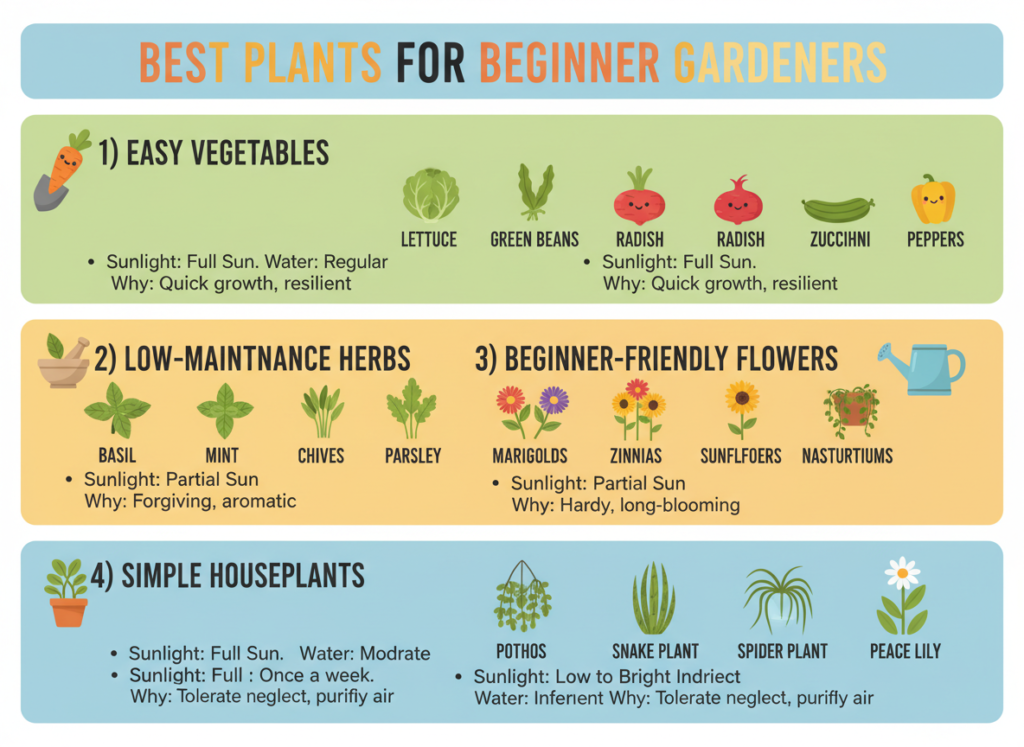
If you’re just starting out, stick with easy, fast‑growing plants like:
- Herbs: basil, parsley, chives
- Vegetables: lettuce, spinach, cherry tomatoes
- Flowers: marigolds, pansies, zinnias
- Planting and Early Care
Follow seed packets or labels for proper spacing and depth. Water gently but thoroughly, keeping the soil damp, not soaked. Add a layer of mulch to protect roots and prevent weeds.
Keep an eye out for early pests — small holes in leaves or sticky residue may signal a problem. A quick rinse with water or neem oil often helps.
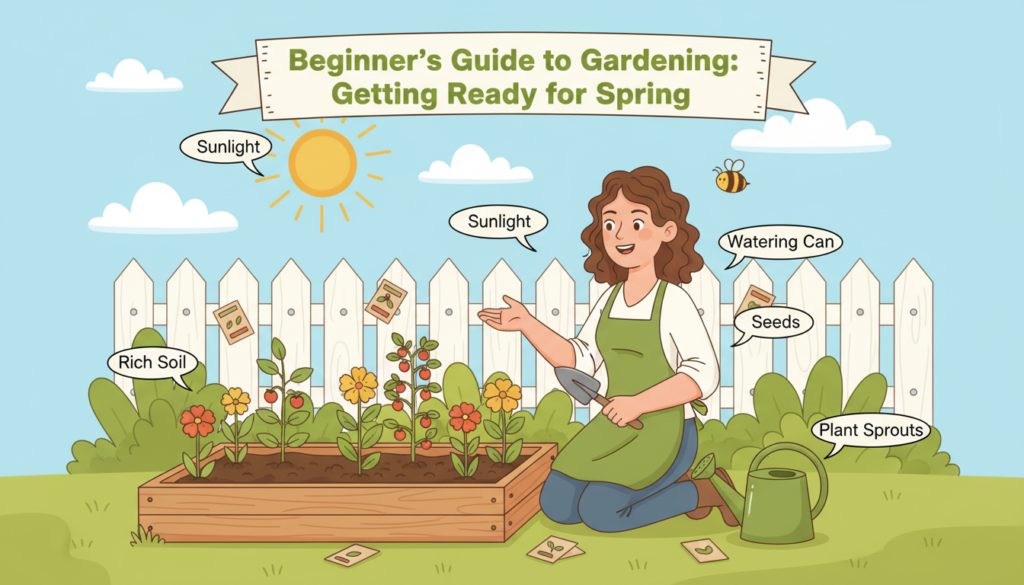
Ongoing Maintenance and Growth
Develop a light weekly routine:
- Water regularly (mornings are best)
- Check leaves for pests or yellowing
- Stake taller plants before they flop
- Harvest herbs or leafy greens frequently to encourage regrowth
Avoid common mistakes like overwatering, crowding plants, and skipping weeding. Your plants will communicate through their leaves — vibrant color and steady growth mean you’re doing it right.
Enjoy the Journey
Don’t rush the process — growth takes time and patience. Gardening teaches you to slow down and appreciate small progress. The first lettuce harvest or blossom you see will make every scoop of soil worth it.
Each season offers new lessons. Take notes on what worked or didn’t, so next year’s garden thrives even more.
Spring Into Gardening with Confidence
Now you know how to plan, plant, and care for your garden — all that’s left is to start. Begin small, test a few plants, and grow your skills as the season continues.
Download a spring gardening checklist, visit your local nursery for advice, or join a community gardening group for encouragement and inspiration.
Conclusion: Your Green Thumb Starts Here
Every great garden begins with a single seed — and a bit of curiosity. Spring is your chance to turn that curiosity into growth, both in your garden and within yourself. By planning your space, preparing your soil, and choosing the right plants, you’re already halfway to success.
Remember, even the most experienced gardeners started somewhere — usually with a few weeds and a lot of enthusiasm. The key is to enjoy the process, notice the changes around you, and let each season teach you something new.
So grab your gloves, step outside, and start small. Whether it’s a pot of herbs on your porch or a row of sunflowers along your fence, your spring garden is waiting — and it’s ready to bloom right alongside you.
There’s a quiet joy in watching something grow from your own hands; that’s the magic of gardening.
https://www.almanac.com/gardening
https://www.almanac.com/10-tips-beginner-gardeners
What an inspiring and practical guide for new gardeners! I love how you’ve broken down each step from assessing the space to preparing the soil and nurturing plants. It makes gardening feel approachable, even for someone who’s never planted a seed before. I especially appreciate the emphasis on starting small, choosing beginner-friendly herbs and vegetables, and observing the plants as they grow — it really highlights the joy in the process, not just the harvest. Your tips on soil preparation, companion planting, and consistent care are so helpful and easy to follow. I also love how you tie gardening to mental wellbeing, creativity, and sustainability, making it more than just a hobby. This post motivates me to grab my gloves, start a small container garden on my balcony, and enjoy the learning journey. Truly, a wonderful reminder that every garden starts with curiosity and patience!
Thanks Divalinks. Yes, it can definitely turn into more of a hobby, Looking forward to devoting more time as I age and growing a big garden to enjoy fresh veggies and fruits. Hopefully it will be somewhere warmer than where I currently live (Cleveland) and can do it year round.