Save Money While Eating Fresh: The Best Budget-Friendly Fruits and Vegetables In Season
This guide is designed to help you align your grocery shopping and meal planning with the seasons. Eating budget-friendly fruits and vegetables in season from April to July is one of the easiest ways to save money and enjoy fresh flavor. By focusing on produce that’s at its peak, you’ll make smarter purchases that deliver fresh flavor and great value. The lists here are your go-to resource for every market trip.
April to July, (“The heart of harvest season”) creates a unique window to find delicious produce at unbeatable prices. This sweet spot between spring and summer is when fruits and veggies hit their absolute apex—bursting with flavor, freshness, and of course, lower costs. Farmers’ markets are thriving and booming, harvests are abundant, and thanks to good old supply and demand, your grocery bill gets cheaper while your kitchen becomes better stocked.
Flavor is another added bonus of shopping during this time. When produce reaches its full ripeness naturally, it doesn’t just taste better; it’s also loaded with more nutrients and health benefits. Therefore, you’re getting the freshest, healthiest options easily, often unparalleled to those expensive out-of-season counterparts that are imported or come from a distance. It’s just like biting into a perfectly ripe berry—you’re almost tasting the sunshine it grew under.
Variety is the spice of life, and April through July surely won’t let you down. During this time, markets are overloaded with options that simply aren’t available, or at their best, during other parts of the year. From artichokes in April to crisp cucumbers in July, your taste buds will definitely be in for a welcome treat. It’s a chance to explore and maybe stumble upon a new favorite, shifting your meals in fresh and exciting directions. Bring these seasonal picks into your cooking adventures. If you already know how to prepare certain fruits or veggies, use them as your base to experiment with new dishes. It keeps your meals exciting while taking advantage of low-cost seasonal abundance.
Lean on these lists when writing your grocery list. A preplanned list helps you stick to what you need, reduce food waste, and explore new produce without overspending. You might even discover a new favorite ingredient without having to hunt for expensive or hard-to-find items.
Defining ‘Budget & Healthy’ – Maximizing Nutrients Per Dollar
Eating healthy doesn’t have to cost an arm and a leg. To most of us, the key is to maximize the nutrients and amount of food you get per dollar spent. This is where buying seasonal produce truly shines. When fruits and veggies are in their prime time, not only are they cheaper, they’re also packed with all those good-for-you vitamins and minerals.
It’s important to tackle the myth that healthful eating has to burn a hole in your pocket. You can prepare delicious, nutritious meals without spending a fortune if you focus on the right ingredients — those in season and locally available tend to be the best bets. Instead of exotic, pricey imports, a modest bag of carrots or a parcel of bell peppers can be the real stars of your shopping cart.
For maximum nutritional bang for your buck, go for color and variety on your plate. The more vibrant your meals, the broader the range of nutrients you’ll get—and let’s be honest, it just looks better too. Switching things up keeps your taste buds happy and turns healthy eating from a chore into something you actually look forward to.
Lastly, remember that it’s key to choose whole foods. Less processed options generally cost less and offer considerably more nutritionally — think whole potatoes versus frozen fries. By prioritizing these choices, you’re setting a solid foundation for both a healthy diet and a healthy budget.
How to Use This Guide – A Practical Approach
This guide is all about helping you align your grocery shopping and meal planning with the seasons. By focusing on produce that’s at its peak, you’ll make smarter purchases that offer great taste and value. The lists in this guide are designed to be your go-to resource every time you plan a trip to the market.
I recomend to start by integrating these seasonal picks into your meal prep strategy. Having a plan before you shop not only cuts down on time wandering the aisles but also reduces impulse buys that don’t fit your budget or health goals. Use our guide to sketch out your week’s meals, ensuring you always have fresh, seasonal options in your fridge and pantry.
Take advantage of these lists when you’re making your grocery list. Having a preplanned shopping list means you’ll more likely stick to what you need, avoiding overspending and food waste. It also gives you a chance to explore new produce that maybe you’ve not tried before, adding variety to your meals without having to search for fancy or expensive items you wouldn’t usually buy.
Incorporate our seasonal picks into your cooking adventures. If you’re familiar with how to cook or prepare certain fruits and veggies, using them as your base can make it easier to try new recipes. It’s a fun way to keep your meals interesting while benefiting from budget-friendly prices.
This guide isn’t just for cooking pros or enthusiastic foodies. It’s a helpful companion for anyone wanting to eat better without breaking the bank. Whether you’re a meal prepper, an adventurous foodie, or someone looking to try out new dishes, these seasonally focused lists give you the confidence to explore the market and get the best deals on the freshest produce.
Insider Tips for Budget-Friendly Seasonal Produce Shopping
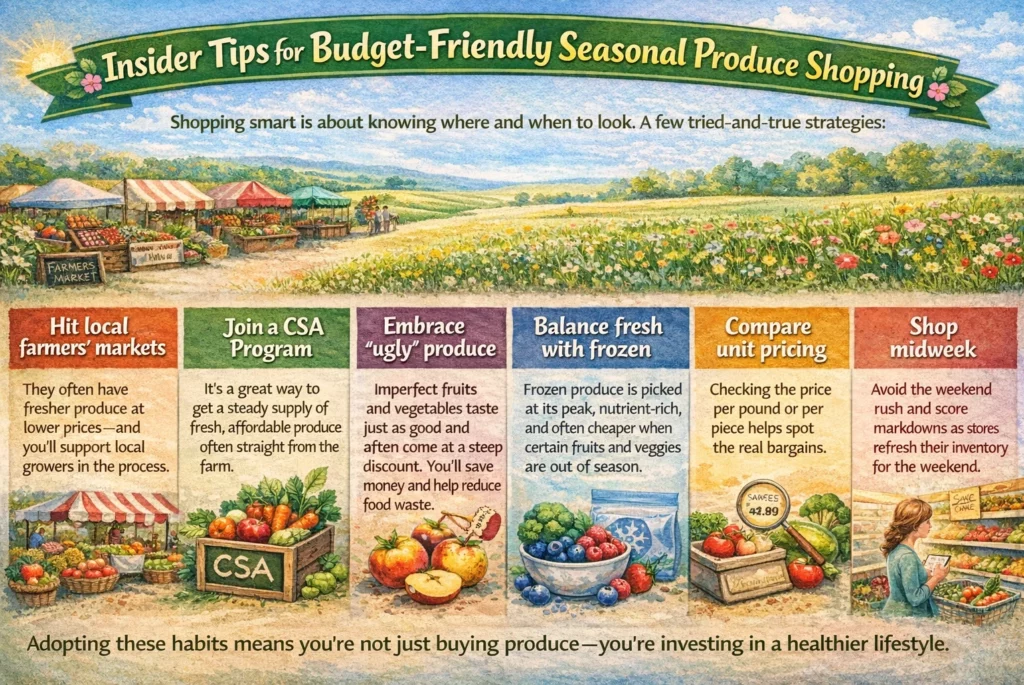
Shopping smart is all about knowing where to look and what to look for. One of the best methods is hitting local farmers’ markets. They often have fresher produce at lower prices, and you’re supporting local farmers to boot. Joining a Community Supported Agriculture (CSA) program is another fantastic way to get fresh, affordable produce, often delivered straight from the farm.
Don’t overlook those less-than-perfect fruits and veggies. Stores often discount “ugly” produce that tastes as good as their more presentable counterparts. It’s a win-win situation where you save money and help reduce overall food waste.
Consider balancing your fresh finds with frozen options. Sometimes, buying frozen vegetables can be cheaper, especially when certain fresh items go out of season. Plus, frozen produce is picked and preserved at its peak, maintaining its nutritional value.
Getting a handle on unit pricing can save you money too. By comparing the price per weight or per piece, you can find the true bargains, ensuring your hard-earned cash stretches further.
Another trick is timing your shopping right. Midweek is a sweet spot, avoiding the weekend rush and often scoring markdowns on inventory arriving fresh for the weekend crowd.
By adopting these smart shopping tactics, you’re not just buying produce—you’re investing in a healthier lifestyle without spending a fortune.
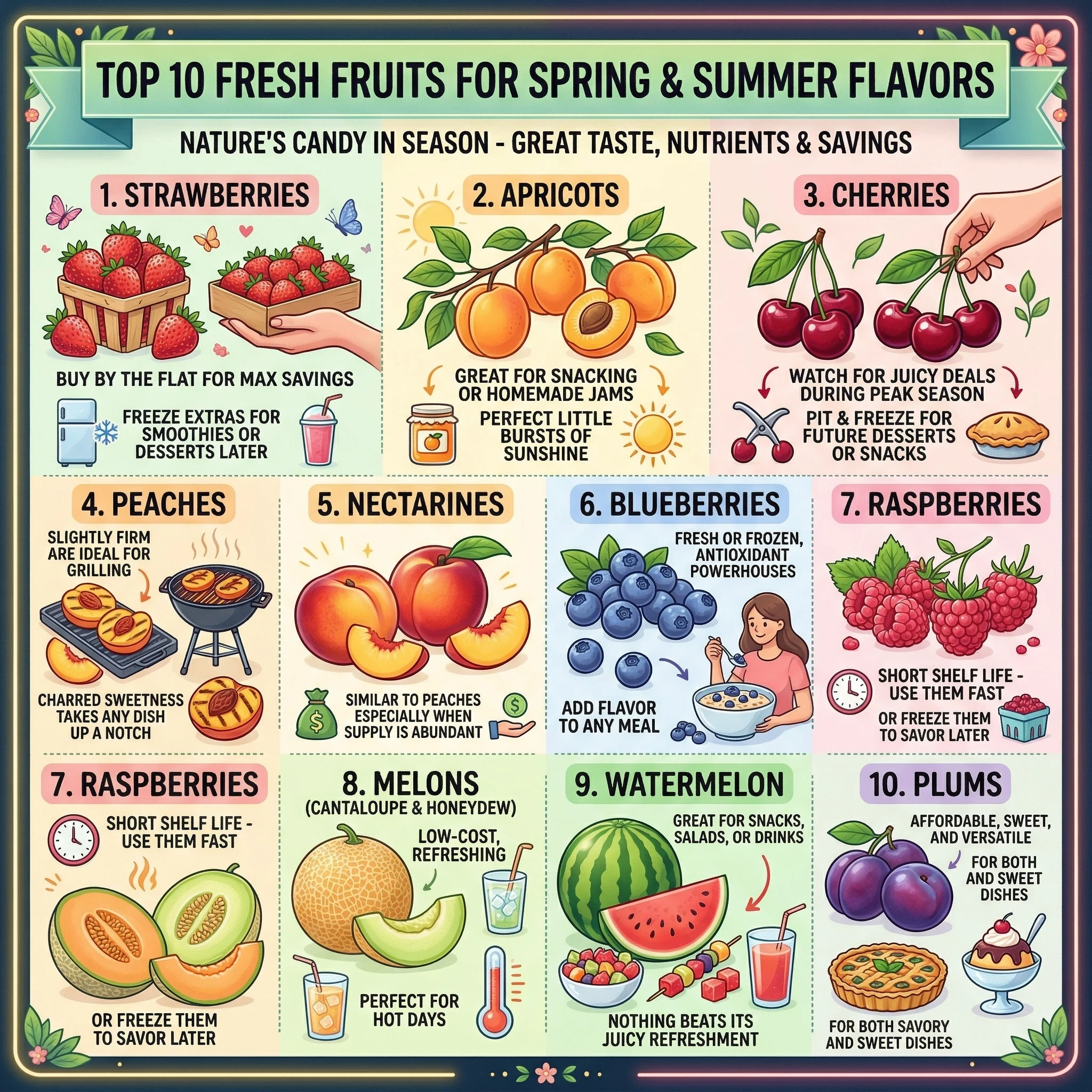
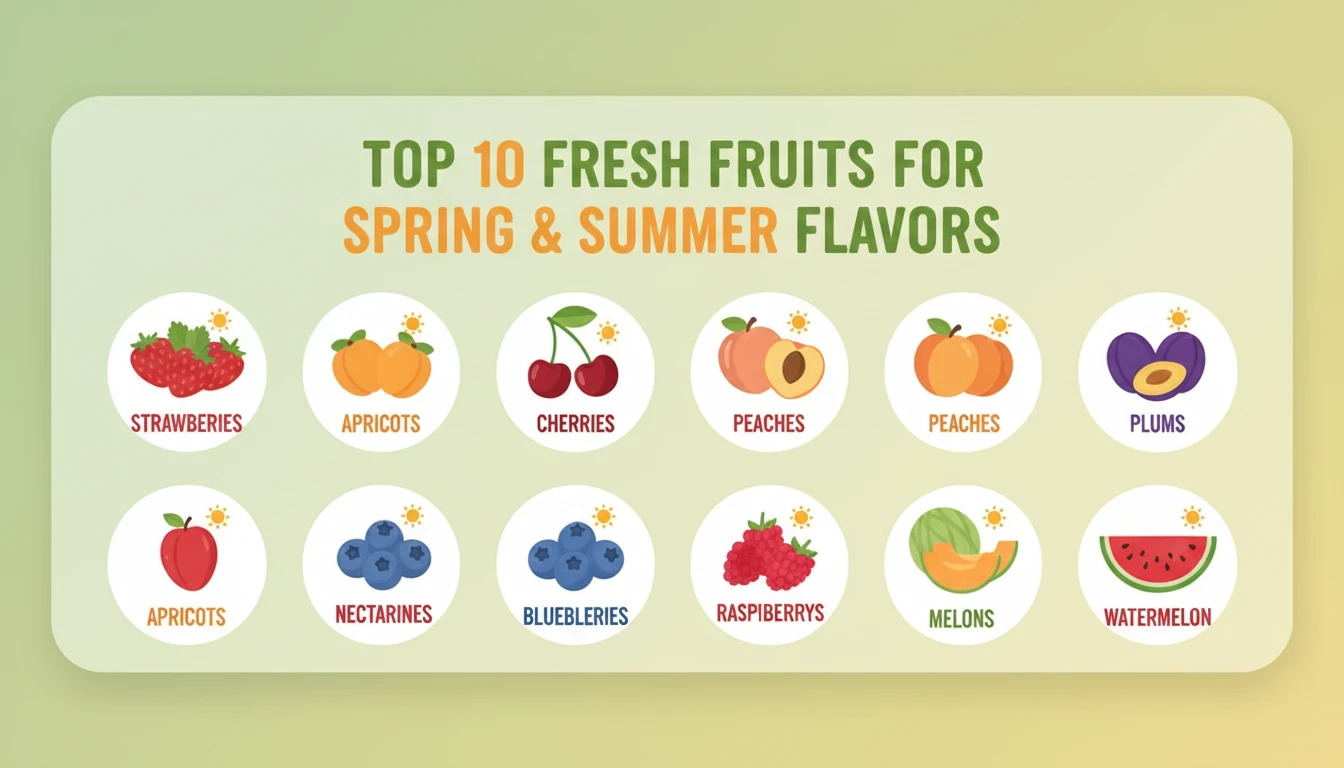
Top 10 Fresh Fruits for Spring & Summer Flavors
Nothing beats indulging in nature’s candy when it’s in season—and saving money while you’re at it. During spring and summer, several fruits are not just ripe but also packed with flavor and nutrients, all at a cost that won’t strain your budget. Here’s my top 10:
- Strawberries: When the market is full of strawberries, buying in flats isn’t just economical but savvy. Freeze extras, and they’ll be ready for smoothies or desserts later.
- Apricots: These little gems are perfect for snacking but also great for making homemade jams or canned delights that you’ll appreciate long after summer fades.
- Cherries: Keep an eye out for those juicy deals during peak season, and don’t shy away from pitting and freezing them. They make great additions to desserts or snacks later.
- Peaches: Slightly firm peaches are full of juicy sweetness and are suitable to both fresh eating and grilling. Their slightly charred flavor can elevate any meal.
- Nectarines: They’re similar to peaches in taste but often come at a lower cost, especially when they’re abundant in supply.
- Blueberries: Whether you enjoy them fresh or find them on sale in the frozen aisle, blueberries pack in flavor and antioxidants. They’re versatile for recipes year-round.
- Raspberries: Given their short shelf life, scoop them up and use them quickly, or pop them in the freezer to savor their tartness later.
- Melons: Such as cantaloupe and honeydew come with a low cost per serving. They’re the perfect refreshing whole food treat on a hot day.
- Watermelon: With its endless possibilities for salads, snacks, and drinks, watermelon is unbeatable when you want maximum flavor for your family or guests.
- Plums: Affordable and sweet, plums are fantastic for a snack or added to a savory dish for a hint of sweetness. They’re easy to work with and sure to become a staple.
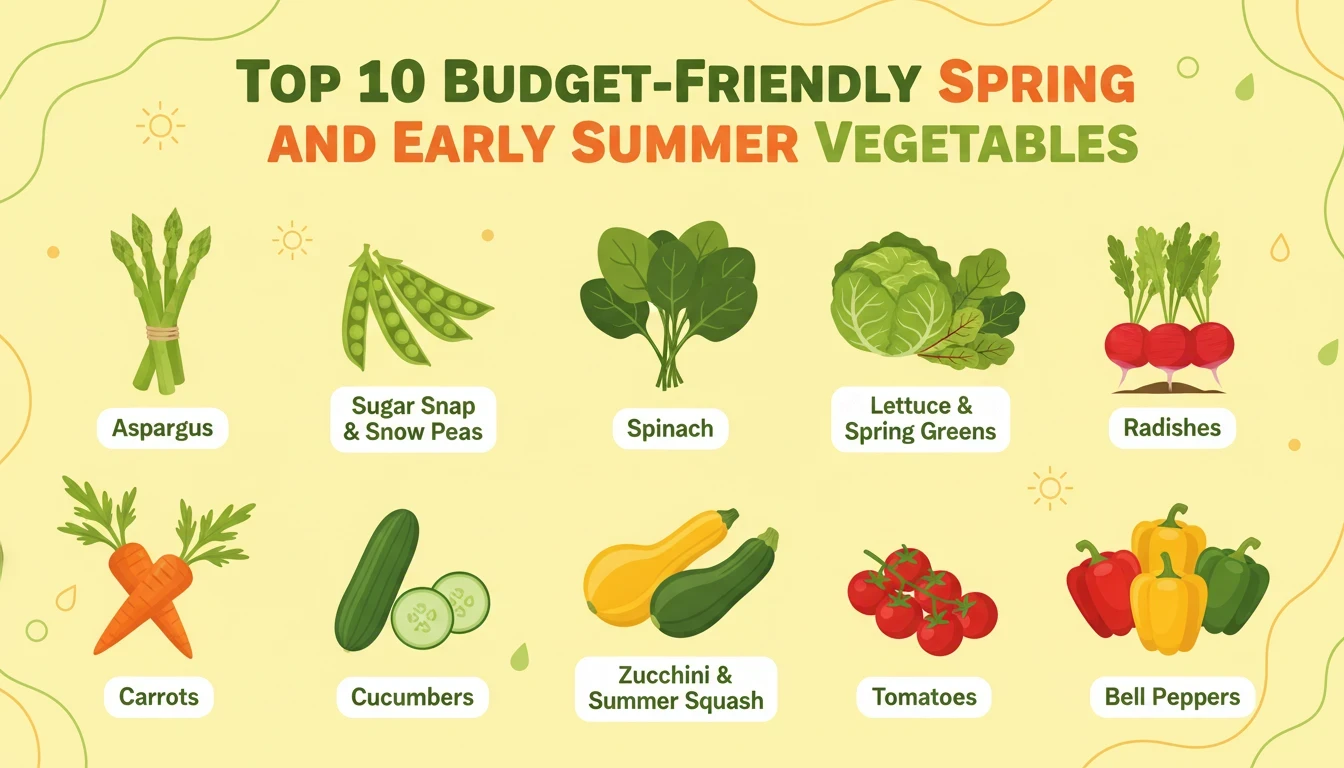
Top 10 Vegetables for Affordable, Nutritious Meals
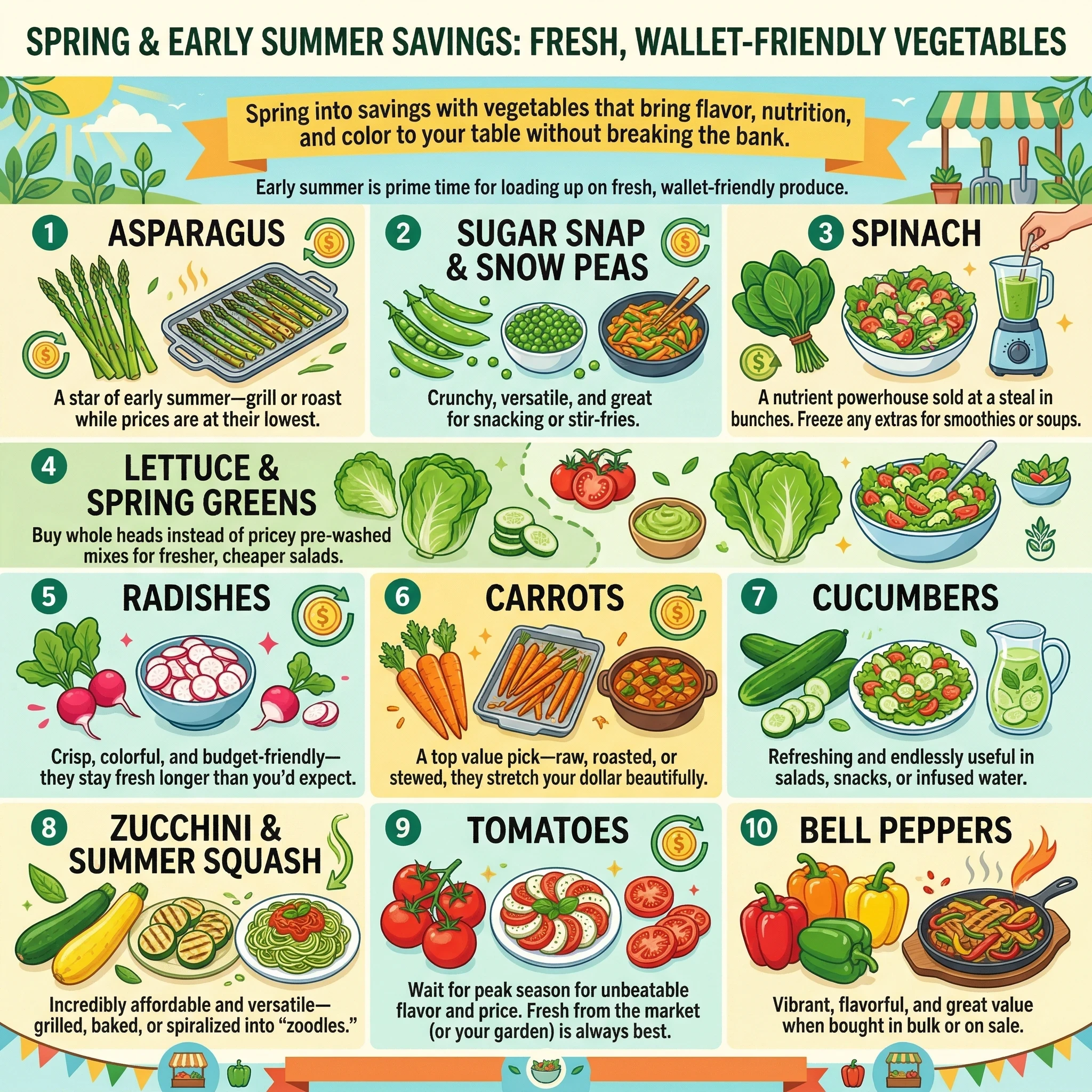
Spring into savings with vegetables that bring both flavor and nutrition to your table without breaking the bank. Early summer is prime time for picking up some green goodness at prices that’ll make your wallet smile. My top 10:
- Asparagus comes in strong at the start of summer. Snatch them while they’re fresh and cheap. They’re perfect for a quick grill, and their unique taste can’t be beat.
- Sugar snap and snow peas will give you that crunchy satisfaction. Plus, they’re super versatile, great for snacking or adding crisp texture to your stir-fry dishes.
- Spinach is a nutrient powerhouse sold at a bargain when you buy it in bunches. Have some that are wilting? Pop it in the freezer to use in soups or smoothies later.
- Lettuce and other spring greens are best picked whole rather than opting for pricier pre-washed mixes. Makes for a fresher salad at a fraction of the cost.
- Radishes are those often-overlooked crunchy delights. They’re often dirt-cheap and have a knack for staying fresh in the fridge longer than you’d expect.
- Carrots hold the crown for best value. Whether raw, roasted, or part of a stew, they stretch your dollar and add a burst of flavor and color.
- Cucumbers bring loads of freshness and stand tall as a snacking staple or salad addition. There’s no such thing as too much cucumber when they’re this affordable.
- Zucchini and summer squash are prolific growers, making them super inexpensive when they’re in season. Grilled, baked, or zoodled – they play deliciously well in any dish.
- Tomatoes wait until in peak season for unbeatable price and quality. Whether scooped from your garden or a farmers’ market, their taste is unmatchable when ripe.
- Bell peppers, especially in mixed color packs, offer vibrant flavors and versatility. When they hit sale prices, it’s time to stock up as they add instant zest to any meal.
Conclusion & Call to Action
The beauty of seasonal produce shopping is in discovering fresh flavors without feeling the squeeze on your wallet. By planning meals around what’s on sale each week, you not only embrace variety but also minimize waste, making your budget go further.
Challenge yourself to explore something new. Maybe there’s a seasonal fruit or vegetable you’ve seen but never tasted. Trying out 2 or 3 new options could turn meal times into something more adventurous and enjoyable.
Engage with your local community or online by sharing your favorite summer produce haul or a tasty recipe you’ve whipped up. It’s a fun way to swap tips and find fresh inspiration for your next culinary creation.