Japan’s Soccer Fans Keep Going Viral for Cleaning Up Trash: And Honestly, We Should Be Taking Notes
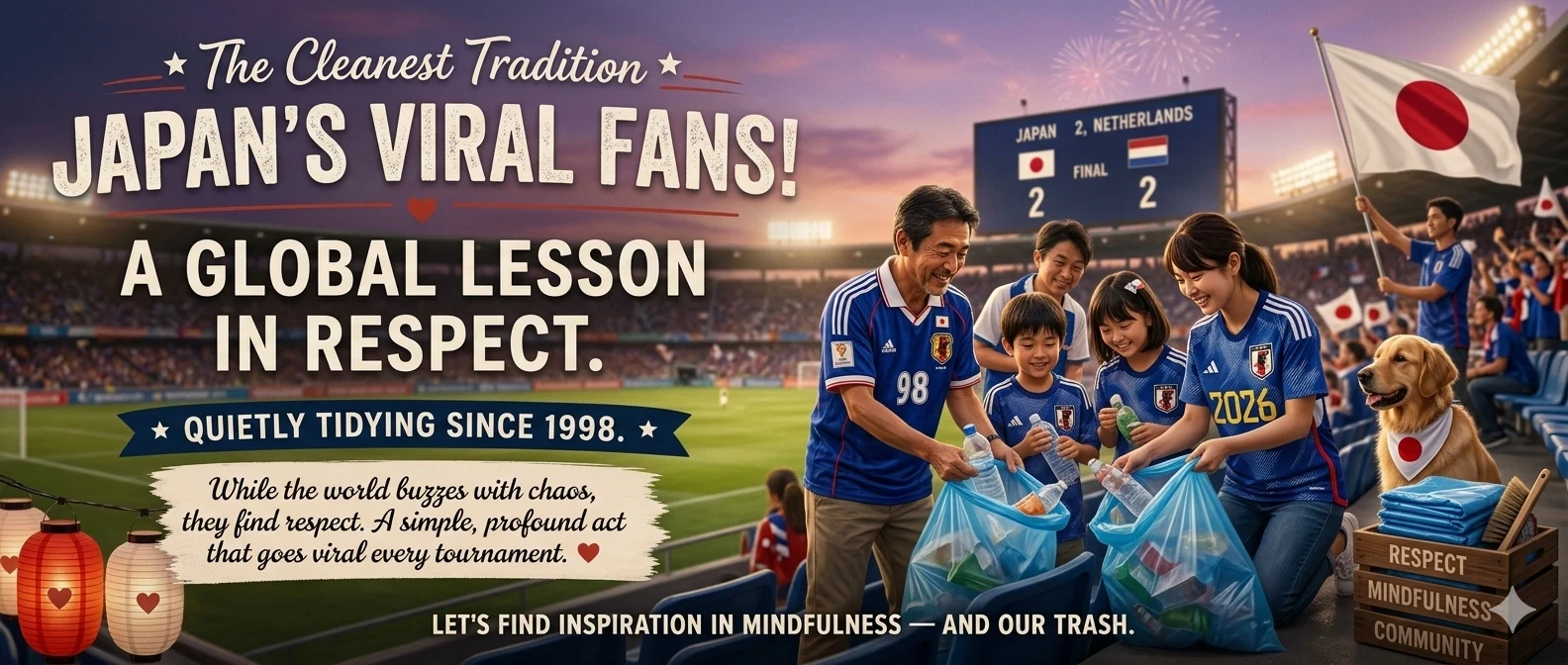
Picture this: your team just battled to a dramatic, nail-biting draw in the biggest tournament on Earth. The adrenaline is still pumping. Somewhere out in the parking lot, strangers are honking horns and hugging people they’ve never met. And what are you doing? You’re crouched in row 14, carefully folding a hot dog wrapper into a trash bag like you’re wrapping a delicate birthday present.
That’s not a hypothetical. That’s just a normal Tuesday for Japan’s World Cup fans.
During the 2026 World Cup, after Japan’s wild 2-2 comeback draw against the Netherlands at Dallas Stadium, hundreds of Japanese fans stayed behind in the stands with trash bags, quietly tidying up their section while the rest of the stadium was still buzzing with chaos. Photos went viral. Videos got reposted everywhere. Even an NFL quarterback doing World Cup commentary got roped into picking up bottles and wrappers alongside them, presumably wondering how he ended up in a cleanup crew instead of a press box.
And here’s the kicker: this isn’t new. Japan has been doing this since their very first World Cup appearance in 1998. Same thing at the Olympics. Same thing pretty much anywhere Japanese fans gather in large numbers. It’s not a publicity stunt, it’s not a one-time feel-good moment for the cameras, it’s just what they do, every single time, whether anyone’s watching or not.
So naturally, the internet’s collective reaction has ranged from “this is the most wholesome thing I’ve ever seen” to “why can’t we be like this,” with a healthy dose of “wait, they brought their own trash bags? Who PACKS trash bags for a sporting event?”
Let’s dig into why this happens, and more importantly, what the rest of us, yes, even those of us who still leave a small archaeological dig site of nacho trays under our seats, might actually be able to borrow from it.
So Why Do They Actually Do This?
The short answer is: it starts in elementary school, and it never really stops.
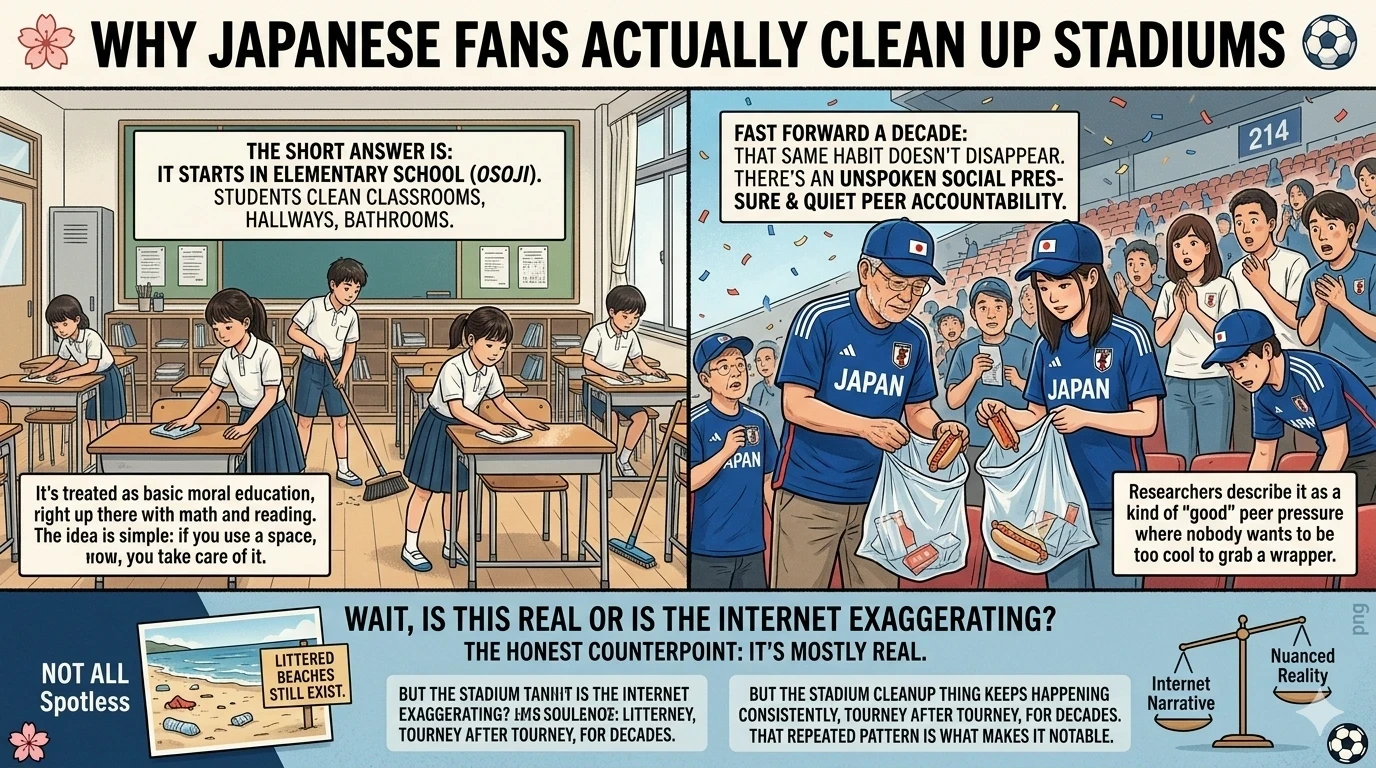
In Japan, kids don’t have janitors who magically appear to clean the classroom every day. Students clean their own classrooms, hallways, and even bathrooms as a regular part of the school routine, a practice called osoji. It’s treated less like a chore and more like basic moral education, right up there with math and reading. The idea is simple: if you use a space, you take care of it. Not because someone’s grading you on it, but because that’s just what decent people do.
Fast forward a couple decades, and that same kid is now sitting in section 214 of a World Cup stadium with a foam finger and a stomach full of stadium nachos. The habit doesn’t disappear just because the venue is bigger and the stakes are higher. If anything, it kicks in even more, because there’s an unspoken social pressure wrapped up in it too, researchers studying this phenomenon describe a kind of quiet peer accountability, where once one person starts picking up litter, the people around them basically can’t bring themselves to just sit there like it’s not happening. Nobody wants to be the one person mid-celebration who’s clearly too cool to grab a wrapper.
There’s also a deeper cultural thread here about not wanting to be a burden on other people, the idea that leaving your mess for someone else to deal with is, at its core, a little bit rude. Not “you’re a terrible person” rude. More like “you let the door close on someone behind you” rude. Just baked-in, everyday consideration that happens to scale up beautifully when 40,000 people are all doing it at once.
Wait, Is This Real or Is the Internet Exaggerating?
This is the part where I have to be the responsible voice in the room for a second: it’s mostly real, but like anything that goes mega-viral, the internet has flattened it into a slightly too-perfect, too-clean (pun intended) narrative.
Some Japanese commentators have pushed back a bit on the idea that every single person in Japan is out here meticulously sorting recyclables at all times, pointing out, fairly, that you can absolutely still find littered beaches and overflowing public trash cans around the country, same as anywhere else. Culture isn’t a monolith, and 120-plus million people don’t all behave identically just because they grew up in the same school system.
But here’s the thing, even accounting for that nuance, the stadium cleanup thing keeps happening, tournament after tournament, country after country, regardless of whether Japan wins, loses, or draws. That consistency is what makes it notable. It’s not a one-off viral moment manufactured for clout. It’s a genuinely repeated pattern that’s been documented for almost three decades now. So sure, take the “Japan is a spotless utopia” framing with a grain of salt, but the stadium habit itself? That part checks out.
What Americans Can Actually Learn From This (Without the Guilt Trip)
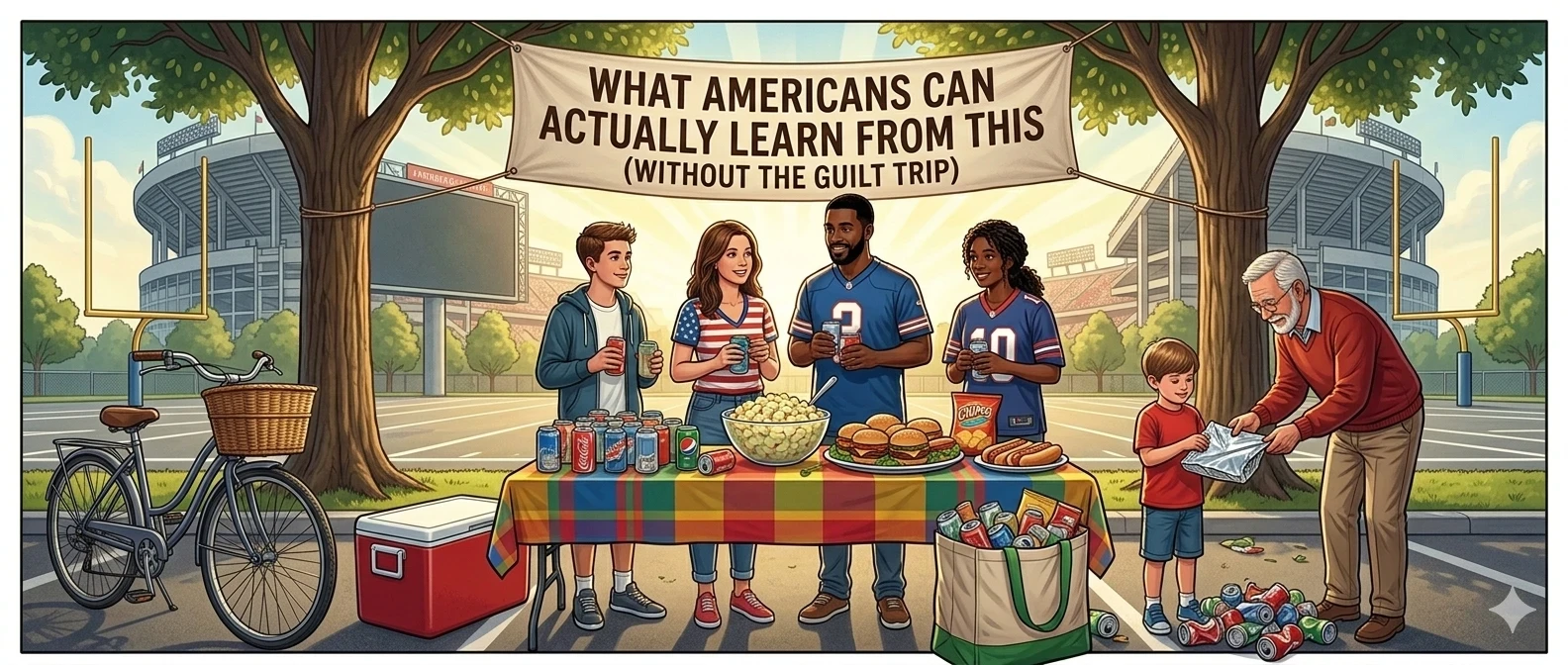
But there’s something genuinely useful buried in here, and it’s less about trash bags and more about a mindset shift. So let’s break down what’s actually worth stealing.
1. Treat shared spaces like they’re temporarily yours, not nobody’s
The whole philosophy boils down to one simple idea: leave it the way you found it, or better. That’s it. That’s the entire secret. It’s not some elaborate cultural mystery,it’s just treating a stadium, a park, a break room, or a rental car the same way you’d treat your own living room if you knew your mother-in-law was coming over in twenty minutes.
You don’t need a national curriculum on this. You just need to catch yourself in the moment of standing up to leave and think, “huh, should I take this with me,” before your body autopilots straight to the exit.

2. Make it a group thing, not a solo moral burden
One of the most interesting parts of the Japan fan phenomenon is that it’s social. It’s not one lone hero quietly shaming everyone else into picking up trash. It’s groups of friends doing it together, almost like a post-game ritual, the same way American fans might do a group chant or a celebratory selfie.
Translate that to literally any setting: a backyard barbecue, a camping trip, a Sunday football watch party at your buddy’s place. If cleanup becomes a 30-second group activity instead of “whoever’s left holding the bag” (literally), it stops feeling like punishment and starts feeling like just… part of the hangout.
3. Pack like you’re planning to leave no trace, not like you’re hoping someone else handles it
This is the unsung hero detail of the whole story: a lot of these fans bring their own trash bags. They don’t wait around hoping the venue provides enough bins, or assume the cleanup crew will swoop in. They just… come prepared.
This is honestly a great life hack independent of any cultural commentary. Tossing a couple of extra trash bags or a reusable bag in your stadium bag, picnic basket, or car has nothing to do with nationality and everything to do with being the person whose stuff is organized instead of the person digging through a purse looking for literally anything to hold a banana peel.
4. Pride in your “section” instead of indifference toward it
There’s a subtle mindset difference between “this isn’t my responsibility” and “this is my little corner of the world right now, and I’d rather it look decent.” The second one isn’t about guilt, it’s almost closer to pride. Like how some people keep an immaculate car interior, or always make their bed even though no one’s checking. It’s not about other people’s opinions. It’s about your own standard for how you operate.
You can apply that same energy to a stadium row, a hiking trailhead, a hotel room, or honestly your own kitchen counter at 11pm when you really, really don’t feel like rinsing one more dish.
5. Good habits installed early just… stick
This is maybe the biggest actual takeaway, and it has nothing to do with soccer at all. The reason this behavior shows up so reliably in Japanese stadiums decades later is that it was built in during childhood, repeated constantly, and normalized as just a regular part of life rather than a special occasion thing.
Whether you’ve got kids, nieces and nephews, or just younger coworkers watching how you operate, small repeated habits done consistently in unglamorous moments (yes, like cleaning a classroom, or a stadium section, or a kitchen) are what actually stick decades later. Nobody becomes a “clean up after yourself” person because of one inspiring speech. It’s the boring repetition that does it.
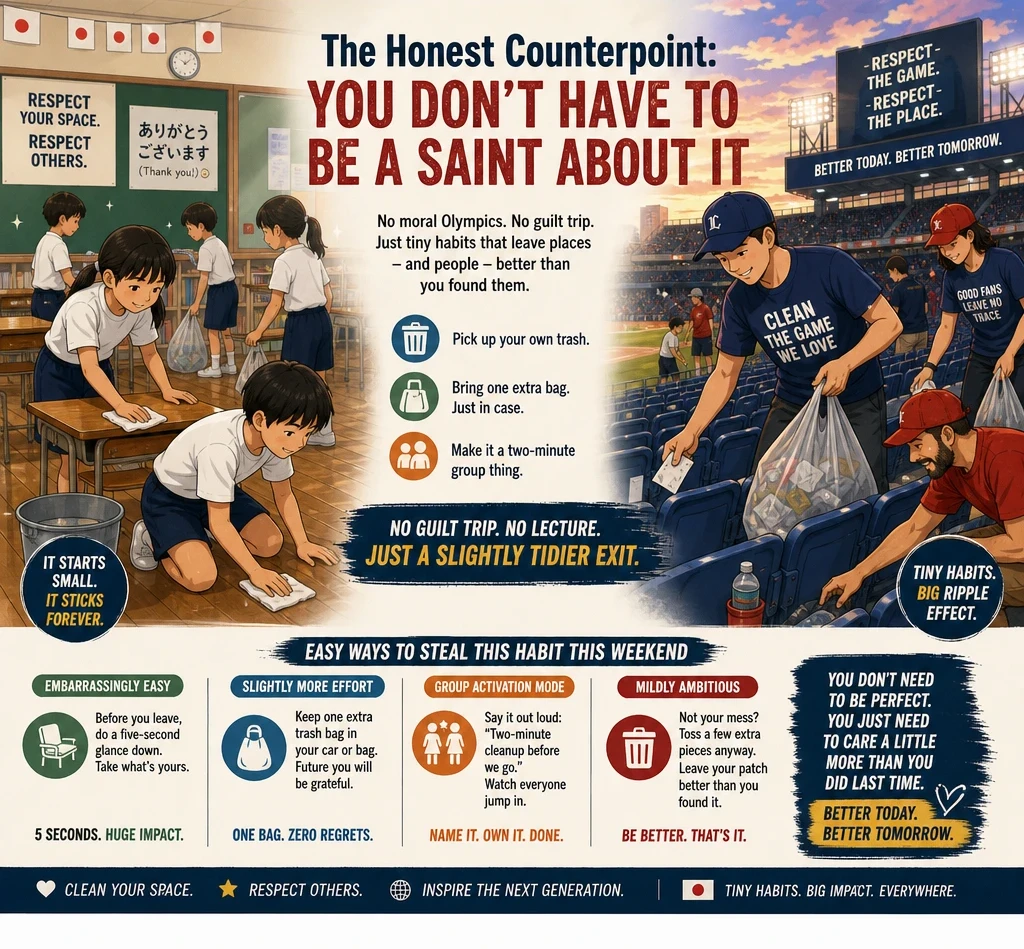
The Honest Counterpoint: You Don’t Have to Be a Saint About It
Let’s not pretend this needs to turn into some kind of moral Olympics where Americans collectively decide to out-tidy Japan at the next World Cup. That’s not the assignment, and frankly it would be a little exhausting and a little try-hard. You don’t need to bring color-coded recycling bags to your next tailgate, and you don’t need to apologize to a stadium employee for existing. The lesson here isn’t “be perfect,” it’s “be slightly more aware than you currently are, in a way that costs you almost nothing.”
Picking up your own trash, leaving a space how you found it, and packing one extra bag “just in case,” none of that requires a personality transplant or a deep dive into Japanese cultural philosophy. It’s just slightly better defaults. Tiny, low-effort, zero-guilt upgrades to how you already move through the world.
 Could This Catch On in the U.S.?
Here’s the genuinely fun part: it kind of already is, a little. Every time this story goes viral, and it goes viral at basically every major tournament Japan plays in, there’s a wave of American sports fans saying some version of “okay, I’m doing this at the next game I go to.” Some of it’s probably just internet talk that evaporates by kickoff. But some of it sticks, especially with people who already lean toward “I hate seeing a mess” energy and just needed a little cultural permission slip to act on it without feeling weird.
And that’s honestly how most cultural habits spread in the first place, not through guilt, not through lectures, but through watching someone else do something cool and low-key thinking, “huh, I could do that too.”
A Few Easy Ways to Steal This Habit This Weekend
If you’re the type who likes a concrete action item instead of just vibes, here’s the cheat sheet version, ranked from “embarrassingly easy” to “mildly ambitious”:
Embarrassingly easy: Before you stand up to leave any seat, stadium, movie theater, airplane, doesn’t matter, do a five-second glance down. Anything that’s yours, take it. This alone solves probably 80% of the problem and costs you nothing but a glance.
Slightly more effort: Keep one extra trash bag in your car, your stadium bag, or your camping gear at all times. Not a whole roll. Just one. Future you will be weirdly grateful.
Group activation mode: Next time you’re packing up after a tailgate, a picnic, or a backyard hang, just say out loud, “okay, two-minute cleanup before we go,” and watch how fast everyone pitches in once someone actually names it as a thing. People aren’t usually opposed to helping, they’re just waiting for someone to make the first move.
Mildly ambitious: If you’re at a public event and notice an obviously overflowing trash can or a stray pile near your section that isn’t even yours, toss a couple extra pieces in a bag anyway. You don’t have to clean the whole stadium. You don’t have to clean the whole beach. Just leave your little patch of the world slightly better than the version you walked into.
None of this requires turning your personality into “that person who cleans things.” It’s just a few seconds of extra awareness sprinkled into stuff you’re already doing.
The Bottom Line
Japan’s stadium cleanup tradition isn’t some unreachable cultural superpower. It’s not magic, it’s not unique DNA, and it’s definitely not about making everyone else feel bad about their nacho tray habits. It’s just a really good, really simple habit, leave it better than you found it, that got built early, repeated often, and turned into muscle memory.
You don’t need to become a different person to borrow a piece of that. Next tailgate, next stadium trip, next backyard hangout: toss an extra trash bag in your bag, do a 30-second sweep of your area before you bounce, and maybe rope a friend into making it a two-person job instead of a chore. That’s it. That’s the whole move.
No guilt trip, no lecture, no moral high ground required. Just a slightly tidier exit, and maybe, eventually, our own viral moment of someone filming an American tailgate going, “wait, are they… cleaning up? On purpose?”