Your Brain is Eating Itself: The Scary Reality of Extreme Calorie Deficits
f you’ve ever tried to get through a busy day without eating enough, you probably noticed feeling more irritable, tired, or distracted than usual. Not getting enough calories, even for a short period, can have a real impact on the brain and how it works. As someone interested in both nutrition and mental performance, I find it critical to understand exactly how calorie intake affects the brain, from short-term changes in mood to longer-lasting effects on memory, focus, and mental health.
https://budgetbite.org/importance-of-eating-enough-calories/
Short Term Effects
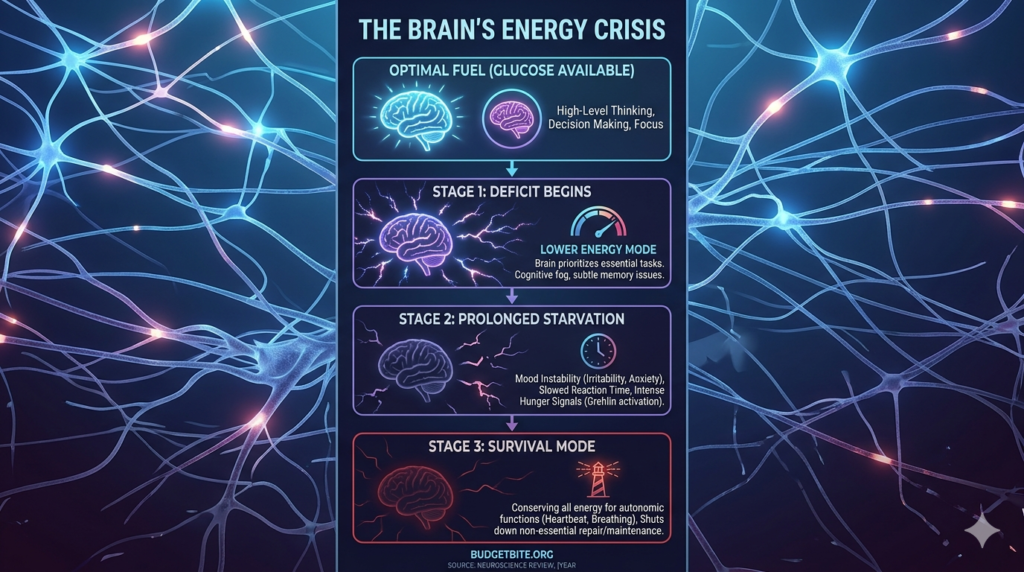
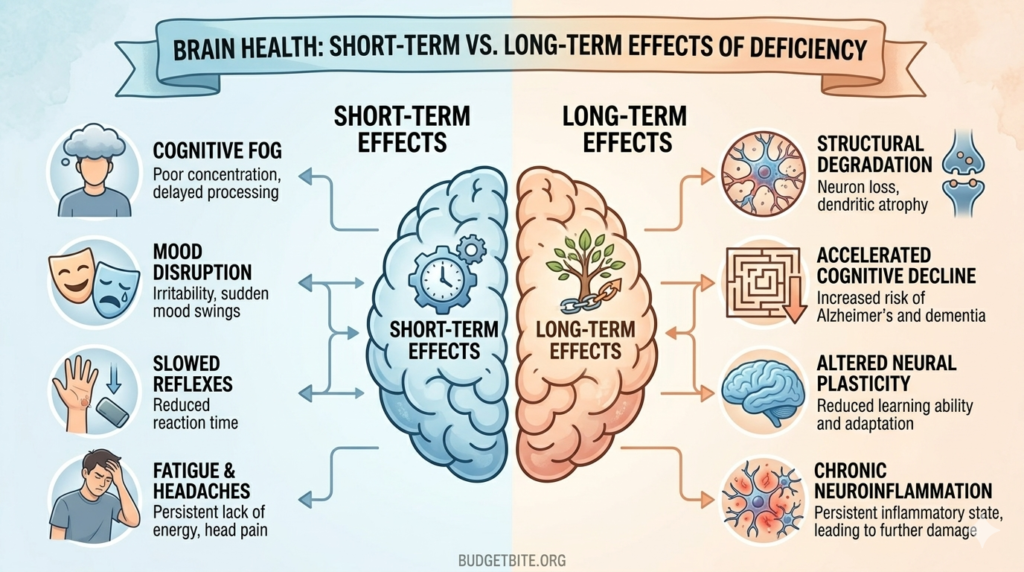
When I skip meals or run on too few calories for a day or more, the changes are hard to miss. Low calorie intake is one of the quickest ways to disrupt thinking, mood, and even coordination. The brain needs energy to fuel everything from focusing on tasks to managing emotions. Without enough calories, the brain struggles to keep up with its usual workload.
Some things I’ve noticed or learned from research include:
- Difficulty Concentrating: Brain fog sets in, making it tough to pay attention at school or work. Studies show that students who come to class hungry often struggle with memory and learning tasks (source).
- Low Energy and Motivation: Even small things feel like a big effort. That’s the brain working in energy saving mode to reserve fuel for the most important functions.
- Increased Irritability and Stress: I often become more impatient or easily upset. This is partly because the brain has less energy to control emotional responses.
These effects usually start to appear after even a single day of undereating. That’s not surprising, since the brain uses about 20% of the body’s energy just to keep running.
Long Term Effects
Going without enough calories over a longer period is even more concerning. If the body is regularly deprived of enough food—whether because of dieting, chronic illness, or disordered eating—the brain may be altered in ways that last well beyond the diet period.
- Impaired Memory and Learning: The brain may shrink in key areas responsible for memory, like the hippocampus. Research in adults with long term undernourishment or malnutrition shows clear links to poorer memory and lower cognitive function (source).
- Mental Health Problems: Not eating enough calories is strongly tied to higher rates of depression and anxiety. When energy is scarce, the brain can’t make enough of the chemicals that stabilize mood, like serotonin and dopamine.
- Developmental Effects: For children or teens, chronic under-eating can even affect brain development, including lower IQ and difficulty with complex thinking or problem solving.
- Sleep Disturbances: Ongoing calorie deficit often leads to trouble falling or staying asleep. Poor sleep only makes it harder for the brain to repair and recharge.
I’ve heard from people recovering from restrictive eating disorders that it can take years for certain cognitive functions to fully bounce back. This shows how important regular, adequate calorie intake is for lifelong brain health.
How Calorie Deficit Affects Thinking, Mood, and Daily Function
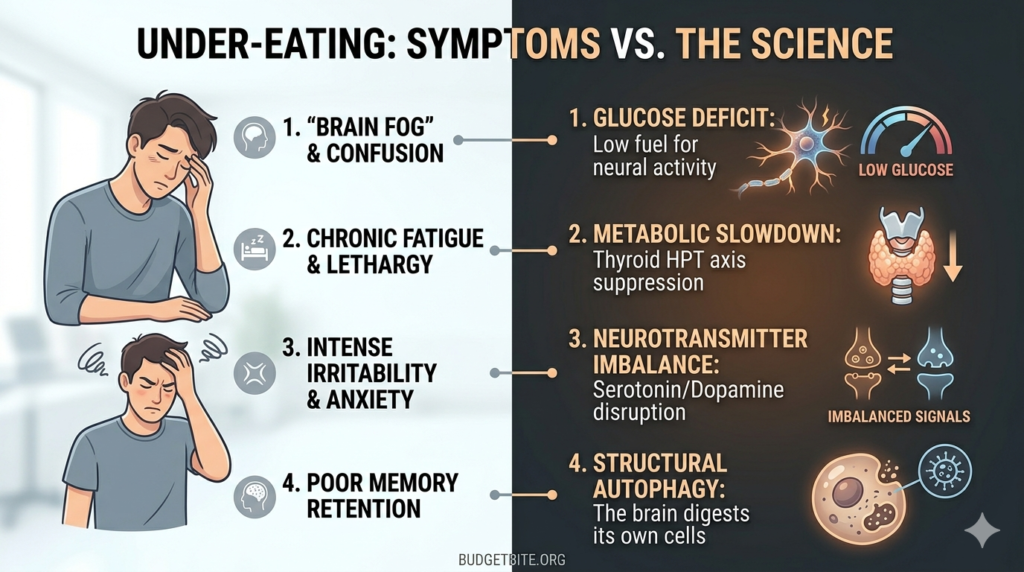
Eating too little isn’t just about feeling tired or hungry; it can really disrupt daily living. On a day when I miss meals or don’t get enough to eat, I might notice some very real differences:
- Poor Decision Making: Low energy in the prefrontal cortex can make it harder to weigh options or solve problems. This area needs tons of fuel to keep you sharp and focused.
- Memory Lapses: I often forget simple things, like where I put my keys or why I walked into a room. Studies have documented these sort of short term memory lapses with even mild calorie restriction.
- Difficulty Regulating Emotions: I’m more likely to snap at someone or feel overwhelmed by small stressors. Low glucose (blood sugar) is linked to more arguments and a shorter temper.
- Reduced Social Motivation: On a low calorie day, I’m much less interested in hanging out with friends, or even texting them back. Social withdrawal is a common response when the brain is low on energy.
The brain’s energy needs are steady throughout the day. When calorie intake drops, there’s less fuel for these core mental and emotional tasks. Long term, this can add up to difficulty in work, school, relationships, and even physical coordination.
Why It’s Really Important Not to Drastically Cut Calories
The temptation to cut lots of calories at once is common when trying to lose weight or stick to a new diet. When I tried a crash diet in college, I noticed my mood and grades suffered right away. Those habits were tough to sustain. Research shows that suddenly slashing calories often backfires, both for mental health and for keeping weight off in the long run.
Some reasons to keep calorie cuts gradual:
- Protects Mental Performance: Slow, steady calorie adjustments allow the brain to adapt without major disruptions in memory, focus, or mood.
- Lowers the Risk of Depression and Anxiety: Studies link very low calorie diets to much higher rates of depression, especially among teenagers and young adults.
- Reduces Cravings and Binge Eating: When I got too hungry, my brain started focusing on food nonstop. Eating just a bit under maintenance can help prevent that obsession and the guilt that often follows binge episodes.
Health professionals recommend only modest changes, like trimming 250 to 500 calories per day from your maintenance, and focusing on nutrient dense foods rather than strictly on calories.
How to Lose or Maintain Weight Without Hurting Your Brain
Healthy weight loss can be done without sacrificing brain power, but it does take some planning. Here’s what I’ve found useful and what experts suggest:
- Eat Enough Protein and Healthy Fats: These help keep you feeling full for longer and give stable energy. The brain especially needs healthy fats from foods like fish, olive oil, and avocado to build its cell membranes.
- Focus on Fiber Rich Foods: Vegetables, fruits, legumes, and whole grains stabilize blood sugar and feed the mind over several hours.
- Don’t Skip Meals: Regular meals, even if smaller, help prevent the sharp drops in energy that can hurt concentration and mood.
- Plan Snack Breaks: When cutting calories, I make sure to have smart snacks, like nuts or yogurt, to keep my brain happy. Spacing meals and snacks evenly lets the brain get a steady stream of fuel.
One key strategy is to lose weight slowly, no more than 0.5 to 1 kg (or about 1 to 2 pounds) per week. Using a diet tracking app can help stay mindful of calorie intake without cutting back too far. Anyone with a history of eating disorders, depression, or major anxiety should check with a professional before making significant changes.
The Best Foods for Brain Health
What you eat matters just as much as how much you eat, especially for the brain. While everyone’s needs are a bit different, I’ve found that focusing on nutrient dense, well balanced foods makes a noticeable difference in daily mental performance and mood.
- Oily Fish: Salmon, sardines, trout, and mackerel are full of omega 3 fatty acids needed for mood, learning, and memory (source).
- Nuts and Seeds: Walnuts, flaxseeds, and chia seeds give a healthy dose of both protein and healthy fats to support brain structure.
- Leafy Greens: Spinach, kale, and Swiss chard are packed with antioxidants and nutrients that slow brain aging and boost alertness.
- Berries: Blueberries, strawberries, and blackberries can help improve memory and protect the brain from harm thanks to their antioxidants.
- Whole Grains: Brown rice, oats, and quinoa give a slow release source of glucose, which the brain relies on for almost all its energy.
- Eggs: Eggs are rich in choline, which is needed for the production of acetylcholine, a neurotransmitter that helps with memory and thought processing.
- Dark Chocolate (in moderation): Polyphenols in dark chocolate may improve blood flow to the brain and raise mood.
Including these foods as part of three regular meals each day, along with a snack or two, keeps energy levels more stable and supports sharper thinking. Eating a variety of colors and whole foods provides a wide range of micronutrients, all of which play a role in brain function and emotional stability. Staying hydrated by drinking enough water is key as well, since even mild dehydration can slow thinking and make it hard to concentrate.
Common Questions
I’ve been asked a lot about calories and brain health, so here are some questions I often hear and answers based on experience and science.
Question: What is the minimum amount of calories the brain requires each day?
Answer: While everyone’s body is different, most adults should never eat fewer than 1,200 to 1,500 calories per day without medical supervision. The brain alone uses around 300 to 400 calories daily just for maintenance.
Question: Is intermittent fasting safe for the brain?
Answer: Some people manage short fasts well, but others notice mood swings or low energy. Keeping fasting periods short and listening to your body’s warning signs can reduce mental fog or irritability.
Question: If I cut calories for a few weeks, will my brain bounce back once I eat normally again?
Answer: Most people recover their focus, mood, and sharp thinking with a return to balanced eating. However, people with a history of long term dieting, disordered eating, or very low intake can take longer to heal. If you feel ongoing problems, reach out to a dietitian or doctor for support.
Wrapping Up: Protecting Your Brain While Managing Your Diet
Finding a balance between calorie control and enough nutrition for the brain is really important for feeling your best in daily life. The brain’s need for steady energy doesn’t go away with a new diet or busy schedule. When I give my brain the nutrients and calories it needs, I notice sharper thinking, steadier moods, and better energy all day long. That’s well worth prioritizing for anyone, at any age. Take the time to check in with your body, aim for balanced meals, and remember that your brain will thank you for fueling it right.
https://budgetbite.org/weight-loss-made-simple-why-a-calorie-deficit-is-the-key/

When I first seen your article ” Dangers to the brain of not consuming enough calories” that actually gave me a scary feeling inside. To be completly honest, I had no idea that not enough calories had any impact on my brain health.
Wow, the short-term and long-term symptoms are extremely familiar to me, but I never connected it to not enough calories for my brain.
I found your section on how to manage my weight wthout cutting too many calories extremely helpful, I try not to get too many calories in an attempt to stay at a health weight. Now I know that isn’t the right thing to be doing, this has opend my eyes to managing my calorie intake wrong.
After reading your health brain foods, I realize I am not consuming nearly enough of them for a healthy and happy brain.
Thanks for such a eye-opening article,
Jeff
Thanks Jeff! I have actually experienced this firsthand and it’s been an ongoing struggle. I didn’t realize this was possible until it happened to me, and it can be scary. Always important to monitor your daily calories and activity and find the right balance.