Tips for Choosing Guilt‑Free Chocolate Treats
Chocolate has been a much beloved delight for centuries, popping up in desserts, drinks, and even beauty product. With so many people aiming for healthier lifestyles, there’s been a growing interest in finding alternatives to chocolate that satisfy a sweet tooth without the extra sugar or additives. If you’re looking to tweak your snacking habits, or just curious to learn more, this will cover some background, reasons for chocolate cravings, and several pleasurable alternatives worth a try.
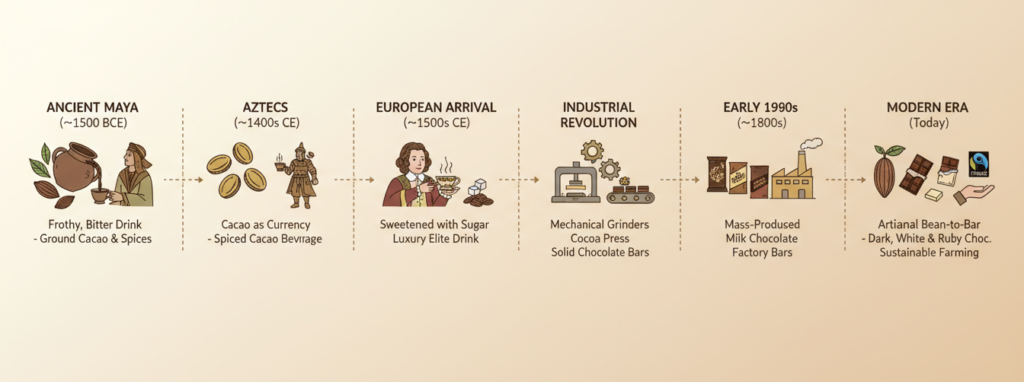
Chocolate isn’t simply a sweet, tasty treat; it has an amazing backstory. The story begins in Central and South America, where cacao trees first grew. Back then, the Maya and Aztecs treated cacao beans like treasure or a luxury item. They didn’t eat sweet chocolate bars like we do now. Instead, they made a thick, bitter drink from cacao beans, sometimes mixed with spices or chili peppers. They didn’t nibble on creamy milk chocolate; they drank a thick, bitter brew with chili pepper. (Imagine saying, “Happy Easter!” and handing someone a mug of spicy bean juice.)
When cacao made its way to Europe in the 1500s, sugar was introduced to the party and things quickly exploded—hot chocolate, truffles, fondue fountains at awkward weddings, and even chocolate-covered fruit. Chocolate became the universal love language of comfort and celebration, with chocolate transforming into a treat closer to what we have today, quickly becoming a symbol of wealth, celebration, and gratification.
What Is Chocolate and How’s It Made?
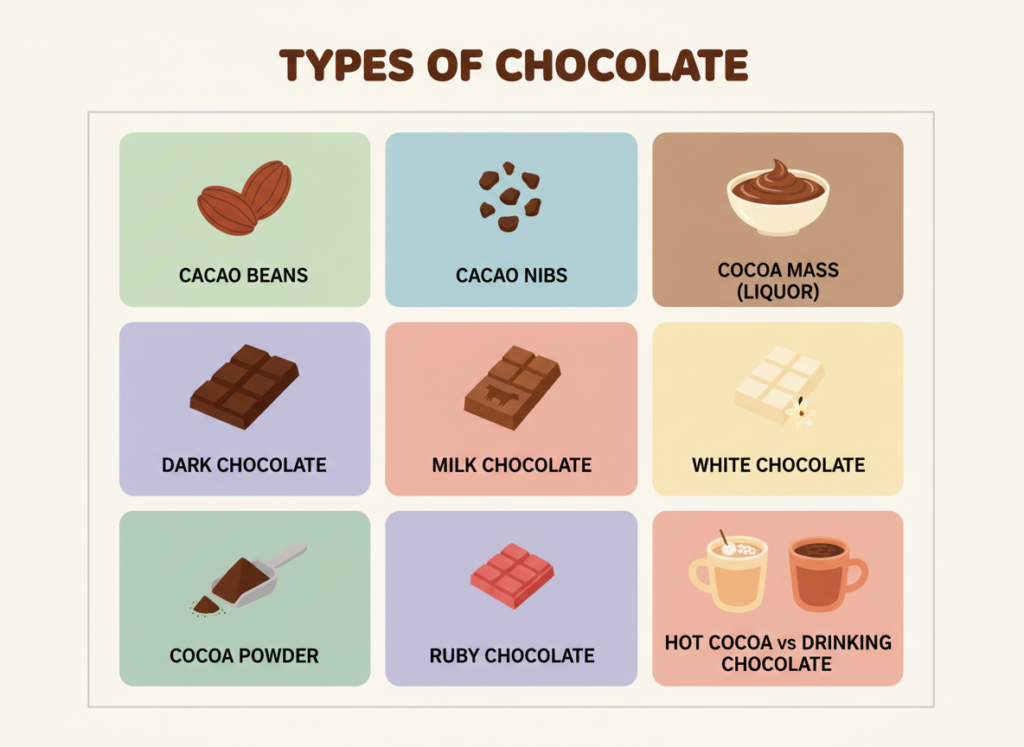
Chocolate starts with cacao beans, harvested from the pods of the cacao tree. These beans are fermented, dried, roasted, and cracked open to get the nibs inside. The nibs get ground up into a paste called chocolate liquor (don’t worry, there’s no alcohol here). From there, the process changes depending on the chocolate style: dark, milk, or white.
For dark chocolate, sugar and sometimes a little vanilla are added before it gets cooled and turned into bars. Milk chocolate includes milk powder, which makes it creamier and sweeter, while white chocolate has cocoa butter instead of cocoa solids. Each version has its own distinct flavor and texture.
Typical forms of chocolate:
- Cacao Beans, The starting point for all chocolate; rarely eaten raw but can be fermented or roasted.
- Cocoa Mass (Chocolate Liquor) Base for making all chocolate types — dark, milk, or white
- Cacao Nibs: Crushed bits of roasted cacao beans with no sugar added
- Cocoa Powder: Dried and ground cocoa solids left after extracting cocoa butter.
- Dark chocolate: Cacao mass + cocoa butter + sugar (no milk).
- Milk chocolate: adds milk powder for that sweet, creamy taste.
- White chocolate: skips the cocoa solids but keeps the cocoa butter—the smooth talker
- Ruby Chocolate: Made from specially processed ruby cocoa beans; naturally pink in color
Each version has its own vibe, from the mysterious dark bar to the kid-friendly milk melting heartthrob.
Cultural Uses and Modern Chocolate
Besides being a snack or dessert, chocolate finds its way into sauces, drinks, and even skincare products. In many cultures, hot chocolate is a winter favorite, while in others, chocolate is saved for special occasions or used as a romantic gesture. Its versatility is a big reason why chocolate remains popular all around the world.
Why People Love Chocolate (And Why Some Crave It More)
Chocolate ticks a lot of boxes when it comes to cravings. Here’s why I find people (myself included) can get attached:
- Sugar and fat combo: Chocolate is rich, creamy, and just sweet enough to be addictive, which lights up the reward center in your brain
- Feel-good chemicals: It contains compounds like theobromine and a little caffeine, giving you a mild energy boost. It also helps the brain release serotonin and endorphins, those “happy” chemicals.
- Emotional connection: Chocolate is tied to celebrations, rewards, and comfort. That’s why you might reach for it during stressful times or when you want to treat yourself.
- Habit and nostalgia: Childhood memories of chocolate as a reward or special treat drive a lot of adult cravings.
Certain people crave chocolate more, and it can even tie back to habits or emotional patterns. For some, it’s about energy, for others it’s just naturally hardwired as a quick comfort fix. Sometimes people even associate chocolate with family gatherings, holidays, or favorite pastimes, all of which can make cravings stronger.
Is Chocolate Unhealthy?
Chocolate shouldn’t be considered completely unhealthy. The biggest issue is often what’s in many commercial chocolate products: extra sugar, milk fats, and added oils that weigh down the health benefits. Dark chocolate with a high cacao content (70% or more) has less sugar and provides antioxidants, but eating a lot of any chocolate can add up if you’re watching your sugar or calorie intake.
Milk chocolate and white chocolate usually have more sugar and relatively little cacao, so they’re not the best for daily snacking if you’re aiming for something healthy. People sensitive to caffeine or those with certain allergies (like milk) also need to be careful about which chocolate products they pick up. Paying attention to the ingredient label and how much you eat can make a big difference in how healthy your chocolate habit is.
It’s also good to recognize that some chocolate bars contain extras like caramel, nougat, or cookies, which can sneak in even more sugar and processed ingredients. Whenever possible, choosing bars with very few ingredients helps you keep things simple and healthier.
Healthy Chocolate Alternatives Worth Trying
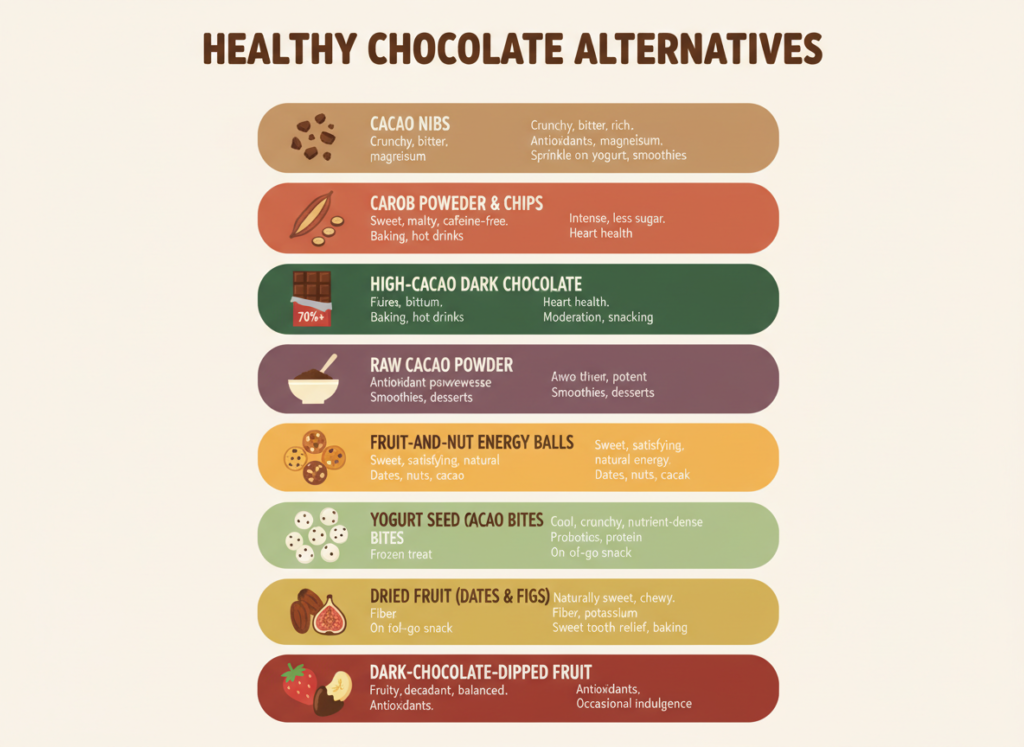
1. Cacao Nibs
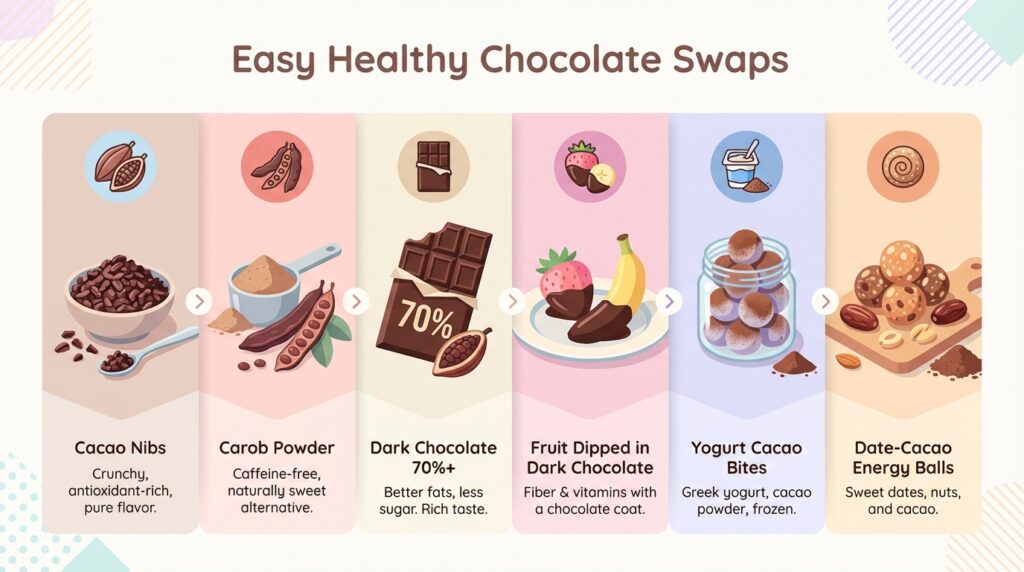
Cacao nibs come from the same beans as chocolate but skip most of the processing and sugar. Crunchy, earthy, and unapologetically bitter, cacao nibs skip the sugar drama. Sprinkle them on oats, smoothie bowls, or yogurt. They give a chocolate vibe but keep things wholesome; plus, they’re packed with antioxidants and minerals.
2. Carob
Carob is a Mediterranean legume that gets ground into powder or chips. Think of it as chocolate’s gentle, caffeine-free cousin that doesn’t steal your energy levels. It’s naturally sweet, mild, and great for baking. Carob bars and chips look like chocolate, but the taste is milder and a little nutty. Try it in baking and hot drinks when you need a chocolate pick me up without the buzz.
3. Dark Chocolate (70% or Above)
If you don’t want to give up chocolate altogether, choosing a bar with at least 70% cacao is a good compromise. Higher cacao means less sugar and more beneficial plant compounds called flavonoids. It’s still chocolate, but way less processed. Just watch out for anything with weird additives or too much sugar hiding in the ingredient list.
4. Raw Cacao Powder
Raw cacao powder is made from cold-pressed cacao beans and is less processed than regular cocoa powder. It keeps more antioxidants and minerals and works great in smoothies, energy bites, or homemade “hot cocoa” with your choice of milk and sweetener.
5. Fruit-Based Treats
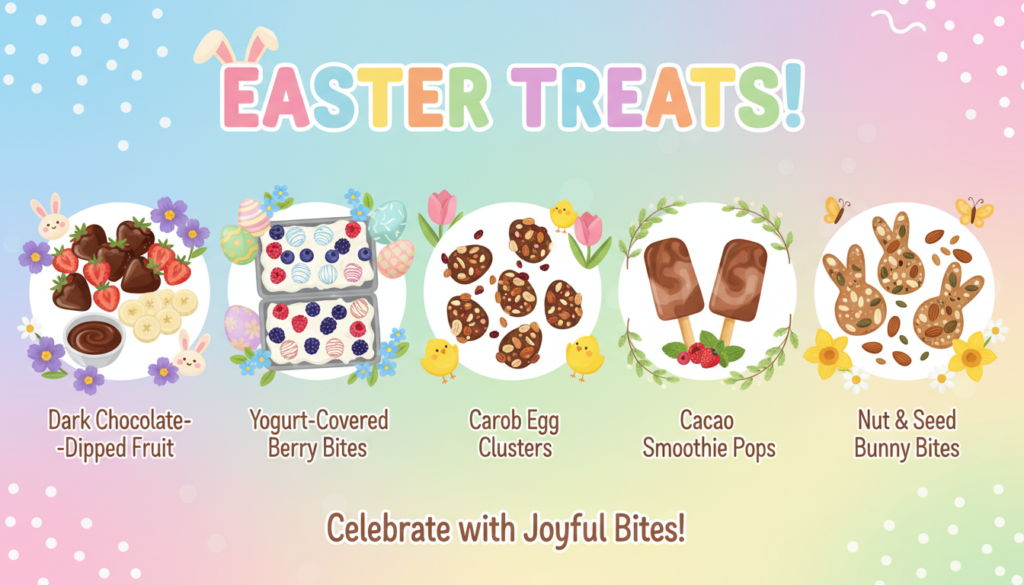
Dried fruit, like dates or figs, can be super satisfying, especially when combined with nuts or seeds. For a chocolate-like experience, try blending dates, raw cacao, and nut butter into snack balls. I freeze them for a quick grab-and-go option that kicks most sweet cravings. Another idea is to dip fresh fruit in a small amount of melted dark chocolate and let it harden; it gives you the chocolate taste but pairs it with the vitamins and fiber from fruit.
6. Yogurt Bites with Cacao
Mix plain Greek yogurt with raw cacao powder and a touch of honey, then freeze in small drops. These little bites have the creamy, tangy quality of chocolate yogurt without the extra sugar. They’re great after a meal or as a cool snack in warmer weather.
7. Nut and Seed Bars with Cacao
If you like chewy snacks, nut and seed bars with a touch of raw cacao or dark chocolate chips can provide healthy fats and protein, plus just enough chocolate flavor to satisfy cravings. Making your own at home lets you control the ingredients and sweetness, so you can skip added sugars and unnecessary oils.
Simple Tips for Switching to Healthier Chocolate Alternatives
- Start by swapping one chocolate snack a week for a healthy alternative.
- If you love baking, experiment with recipes that use cacao powder or carob instead of milk chocolate chips.
- Read ingredient lists for added sugars or unhealthy fats, even with “health” chocolate bars.
- Don’t beat yourself up for enjoying regular chocolate; balance is key, and even small swaps help.
- Try pairing chocolate alternatives with foods you already love, like nut butters, fruit, or yogurt. This makes the new flavors more familiar and satisfying.
- If you crave the creaminess of milk chocolate, combining cacao powder with avocado or banana in smoothies gives a rich texture without extra sugar.
Trying out healthier chocolate alternatives isn’t about going completely cold turkey or depriving yourself. It’s all about adding in choices that make you feel good, satisfy your cravings, and maybe help you stumble upon new favorites along the way. Whether you’re after something crunchy, smooth, or creamy, there’s a substitute that does the job without all the extras. Staying open to experimenting can make the process fun and rewarding while helping you create habits that really stick.
Final Thoughts
Chocolate has a fascinating history and a truly unique place in our lives, but switching to healthier alternatives opens up a whole new world of flavors and benefits. Whether you reach for cacao nibs, carob, or just choose darker chocolate, the main thing is to find what works for you and helps you enjoy your treats while feeling good about what you eat. Keep exploring, be curious, and you might just track down a new favorite treat that gives a boost to your snacks and your well-being.
Easter Bonus Round: Festive Ideas 🐣
Chocolate’s history is rich and glorious (pun fully intended), but discovering healthier twists can make holidays like Easter feel even sweeter.
- DIY “Healthy Easter Eggs” – Fill plastic eggs with cacao snack balls, dried fruit, or homemade trail mix. (Your kids won’t be suspicious if you play it off as “grown-up candy.”) Dairy Free
- Cacao Bunny Smoothie – Blend banana, almond milk, raw cacao, and a pinch of cinnamon. Tastes like chocolate milk had a wellness glow-up.
- Mini “Carob Bark Nests” – Melt carob chips, mix with oats or shredded coconut, and shape them into nest-like clusters. Drop a few almonds or berries in the center—they’re almost too cute to eat.
- Dark Chocolate Dipped Peep Alternatives – Skip the marshmallow sugar bombs and dip strawberries, orange slices, or pretzel sticks in dark chocolate instead. Delicious, festive, and doesn’t feel like regret in foil form.
- https://www.thesweetfest.com/sugarverse/peeps-easter-candy-cancer-concerns-sparks-petition
- https://www.thepioneerwoman.com/holidays-celebrations/gifts/g70806099/best-easter-egg-filler-ideas/


I really enjoyed this article because it highlights how you can enjoy chocolate treats without the guilt that usually comes with indulgence. I like that it shows practical ways to make desserts feel rich and satisfying while using healthier ingredients or keeping portions in check. Many people struggle with balancing cravings and maintaining healthy habits, so tips like these make it much easier to enjoy treats without feeling like you’re undoing your progress.
From my experience, swapping out some traditional ingredients for lighter or more natural alternatives doesn’t mean you sacrifice flavor in fact, sometimes the treats taste even better than expected. In my opinion, learning to enjoy food mindfully and creatively, like these guilt-free chocolate options, is one of the best ways to stay consistent with healthy habits while still enjoying the foods you love. It’s all about making indulgence smarter, not impossible.
Thanks Iyere! I wanted to highlight some of my favorite products, seemed like I was one of few who had even heard of it. it was definitely a game changer to my diet and finding great tasting low calorie options that satisfy cravings. Just a few years ago, I would have to order them online from specialty stores, but have noticed them popping up at my local grocery store lately. Excited to find easier and hope that means they are gaining popularity.