If you’re anything like me, you want to eat well without blowing your budget. Figuring out how to plan weekly meals on just $50 takes a little strategy, but I’ve found it pretty rewarding and enjoyable. Over the years, I’ve managed to create plenty of healthy, balanced, and surprisingly fun meal plans on a tight budget. There’s a lot you can do with $50 if you know where to look, what to prioritize, and how to organize your meals.
Here, I’m breaking down exactly how to plan for a week’s worth of meals for $50, with all my favorite tips, my own meal-planning tricks, and easy swaps to help you stay on track. Let’s get straight into the details and see how you can make the most of your food dollars!

Budget: $50 (7 Days, All Meals)
Target: 1 Person
Major Focus: Affordable, Nutritious, Easy to Prep Meals
Main Ingredients: Rice, beans, eggs, oats, pasta, in-season veggies, chicken (or tofu), canned goods
Meal Types: Breakfast, Lunch, Dinner, Snacks
This guide covers what I actually do when I need to make my grocery dollars stretch. I’ll share an example meal plan and even break down grocery lists, so you can see exactly where your money goes and what you really get out of it.
I always say, don’t underestimate how much food you can actually get on $50! With careful planning, some tactics for getting ingredients at their lowest price, and a flexible approach to recipes, your week can be filled with balanced, tasty eats, even if you’re not a professional chef.
Why $50 Is a Game-Changer for Weekly Meal Planning
If you’ve been spending way more than $50 a week on groceries, you’re definitely not alone. Food prices keep climbing, but plenty of people—students, families, and solo folks—need to tighten up their grocery spending without giving up on nutrition. There are several reasons why figuring out how to thrive on $50 a week just makes sense:
- It’s accessible: $50 is a workable number for most single person households, and you can use the same strategies for two people (with careful tweaking).
- It helps fight food waste: When you plan around your budget, you buy less “just in case” filler and end up using everything you purchase.
- It builds cooking confidence: Learning to get creative in the kitchen makes cooking more fun and can help with eating habits, too.
- It lets you save for other goals: Lowering your food bills frees up money for other priorities, from building an emergency fund to enjoying a night out now and then.
I remember the first time I set a hard $50 cap. It felt like a challenge, and honestly, I worried about getting bored or hungry. Turns out, not only did I hit the mark, I started eating better and learning more about flavor, nutrition, and portioning than ever before. That confidence snowballed every week after.
The Step by Step Game Plan for $50 Weekly Meals
Planning meals around a fixed budget isn’t rocket science, but it works much better if you use a system. Here’s the process I follow every week to make things smooth:
- Check what ingredients you already have to avoid double buying.
- Create a flexible meal plan and a matching grocery list.
- Shop with a focus on basics and bulk items over packaged foods.
- Pick recipes that share ingredients or use up extras.
- Batch and prep as much as possible to save time and money.
Missing just one of these steps, especially skipping inventory or shopping without a list, usually means going over budget. Staying organized only takes a few minutes, and it pays off all week long.
My Top $50 Grocery Staples (and How Much They Cost)
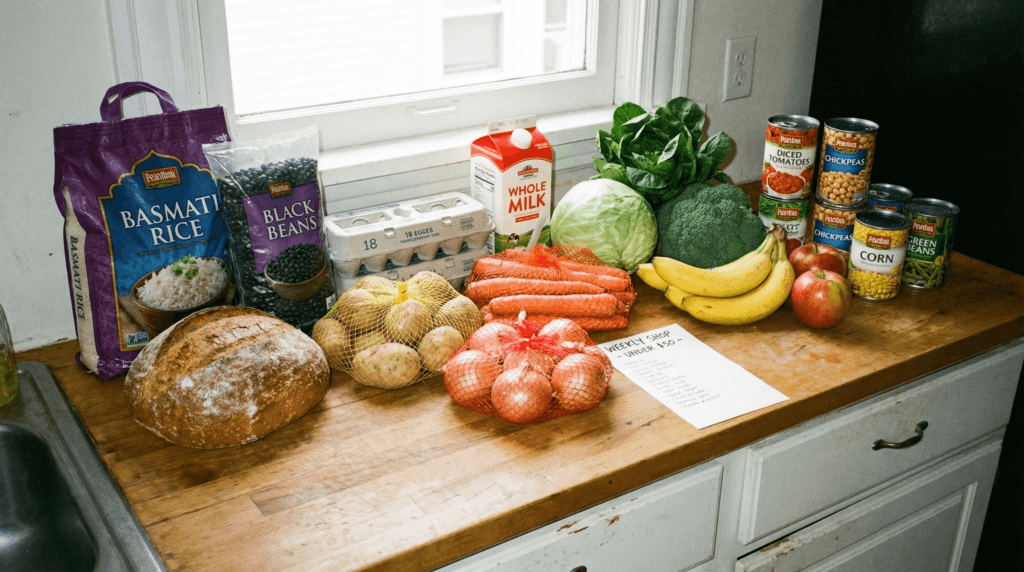
Shopping on a tight budget led me to figure out which grocery staples stretch the farthest while still tasting great. Prices vary by location and season, so always check your local flyers or apps for the newest deals. Here’s how I usually build my $50 grocery list, with approximate prices (these can shift, so leave yourself a margin of a dollar or two):
- Rice (2 lbs) – $2.50 to $3
- Dried Beans or Lentils (1 lb) – $1.25 to $1.75
- Oats (18 oz) – $2
- Pasta (1 lb) – $1.25
- Bread (loaf) – $1.50 to $2
- Eggs (dozen) – $2
- Chicken thighs or drumsticks (2 lbs) – $5 to $6 (swap tofu for plantbased)
- Milk (half gallon) – $2
- Greek yogurt (32 oz) – $3
- Carrots (2 lbs) – $2
- Onions (3 lb bag) – $2
- Potatoes (5 lb bag) – $3
- Frozen peas, green beans, or broccoli (1 lb bag) – $1.25
- Fresh seasonal veggies (bell pepper, spinach, tomato, etc.) – $5 (grab what’s on sale!)
- Bananas (1 bunch) – $1.25
- Canned tomatoes or tomato sauce – $1
- Canned beans (12 cans if you don’t want dried) – $1.50
- Peanut butter – $2
Total: Around $44 to $49, depending on exact local pricing, sales, and quantities. If you get a little extra room (say you find a coupon or a sale), I usually add apples, tofu, cheese, or another veggie.
Setting Up Your Weekly Meal Plan Template
I like to work from a base template each week for three good reasons: it saves a ton of time, helps cut food waste, and makes sure every meal has some balance. Here’s a look at my favorite weekly format:
- Breakfast: Always built around oatmeal, eggs, or yogurt. Swap in toast if you need variety.
- Lunch: Rotating grain bowls, wraps, or hearty salads using leftovers and plenty of veggies.
- Dinner: Main grain (rice or pasta), protein (beans, eggs, or chicken), plus a veggie.
- Snacks: Fruit, yogurt, sandwiches, or veggie sticks with dip.
This simple framework makes shopping and prepping super easy, and it can be adjusted for different taste buds every week. You can switch out a couple of ingredients and feel like you’re eating something new every day, even if you use the same base items.
The Real Life $50 Weekly Meal Plan Example
So here’s what one week of meals actually looks like when I follow my $50 budget with what I listed above. I’ve included portion sizes and snack options, so you’ll have an idea how filling this plan is, too.
Day 1
- Breakfast: Oatmeal with sliced banana and a scoop of peanut butter
- Lunch: Rice bowl with black beans, roasted carrots, sautéed spinach, and salsa (made from canned tomatoes, onion, and spices)
- Dinner: Baked chicken thighs, roasted potatoes, and steamed frozen broccoli
- Snack: Greek yogurt with a little granola (if you have it), carrot sticks
Day 2
- Breakfast: Scrambled eggs with toast and banana
- Lunch: Chickpea salad sandwich (mashed canned chickpeas, mayo or yogurt, onion, celery if on hand) on bread
- Dinner: Spaghetti with homemade tomato sauce, sautéed spinach on the side
- Snack: Sliced apples or another piece of fruit, yogurt
Day 3
- Breakfast: Oatmeal pancakes (made with oats, milk, and egg), topped with banana and peanut butter
- Lunch: Leftover chicken bowl (chopped chicken, rice, roasted carrots, veggies)
- Dinner: Lentil curry (lentils, onion, carrot, canned tomatoes, spices), served over rice
- Snack: Celery sticks and peanut butter, or a slice of toast with jelly (if you have it)
Day 4
- Breakfast: Greek yogurt with sliced banana and a handful of oats or crushed cereal
- Lunch: Pasta salad with peas, diced carrots, onion, and a mayo/yogurt dressing
- Dinner: Eggs fried with potatoes and onions, side of sautéed greens
- Snack: Fruit or veggie sticks
Day 5
- Breakfast: Peanut butter toast with sliced banana, glass of milk
- Lunch: Rice and bean bowl with roasted peppers and onions
- Dinner: Chicken drumsticks with oven roasted potatoes and green beans
- Snack: Yogurt parfait (yogurt, fruit, oats)
Day 6
- Breakfast: Scrambled eggs with sautéed onions and toast
- Lunch: Leftover lentil curry with rice
- Dinner: Pasta with chicken and veggies in a light tomato sauce
- Snack: Carrot sticks with ranch or hummus (homemade if possible)
Day 7
- Breakfast: Oatmeal with peanut butter and a sprinkle of cinnamon
- Lunch: Egg and veggie scramble, toast on the side
- Dinner: Veggie stir fry with rice, using up any extra veggies
- Snack: Sliced fruit or yogurt
Even with a tight budget, the meals stay quite varied because of ingredient combos. Dinners are built around whatever’s left. If you have more potatoes, it becomes hash. More veggies? Stir fry time.
Shopping Smart on a $50 Budget
The difference between staying under $50 and blowing your budget always comes down to how, and where, you shop. Here are some tips that totally changed how I approach my grocery runs:
- Shop with a List: Not only does this stop impulse buys, it helps you evaluate what you can skip if there’s a sale on something better.
- Use Flyers, Rewards, and Apps: I always check flyers for the week’s best bargains (especially on produce, eggs, and proteins). Bonus points for rewards cards or cashback apps; you can sometimes trim $2 to $5 just by using them.
- Buy Store Brands: Most store brand items are just as good (or literally the same product) for less money. They’re my default for everything except spices and baking soda.
- Buy in Bulk (If Possible): Bulk rice, oats, beans, or flour are almost always cheaper per serving. If you’re shopping for just yourself, split sacks with a buddy or buy the smallest available bulk size.
- Avoid Packaged or “Convenience” Foods: Even a frozen meal that looks cheap per box adds up fast. Stick with basics; you’ll get way more food, and it’ll taste fresher, too.
- Go for InSeason Produce and Frozen Veggies: Fresh inseason fruits and veggies are less expensive and better tasting. In the offseason, frozen veggies are a great buy; you get more nutrients per dollar and less food waste.
I also try to shop at stores known for good produce prices or strong weekly specials. Some discount grocers or even international markets are awesome spots for things like rice, beans, spices, or bulk onions and potatoes, sometimes for half the regular price at a chain store.
Meal Prepping, Batch Cooking, and Making Food Last
One trick that makes $50 stretch a lot farther is to plan food prep in batches. Meal prep isn’t just a trend on social media; it’s actually super useful when you’re on a tight budget. Here’s what works for me:
- Cook starches ahead: Cook rice, lentils, or pasta for multiple days. Store in airtight containers and scoop out what you need for each meal.
- Prechop veggies: Take 30 minutes on your shopping day to prep veggies for sides, snacks, and stir fries. You’re less likely to let them wilt before you get to them.
- Batch cook proteins: Roast or grill a whole batch of chicken, beans, or tofu at once.
- Prep breakfasts: Portion oats or pancake mix in jars, boil a few eggs, or portion yogurt cups to grab and go.
- Freeze what you won’t use by midweek: If you spot milk or bread getting close to spoiling, freeze it in servings for the rest of the week.
Try to keep an eye on the “use by” dates and rotate through items with the shortest shelf life first, like greens or dairy. This way, you get through your haul without tossing anything in the compost bin.
How to Build Delicious Meals from Simple Ingredients
Spending less doesn’t mean bland or boring. Flavor comes from using simple seasonings and switching up textures or combinations. Here are my goto ways for making affordable ingredients shine:
- Play with herbs and spices: Even two or three cheap spices can turn rice and beans into chili, curry, or stir fry. Onion powder, garlic powder, cumin, and paprika are affordable and last for months.
- Use sauces and dressings: I throw together simple dressings using oil, vinegar, mustard, and whatever herbs I have. Homemade salsa from canned tomatoes, lime juice, onion, and salt adds tons of flavor for pennies.
- Mix textures: Roasted veggies add crunch, creamy yogurt brings coolness, and sautéed onions or garlic make everything taste better.
- Get creative with leftovers: Leftover roasted potatoes get turned into hash. Old bread becomes croutons or toasted for breakfast. Soups can be remixed with new veggies or grains to keep lunch interesting.
Pretty soon, you’ll develop a handful of sauces, spice mixes, or cooking methods you love, and you can rotate them onto new meals with whatever supplies you have on hand.
The Role of Protein in a Budget Meal Plan
Protein is the biggest food expense for most people, so this is where I always get strategic. You definitely don’t need steak or fish every week to eat well. Here are smart ways I’ve worked protein into my $50 meal plans:
- Rely on eggs and beans: Eggs offer protein and healthy fats. Beans and lentils are filling and handle any flavor. Both are cheap, versatile, and easy to prep in big batches.
- Choose chicken, not steak: Chicken thighs and drumsticks almost always beat chicken breasts and red meat on cost. Rotisserie chickens, if on a good sale, are a pretty solid value and make the best leftovers.
- Try canned fish and nuts (if the budget allows): Canned tuna or salmon can fit in some weeks, especially when there’s a sale. Peanut butter or sunflower seed butter also offer a protein boost in snacks or breakfast.
- Consider tofu or tempeh: If you lean more plantbased, tofu is awesome in stir fries, curries, salads, and scrambles. Prices vary, but most stores carry affordable options (especially Asian groceries).
If you track your portion sizes, it’s easy to stretch a couple of pounds of chicken for the majority of dinners, and then fill in with beans, eggs, and plant proteins so that every meal feels satisfying.
Making the Best Out of Leftovers
Turning one meal into the next day’s lunch is the habit that’s probably saved me the most money and sanity. I usually cook a double portion at dinner and package half for lunch the next day. If you’re cooking for one, leftovers don’t get boring if you change up sides, sauces, or even just throw everything into a tortilla or on top of rice.
- Roasted veggies become burrito fillings or salad toppers.
- Chicken or beans show up in wraps, stir fries, and bowls later in the week.
- Pasta sauces can go over baked potatoes, rice, or scrambled eggs.
The key here is to look at what’s left in the fridge every night, and get just a little creative. This keeps you eating well and feeling accomplished about zero food waste.
Snacks and Treats: Sticking to Your Budget
If you love snacks or have an afternoon sweet tooth, you don’t have to go without. I usually keep a few affordable snack ideas on my list:
- Fruit, apples, bananas, seasonal goodies
- Homemade popcorn from kernels
- Veggie sticks with peanut butter or yogurt based dip
- Toast or open face sandwiches
- Yogurt parfaits with a little fruit or oats
The trick is to buy snacks that double as breakfast or lunch sides, instead of getting single use junk food that disappears after one movie night.
Sample Grocery List (With Pricing)
Here’s a sample rundown of one real week’s $50 grocery haul based on regionally average prices:
- Rice (2 lbs): $2.50
- Dried black beans (1 lb): $1.25
- Pasta (1 lb): $1.25
- Bread: $2
- Oats (18 oz): $2
- Eggs (1 dozen): $2
- Chicken thighs (2 lbs): $6
- Milk (0.5 gal): $2
- Greek yogurt (32 oz): $3
- Cheddar cheese (8 oz): $2
- Potatoes (5 lbs): $3
- Onion (3 lbs): $2
- Carrots (2 lbs): $2
- Bananas (1 bunch): $1.25
- Green beans (frozen, 1 lb): $1.25
- Canned tomatoes (15 oz): $1
- Canned chickpeas (15 oz): $0.90
- Spinach (fresh, 5 oz): $2
- Bell pepper (2): $2
- Peanut butter: $2
This usually brings me in between $46 and $49, depending on sales and size options. With the extra few dollars, I either stock up on another canned good, a jar of salsa, or treat myself to a discount find in the produce aisle.
Adapting the Plan: Plant Based, Gluten Free, and More
If you’re eating plant based, gluten free, or have certain allergies, the system totally works with some easy swaps:
- Switch out chicken for tofu or tempeh, or just add another can of beans or lentils (keep an eye on protein totals).
- Choose gluten free grains like brown rice, quinoa (if you find a deal), or gluten free oats and pasta.
- When dairy free, use plant based milk and a big tub of plain soy yogurt.
- Some nut butters, like sunflower or soynut butter, are usually affordable and allergy friendly.
The approach doesn’t change—you just sub in what works for your diet and adjust prices when needed. I always recommend keeping an eye on in store markdowns and coupons for swaps like this.
FAQs About Planning Meals on a $50 Budget
Is $50 a week really enough for healthy eating?
Yes, you can absolutely cover the basics with $50 per week, even with fluctuating food prices. Keep your focus on whole ingredients like grains, beans, eggs, and veggies, and you’ll get good nutrition and filling meals. It takes a bit of planning at first, but it quickly becomes a habit.
What happens if produce or eggs go up in price?
If prices spike, just switch in more frozen or canned goods, or lean heavier on grains and beans (which tend to be more price stable). Buy the cheapest fruits or vegetables of the week. You can also shave off extra “nicetohave” options like cheese or “treat” items for a week or two.
What if I don’t have time to cook every meal?
Batch cooking is your friend. Prepping rice, beans, chicken, or roasted veggies once or twice a week saves you from having to cook fresh meals daily. Breakfasts and snacks can all be portioned out and ready to grab on busy mornings.
Do you ever get bored eating this way?
I thought I would, but rotating spices, sauces, and simple recipes makes a huge difference. Trying one new ingredient or side per week (even if it’s just a different veggie or sauce) helps a lot. Plus, the variety in meal styles—bowls, soups, wraps, salads, and stir fries—keeps things interesting.
Tips for Sticking to Your Plan (and Enjoying It)
If you start planning meals with a hard budget, expect a little trial and error your first couple of weeks. These habits helped me stay on track and make the process enjoyable:
- Be flexible with brands, sizes, and exact ingredients. If chicken is over budget, switch in beans or eggs and buy more veggies.
- Shop once a week, and only once a week. That way, you’re less tempted by impulse buys or “just in case” extras.
- Keep an eye on leftovers, and freeze anything you won’t get to within 23 days.
- Go easy on yourself if you go over by a dollar or two. The goal is progress and learning, not perfection from day one.
- Share your meals or batch prep with a friend to save time, split bulk items, or swap recipes.
- Celebrate wins; when you find a great deal, make a new dish, or cut food waste, make a note for next week’s plan.
This way, meal planning for $50 ends up being empowering rather than stressful.
Resources for Budget Meal Planning
Over time, I’ve found some online tools pretty handy for building $50 (or less) meal plans:
- Budget Bytes: Awesome recipes and full meal plans, many with price breakdowns.
- Eat Right – Academy of Nutrition and Dietetics: Nutrition tips for all budgets.
- SNAP-Ed / USDA Buy and Prepare on a Budget: Shopping and recipe resources designed for limited budgets.
- Local grocery store apps: Many have digital coupons, weekly ad scans, and budget friendly meal ideas based on what’s on sale right now.
How Meal Planning on a $50 Budget Changes Over Time
The first few times you try this, it might feel like you’re making sacrifices. Once you’re in the habit, though, the whole process gets easier and more fun. You’ll get to know the stores with the best produce deals, get comfortable experimenting with new recipes, and start saving even more through smart substitutions.
Eventually, you’ll probably find your own rhythm, maybe with Friday “pantry nights” where you use up odds and ends, or themed dinners that rotate. Your cooking will naturally become more creative, and your confidence in the kitchen will go up along with your savings.
When $50 Won’t Stretch (and What to Do About It)
Even with careful planning, there might be some weeks where sticking to $50 isn’t possible. Maybe your area experienced a price spike, or you have guests, or you’re just hungrier than usual. Here are some things I do when the budget is extra tight:
- Use what’s already in the pantry or freezer. Half a bag of frozen peas, oddsandends pasta, or an extra can of beans can help fill in any gaps.
- Focus on superbudget proteins: more dried beans, lentils, and eggs. Skip pricier meats or specialty items for a week.
- Shop at discount stores, dollar stores, or local markets when possible.
- Scale back “snack” or treat items, or substitute in an extra serving of a budget friendly side like potatoes or rice.
It’s all about doing the best you can with what’s available. If a week comes up short, don’t stress. It helps you get even better at stretching resources next time.
Building a Repeatable System: The Real Secret
The absolute best thing about sticking to a $50 weekly grocery budget is how it gives you a strong, repeatable system for saving money, not just a one time “challenge.” Each week, it gets easier to create tasty, nourishing meals, use up what you have, and get creative with new ingredients. Your shopping list basically becomes second nature, and you’ll spot new deals everywhere.
Try It Yourself
If you’re ready to try eating well on $50 for a week, start with a simple plan using the guidelines here. Use the provided shopping list template, try out a few basic recipes, and tweak as you go. With a little practice, you’ll find the meals you love that keep you full, happy, and on budget.
I’m always happy to share tips, answer questions, or swap recipes. Feel free to reach out or leave a comment below with your favorite frugal meal ideas!