
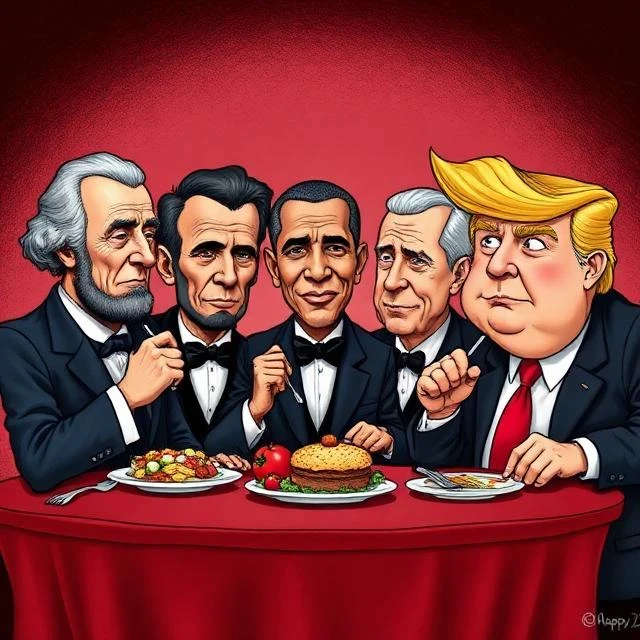
Beginning at the origin of America, the dining habits of George Washington and the Founding Fathers weren’t as lavish as you would think. Washington, generally known for his simple tastes, often preferred meals of hoecakes served with honey and butter, a far cry from what might be expected of someone in his position. He also enjoyed meals featuring fish, nuts, poultry, wild game, as well as seasonal produce fresh from Mount Vernon’s gardens. George Washington typically only ate two hearty meals each day: breakfast around 7 a.m. and dinner about 3 p.m. Washington’s diet was dictated mostly by his physical health, particularly his dental issues. When he first became president, he only one had tooth remaining and depended on dentures, which restricted his ability to eat certain foods. This led him to prefer softer foods, such as cornmeal hoecakes and puddings. Coffee or tea was common in the evening, and he was known to drink a few glasses of wine or a beer as well.
The contrast between presidential tables and everyday American meals at the time was quite stark. The average American’s diet was heavily reliant on what was locally available: corn, beans, pork, and potatoes were staples. Yet, Washington often dined on more refined dishes, most likely influenced by European tastes, thanks to his time spent across the Atlantic and the influence of his wife’s recipes and upbringing, blending British culinary traditions with new world ingredients.
Possessing sprawling plantations, the Founding Fathers had the advantage of a broader palette of ingredients at their disposal, taken from their own resources. Local fare like corn and squash were prominent, but imported goods such as tea, sugar, and spices also filled their pantries, showing a blend of cultivated tastes and regional necessity.
Times of war required adaptation and adjustment, of course. During the revolutionary periods, meals had to be modest, compact, and easy to prepare. Foraged foods, salted meats, and whatever could travel well became essential for those away from the comforts of home dining.
The diets of the time don’t just tell us about their dining preferences, but they also paint a broader picture of the era’s society and economy, revealing a lot about how the class status and where you lived played in the availability and utility of certain foods. Understanding these eating habits offers a fascinating glimpse into how historical contexts shaped meals at the most influential tables in America.
Early Presidential Diets vs. the Average American’s Plate: A Nutritional Comparison
The early American presidents often enjoyed more lavish meals compared to the everyday meals of the average citizen. While presidents like John Adams and Thomas Jefferson could afford imported delicacies and diverse menu items, most Americans worked within the limits of local food systems, relying on staple foods like corn, bread, and pork.
A closer look at the time shows how economics and social factors played crucial roles in shaping these dietary differences. Wealth and position granted access to imported goods and fine domestic produce, while everyday Americans ate a simpler diet based on what was around them locally. This gap highlighted the broader economic divides and how those with means enjoyed a precisely curated table.
The average diet during the late 18th and early 19th centuries in America largely depended on geography. In New England, seafood, corn, and beans were dietary staples. In Southern states, diets were heavily reliant on pork, corn, and sweet potatoes. Diets were generally high in calories, a necessity for the labor-intensive lifestyle of the time, but this varied noticeably from the often rich and diverse spread found at the president’s residence.
Presidential meals occasionally reflected regional diversity, influenced by travel or personal preference. Jefferson, for instance, was famously fond of French cuisine following his time in France. This shows how personal and geographical experiences began to contribute to a gradually broadening palate, albeit largely confined to those in power or wealth.
Trade and agriculture were critical to these differences. With better trading routes came access to varied food products, which in turn shaped how meals were prepared and consumed by those who could afford the luxury. Thus, the divergence in diets of presidents and citizens also subtly narrates a story of progress in agriculture and trade, hinting at how these two pivotal sectors evolved together through the years.
Presidential Health Nuts: The Presidents with the Healthiest Diets
In the modern narrative of American presidents, some have stood out for their commitment to maintaining healthy diets. These leaders took conscious steps towards nutrition, not just for personal well-being but also to set a national example.
Abraham Lincoln was known to be generally uninterested in food, occasionally even forgetting to eat due to his focus on political matters. He often missed breakfast, lunch, and even dinner unless reminded, and he usually ate simple and modest meals. He drank mostly water and milk (with dinner) and avoided wine or spirits. Lincoln’s favorite foods reflected his Midwestern upbringing, generally being familiar and comforting. He did enjoy a few indulgences, including sweet desserts and rich, hearty dishes like chicken fricassee.
Thomas Jefferson had a predominantly vegetable diet, with a compliment of meat. He was well ahead of his times and may have been the first “foodie” and even the beginning of the farm-to-table strategy of today. He was known for his consumption of a variety and large amount of vegetables. Jefferson would even bring seeds home from his travels or be given them as a gift to grow and harvest at his home in Monticello, in an experimental garden.
Millard Fillmore is often considered one of the worst American presidents, but he has been thought to be the first US president to take a real interest in their health. He did not smoke or drink and was very careful to remain physically and mentally healthy, realizing the value of taking a break.
Some claim that Rutherford B. Hayes was the healthiest American president. Hayes is one of the least known presidents, but according to a recent study, he is considered one of the healthiest. He followed a strict dietary routine of simplicity and moderation. Hayes was president at a time when smoking and alcohol were prohibited in the White House, and although he suffered a few war wounds he lived to be 77.
Jimmy Carter, the first US president to live to 100, was known for his commitment to simple, wholesome, and sustainable eating practices and was highly dedicated to various charities, some focused on getting healthy food to all Americans, regardless of income.
More recent presidents have also shown a keen interest in healthy eating. George W. Bush started the HealthierUS, an initiative that aims to promote community wellness and improve people’s lives. Barack Obama promoted healthy dietary practices both within the White House and to the general public. With initiatives like the “Let’s Move!” campaign championed by First Lady Michelle Obama, the Obama administration encouraged healthier eating habits across the country.
The presidents have often been supported by personal chefs who emphasize nutrition, ensuring that meals served are not only delectable but also balanced. Modern advancements in nutrition science have meant that presidential meals can be both thoughtfully curated and health-focused.
Healthy eating proved essential for their roles, allowing them to tackle the grueling demands of leadership with vigor. Their dietary choices often reflected broader health trends, influencing public perception and lifestyle trends. Being health-focused as a leader sets a precedent, showing how strategic dietary habits can enhance one’s stamina and clarity in decision-making.
Uncommon Presidential Culinary Choices: Presidents with the Quirkiest Tastebuds
Presidents, with their unique access to diverse foods, have occasionally indulged in some rather unexpected culinary choices. While most stick to classic and wholesome meals, some have become known for their rather eccentric palates.
Thomas Jefferson, for instance, was quite the food connoisseur, but he also enjoyed experimenting with unusual flavors and meals. Snails, considered a delicacy in France, found their way to his dining table, surprising many of his contemporaries. His adventurous tastes were a nod to his diplomatic stint overseas and his curiosity about global cuisines.
Ulysses S. Grant always required that any meat he was given to be cooked well-done and heavily charred if possible.
James A. Garfield loved to eat squirrel stew, which he most likely learned from growing up on a farm and having to hunt or farm his own food.
Calvin Coolidge earned quite a reputation for his unusual food preferences. Stories of him enjoying pickles with breakfast and the occasional sardine were told. These quirky tidbits give a glimpse into the lighter side of presidential life, perhaps reflecting Coolidge’s unconventional personality.
Woodrow Wilson would regularly consume a cup of juice with a few raw eggs cracked into it to start the day. Wilson generally considered eating to be just a necessity or chore, and his doctor recommended the juice and eggs to gain weight and consume calories.
Richard Nixon brought middle-American comfort foods into the spotlight, but with a little twist. He is remembered for favoring cottage cheese paired with copious amounts of ketchup, stirring conversation and amusement.
Ronald Reagan was famous for his love of jellybeans, which he developed while quitting pipe smoking.
Such culinary quirks not only reveal personal preferences but also contribute to the humanizing narrative of these high-standing figures. It’s the quirky habits that make them relatable, showing that even those in power have their little indulgences and whims.
Presidential food choices, even the odd ones, can influence popular food trends slightly, whether through public intrigue or media portrayal. Ultimately, these unique culinary tastes add a layer of intrigue to the presidential dining history, inviting us all to explore and perhaps even embrace our own food curiosities.
The Unhealthiest Presidential Diets: A Journey Through Presidential Indulgences
Some presidents have been known to indulge in diets that raise eyebrows for their sheer lack of nutritional value. This isn’t always just about occasional indulgence; sometimes, it reflects longstanding eating habits that could impact health and energy levels.
Lyndon B. Johnson was a Texan through and through, which often meant meals high in fat and cholesterol. Barbecue and Tex-Mex were staples in his diet, which while delicious, often lacked the balance needed for long-term health.
Ulysses S. Grant wasn’t a president known just for his military prowess; his love for heavy meats and rich foods was well-documented. Combined with a penchant for brandy, Grant’s diet wasn’t one your doctor would likely recommend.
Warren G. Harding had a notorious love for pies and fatty foods, often neglecting the vegetables his wife pushed for. His diet remained a subject of gossip amongst those who wondered how it might affect his health. His preference for easy, comforting foods sometimes overshadowed better nutritional choices.
High-calorie favorites are a common theme in presidential history. While the stress and demands of the presidency might drive one to seek comfort in food, it’s a reminder of the need to prioritize nourishment for sustaining health.
It’s important to remember that our food choices directly impact our overall health and wellness. While historical presidencies operated in a different context, modern insights into nutrition remind us that balance and moderation are the key to thriving, even in roles of immense pressure like the presidency.
Presidential Diet and Efficacy: Did Daily Meals Affect Their Leadership?
The relationship between what presidents eat and how they perform isn’t just anecdotal—it carries the weight of historical and modern insights. It’s well known that diet directly influences how we feel, think, and act, which are critically important aspects of a presidency.
Looking back, some dietary habits of past presidents give rise to questions regarding their impact on effectiveness and decision-making. Take Harry S. Truman, for instance, who stuck to a hearty breakfast to kickstart his day. Truman’s morning ritual included fruit, toast, bacon, and eggs, all crafted based on sustenance, believed to fuel a day of tough calls and long hours.
Then, there’s the case of John F. Kennedy, whose light eating habits often were tailored to accommodate both health needs and the demands of a high-stress job. His preference for small meals spaced throughout the day aimed to maintain his energy levels without weighing him down.
While specific examples show varied dietary approaches, a clear pattern emerges: presidents who remained mindful of their nutrition often found themselves well-equipped to handle the stresses of their monumental roles. Today, with better understanding of nutrition, this mind-set continues to reinforce itself.
It’s crucial to recognize that the physical aspect of leadership cannot be separated from mental acumen. A well-nourished body aids a sharp mind, essential for the multifaceted challenges of leading a nation.
As we reflect on the dietary stories of past presidents, we gain insight into how their eating choices may reflect their priorities and underline the timeless truth that what fuels us, fuels our work and lives. Their legacy in the culinary arena can serve as a gentle reminder of the need for balanced nutrition, amidst all types of pressures.
I really enjoyed how this post connects food to power, culture, and context rather than just listing what each president liked to eat. The contrast between early presidents like George Washington and the average American plate was especially compelling—it highlights how access, trade routes, and land ownership quietly shaped leadership lifestyles. I’m curious, though: do you think some of the “refined” presidential meals were more about status signaling than actual preference? For example, with Thomas Jefferson bringing French influence into the White House, was that culinary curiosity, diplomacy through food, or subtle cultural branding?
The section on health and leadership also raises interesting questions. You mention how nutrition may have influenced stamina and decision-making—do you think there’s a measurable link between dietary discipline and presidential longevity or effectiveness? It would be fascinating to compare someone like Jimmy Carter, known for simple eating and long life, with presidents who indulged more heavily. I’d love to see a deeper dive into whether stress drove indulgence—or whether indulgence was simply a reflection of the era’s norms around masculinity, success, and hospitality.
Thanks Iris! Tried to take a different spin on the topic and find something to interest everyone.