
Worst Tick Season in a Decade: Here’s Your Survival Guide
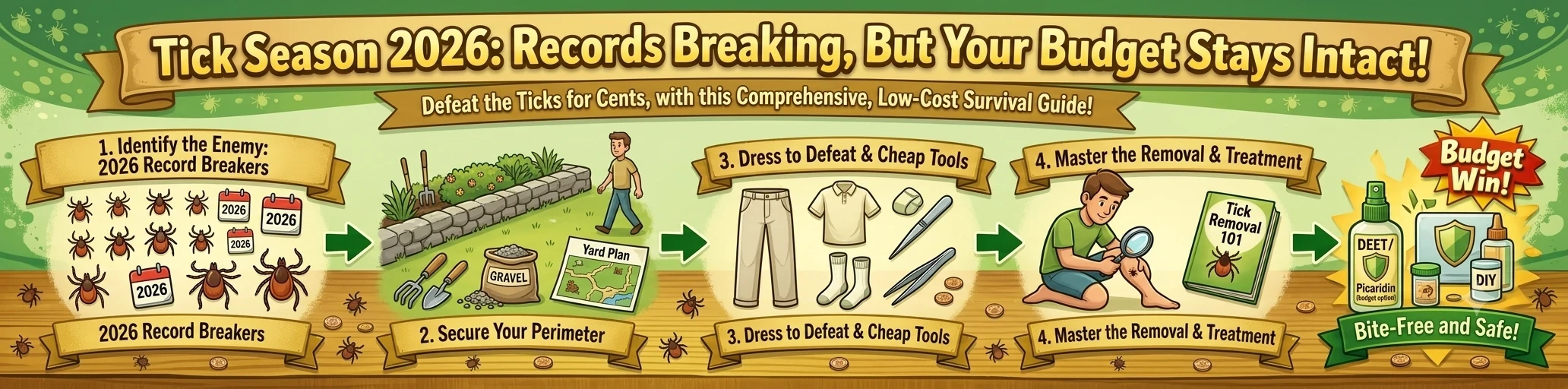
Why does it seem everyone’s talking about ticks and Lyme disease this year, and how to protect your family without spending a fortune?
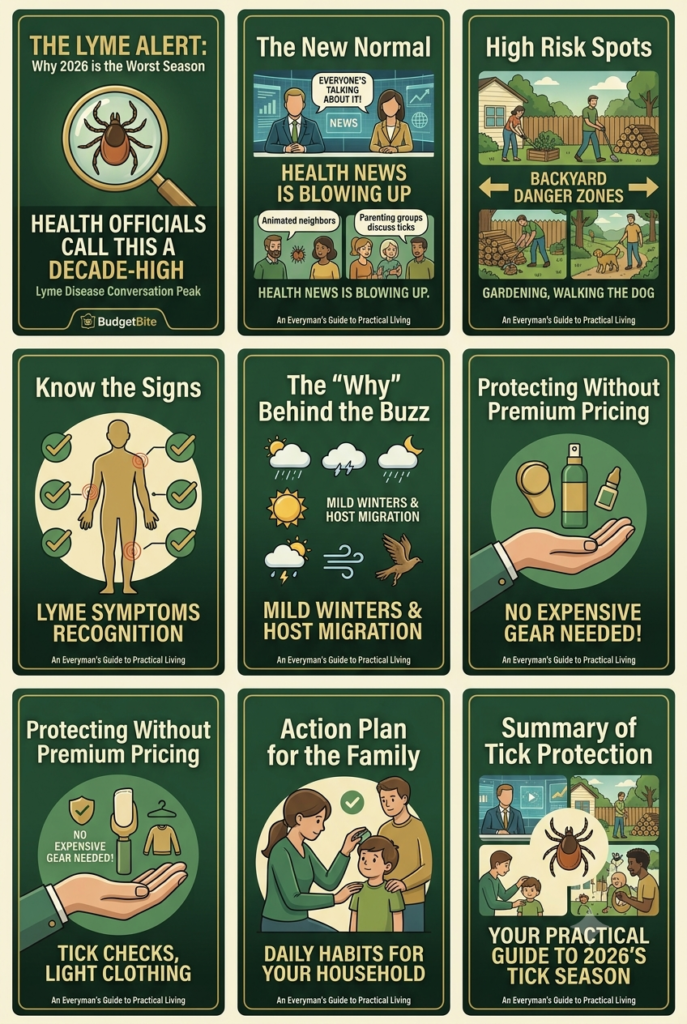
If it feels like every news outlet, parenting group, and neighbor with a backyard is suddenly talking about ticks, you’re not imagining it. Health officials are calling 2026 one of the worst tick seasons in nearly a decade, and Lyme disease is at the center of the conversation. The good news? Protecting yourself and your family doesn’t require expensive gear or a hazmat suit. Just a little know-how and a few smart habits.
If you’ve spent any time outdoors this spring, gardening, hiking, walking the dog, or just letting the kids run around the backyard, you’ve probably heard someone mention ticks lately. Maybe a friend found one crawling up their arm after a walk in the woods. Maybe your local news ran a story about emergency rooms seeing more tick bite visits than usual. Or maybe your vet warned you to start flea-and-tick prevention earlier than normal this year.
There’s a reason this topic keeps popping up everywhere right now, and it’s not just media hype. And it’s also not just media hype. Let’s break down exactly what’s going on, why Lyme disease in particular is getting so much attention, and, most importantly, how you can protect your household using simple, affordable strategies that fit into a budget-conscious lifestyle.
Why Is Everyone Suddenly Talking About Ticks?
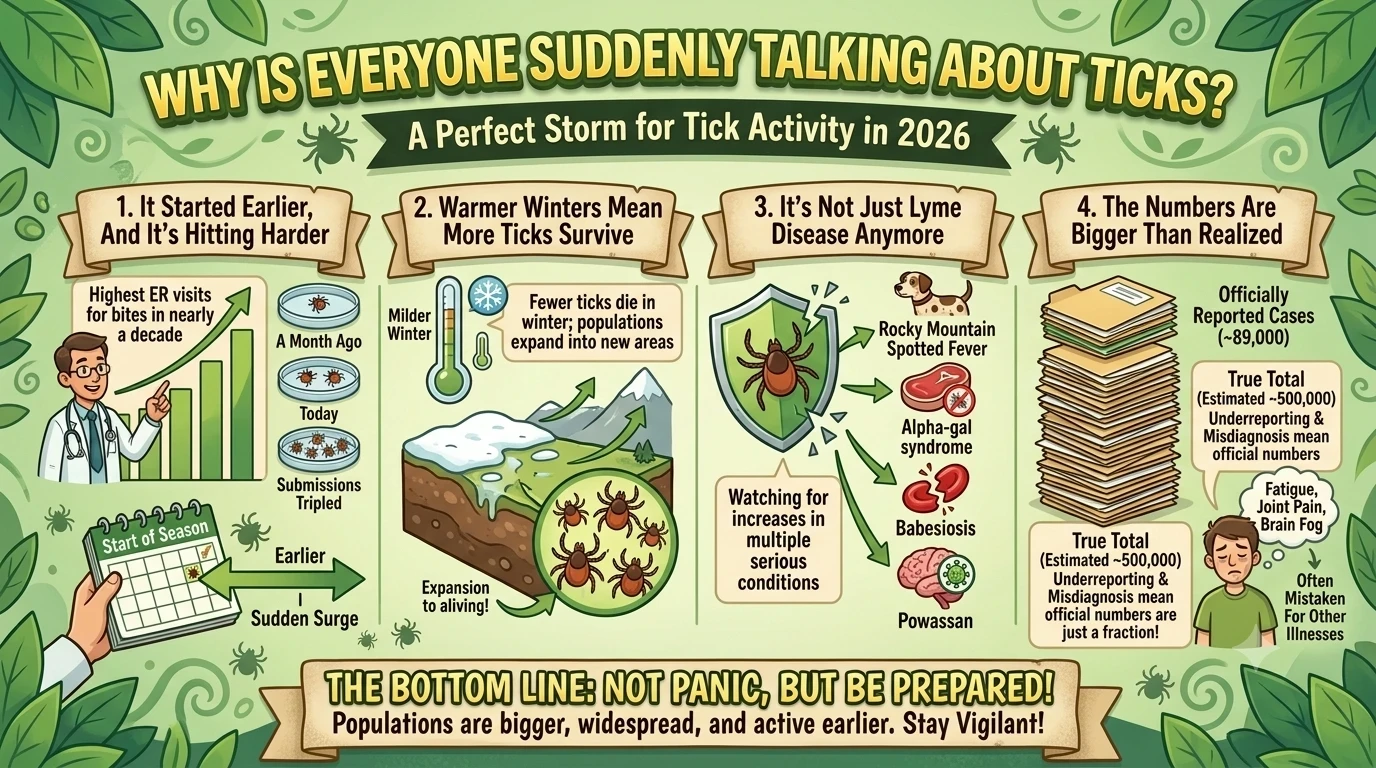
Tick season happens every year, so why does 2026 feel different? A few things are converging at once, and together they’re creating what health experts describe as a near-perfect storm for tick activity.
1. It Started Earlier, And It’s Hitting Harder
Health officials have noted that emergency room visits for tick bites this year are at the highest levels seen in nearly a decade for this time of year. That’s not a small uptick, it’s a significance jump that has doctors and public health departments paying all close attention. In some regions, reports of ticks being submitted for testing have tripled compared to just a month earlier.
Normally, tick activity ramps up gradually as the weather warms. This year, ticks seem to have gotten a head start, which means people are encountering them earlier in the season than they’re used to, often before they’ve started thinking about tick prevention at all.
https://www.rspca.org.uk/adviceandwelfare/pets/general/ticks
2. Warmer Winters Mean More Ticks Survive
Ticks are cold-blooded creatures, and historically, harsh winters have helped keep their populations in check. Cold snaps kill off a portion of the tick population each year, which naturally limits how many survive into spring.
But as winters trend milder across much of North America and Europe, fewer ticks die off during the colder months. That means more ticks survive to reproduce, and tick populations are expanding into areas where they weren’t previously common, including higher elevations and more northern regions that used to be too cold for them.
3. It’s Not Just Lyme Disease Anymore
Lyme disease is the name most people associate with ticks, and for good reason, it’s the most commonly reported tick-borne illness in the United States. But it’s far from the only health concern on the radar this year. Health officials are also watching for increases in:
- Rocky Mountain Spotted Fever, a potentially serious bacterial infection
- Alpha-gal syndrome–, a delayed allergic reaction to red meat triggered by certain tick bites
- Babesiosis– a parasitic infection that affects red blood cells
- Powassan virus, a rarer but more serious viral infection spread by the same ticks that carry Lyme
The fact that one tiny bite could potentially expose you to multiple different illnesses is part of why this season has caught so much attention.
4. The Numbers Are Bigger Than Most People Realize
Every year, an estimated 31 million Americans are bitten by ticks, and roughly 476,000 people are treated for Lyme disease annually. To put that in perspective, that’s more new cases each year than several diseases that get far more attention.
And here’s the part that surprises a lot of people: officially reported Lyme disease numbers — which hover around 89,000 confirmed cases in recent reporting years, likely represent only a fraction of the real total. Researchers believe underreporting and misdiagnosis mean the true number of annual cases is closer to half a million. Lyme disease symptoms can mimic so many other conditions (fatigue, joint pain, brain fog) that it’s often missed or mistaken for something else entirely.
The Bottom Line
Tick populations are bigger, more widespread, and more active earlier in the year than usual. They’re carrying a wider range of illnesses than most people realize, and Lyme disease, already underreported, is expected to be a bigger concern than ever this year. The takeaway isn’t to automatically panic. It’s to be prepared and ready.
Meet the Ticks: A Quick Field Guide
Not all ticks are the same, and knowing which ones are common in your area can help you understand your specific risk. Here’s a simple breakdown of the ticks most likely to cause problems this season.
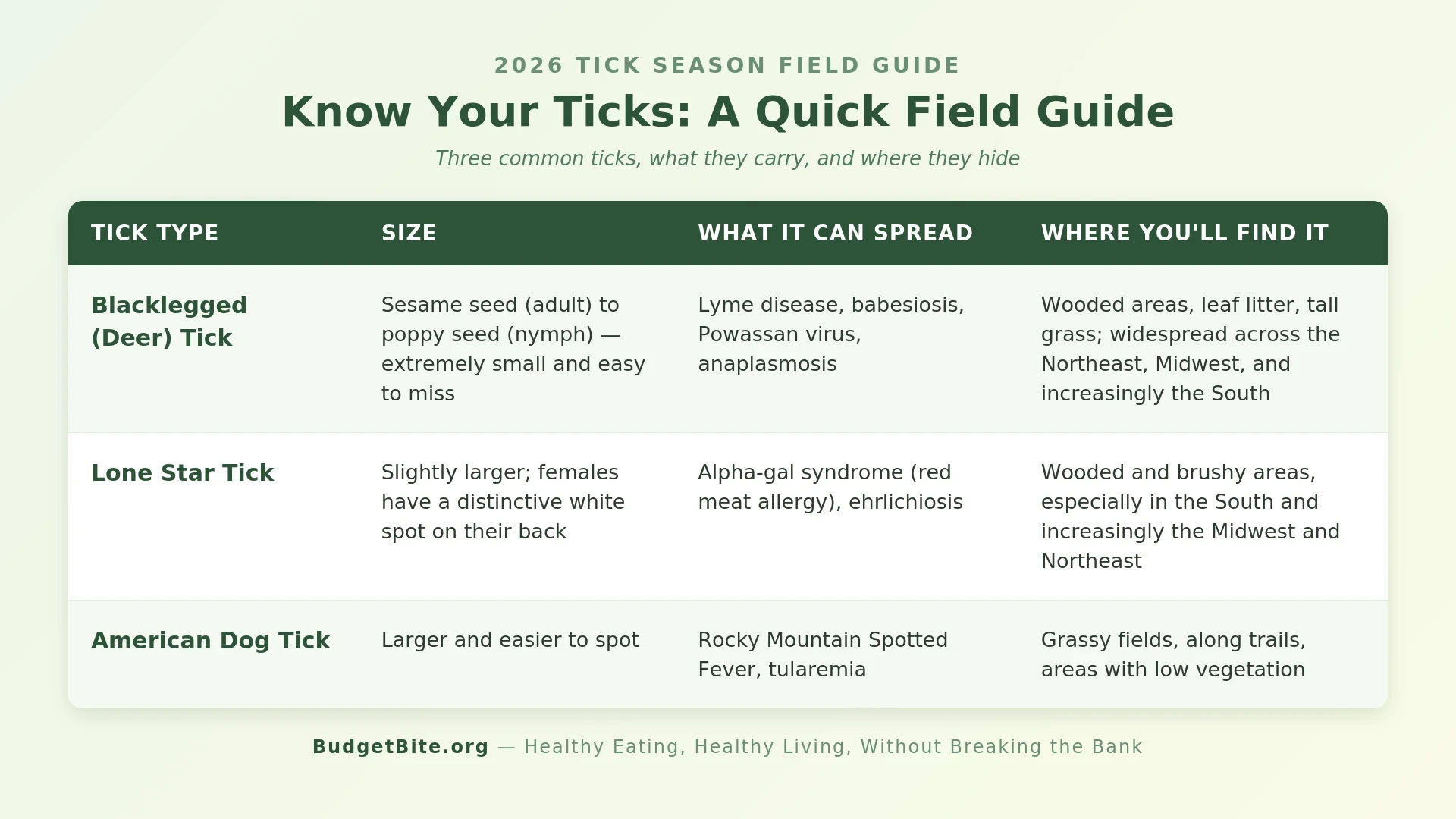
Notice anything they have in common? They all prefer the same kind of habitat: shady, brushy, leafy spots with tall grass. That’s exactly the kind of environment many of us walk through without thinking twice, along hiking trails, around the edges of yards, in community gardens, or even just brushing past overgrown bushes on a walk.
🌿 Garden and Yard Tip
If you love gardening (and let’s be honest, a lot of us do, it’s one of the best ways to eat well on a budget), keep your grass trimmed and clear leaf litter from garden edges. Ticks don’t like dry, sunny, open spaces, so creating a mowed buffer zone between your lawn and any wooded or brushy areas can meaningfully reduce your risk.
What Does Lyme Disease Actually Look Like?
One of the trickiest things about Lyme disease is that early symptoms are easy to brush off as “just feeling run down.” Knowing what to watch for can make a huge difference in catching it early, when it’s much easier to treat.
Early Symptoms (Days to a Few Weeks After a Bite)
- A red, expanding rash, sometimes (but not always) with a “bullseye” appearance
- Fatigue that feels disproportionate to your activity level
- Fever and chills
- Headache
- Muscle and joint aches
- Swollen lymph nodes
Later Symptoms (If Left Untreated)
- Joint pain and swelling, especially in larger joints like the knees
- Neurological symptoms, such as numbness, tingling, or facial drooping
- Heart palpitations or irregular heartbeat
- Persistent fatigue, brain fog, and sleep disturbances
⚠️ A Word of Caution
Not everyone with Lyme disease gets the classic bullseye rash — in fact, many people never notice one at all. If you’ve spent time outdoors and start experiencing flu-like symptoms, fatigue, joint pain, or unusual aches in the days or weeks afterward, it’s worth mentioning your outdoor activity to a healthcare provider, even if you don’t remember being bitten. Early treatment with antibiotics is highly effective, but waiting too long can allow the infection to spread and cause more complicated, harder-to-treat symptoms involving the nervous system, heart, or joints.
Your Budget-Friendly Tick Prevention Toolkit
Here’s the part you’ve been waiting for. The good news is that effective tick prevention doesn’t require fancy products or expensive treatments. A few consistent, low-cost habits go a long way.
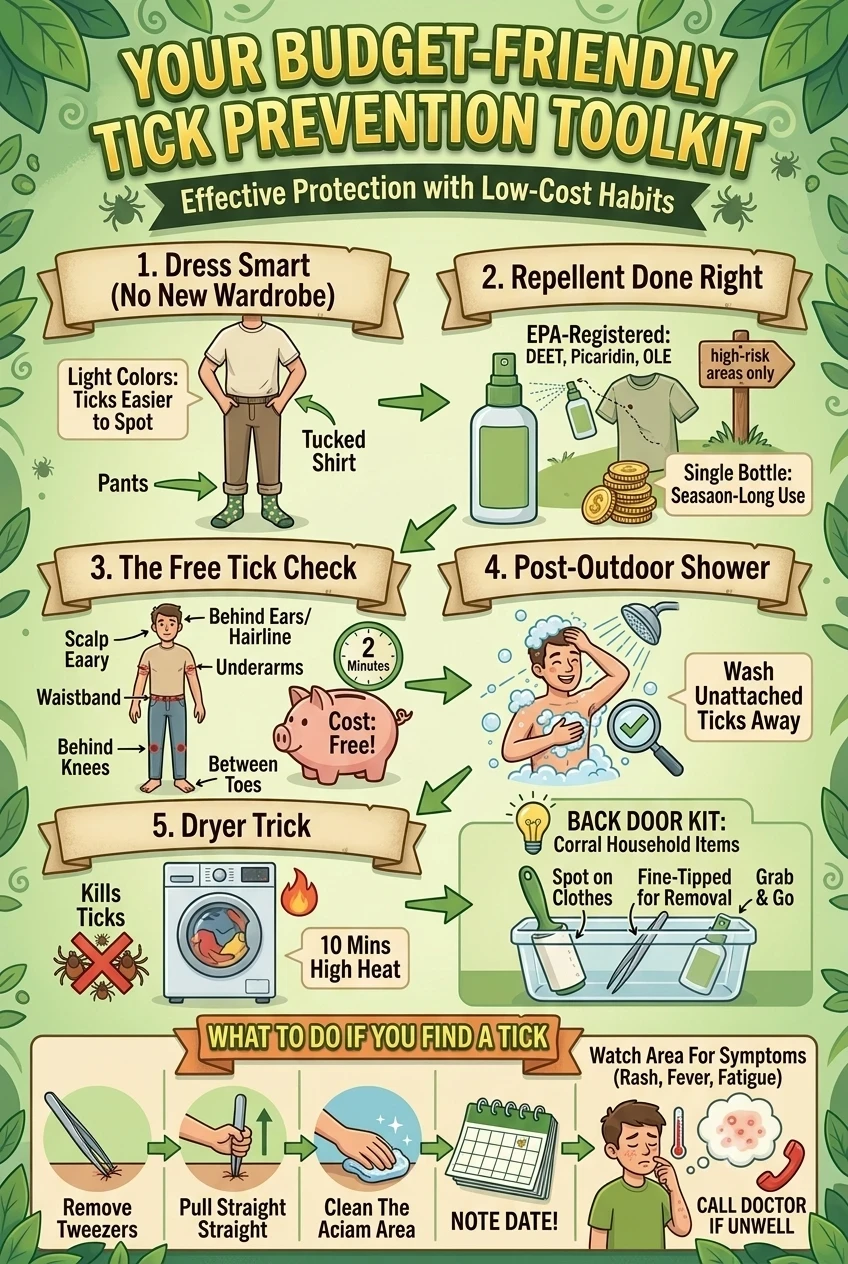
1. Dress Smart (No New Wardrobe Required)
You don’t need special “tick-proof” clothing, just a few simple adjustments to what you probably already own:
- Tuck your pants into your socks. It might not win any fashion awards, but it creates a physical barrier ticks can’t easily cross.
- Wear light-colored clothing. Ticks are dark and easier to spot against light fabric — meaning you can find and remove them before they ever bite.
- Tuck in your shirt. Same principle: fewer gaps for ticks to find their way to skin.
2. Repellent Doesn’t Have to Be Pricey
Look for repellents containing DEET, picaridin, or oil of lemon eucalyptus, all of which are widely available at any pharmacy or big-box store, often for just a few dollars. A single bottle can last an entire season if used only when you’re heading into higher-risk areas like trails, tall grass, or wooded yards. You don’t need to spray it on every single day, just when you know you’ll be in tick habitat.
3. The Tick Check: Your Free, Most Powerful Tool
This is, hands down, the most cost-effective prevention strategy there is, because it costs absolutely nothing. Ticks typically need to be attached for a while before they can transmit disease, so finding and removing them quickly dramatically lowers your risk.
After spending time outdoors, do a quick tick check on:
- Behind the knees and ankles
- Around the waistband and underarms
- Behind the ears and along the hairline
- The scalp (run fingers through hair, especially for kids)
- Between fingers and toes
- The back of the neck
Make this part of your routine the same way you’d remind kids to wash their hands before dinner. A quick once-over while changing clothes or before a shower takes less than two minutes and is genuinely one of the best defenses you have.
4. Shower After Outdoor Time
Showering within a couple of hours of coming inside can help wash away ticks that haven’t yet attached, and gives you another natural opportunity to do a visual check.
5. Don’t Forget the Laundry Trick
Tossing outdoor clothes into the dryer on high heat for about 10 minutes can kill any ticks that hitched a ride on your clothing, even before you wash them. This is a free step that uses an appliance you already own.
💡 Budget Tip
If you garden, hike, or spend a lot of time outdoors, consider keeping a small “outdoor kit” by your back door: a bottle of repellent, a lint roller (great for spotting ticks on clothing), and a pair of fine-tipped tweezers. Most households already have these items lying around — corral them into one spot so they’re easy to grab before heading outside.
What to Do If You Find a Tick
Finding a tick on yourself or a family member can be alarming, but staying calm and acting methodically makes a big difference.
- Use fine-tipped tweezers. Grasp the tick as close to the skin as possible.
- Pull straight up with steady, even pressure. Avoid twisting or jerking, which can leave mouthparts embedded in the skin.
- Clean the area with soap and water or rubbing alcohol after removal.
- Note the date. Knowing when the bite occurred can help a healthcare provider assess risk if symptoms develop later.
- Watch the area for a few weeks. Keep an eye out for rash, fever, fatigue, or other symptoms.
If you’re unsure about a bite, or if you start feeling unwell in the days or weeks afterward, don’t hesitate to reach out to your doctor. Being upfront about potential tick exposure helps your healthcare provider connect the dots faster — and earlier treatment generally means a much smoother recovery.
Don’t Forget Your Pets
If you have a dog (or even an outdoor cat), they’re just as much a target for ticks as you are — and they can bring ticks into your home even if they never bite the pet itself.
- Talk to your vet about prevention options. Many flea-and-tick preventatives are surprisingly affordable, especially when bought in larger multi-month packs.
- Check your pet after outdoor time, especially around the ears, neck, and between toes.
- Brush pets regularly,it’s a great opportunity to feel for any small bumps that could be an attached tick.
Looking Ahead: Could a Lyme Vaccine Change the Game?
Here’s a development worth keeping an eye on: a new Lyme disease vaccine candidate has been moving through late-stage clinical trials, with results anticipated sometime this year. If it proves effective and eventually becomes available, it could be a meaningful addition to the prevention toolbox — especially for people living in or frequently visiting high-risk areas.
For now, though, prevention through everyday habits remains the most accessible and reliable tool we have. Even if a vaccine becomes available down the road, things like tick checks, protective clothing, and yard maintenance will likely remain part of the recommended routine for years to come.
Putting It All Together
It’s easy to feel overwhelmed when headlines start using phrases like “worst tick season in a decade.” But the reality is that the same simple, low-cost habits that have always helped reduce tick risk are still your best defense — they’re just more important than ever this year.
Here’s a quick recap of the budget-friendly essentials:
- Tuck pants into socks and wear light-colored clothing in tick habitat
- Use an affordable repellent when heading into grassy or wooded areas
- Do a daily tick check — it’s free and incredibly effective
- Shower after outdoor activities
- Toss outdoor clothes in the dryer on high heat
- Keep your yard mowed and clear of leaf litter near wooded edges
- Don’t ignore unexplained flu-like symptoms after time outdoors
- Protect your pets, too — they’re part of the family
None of this requires a big investment of time or money. It’s about building small habits into your routine — the same way you might meal prep on Sundays or check unit prices at the grocery store. A little awareness now can save you a lot of hassle (and medical bills) later.
Great Information for going outdoors and being safe, I like the idea of wearing light clothes and tucking your pants in your socks, so ticks won’t get on you, I do hike in trails parks near me and I do the lawn cuts in my yard and aware of tall grass areas too void. I like the safety things you can do like putting your clothes in the hot dryer and taking a shower soon after yard work or walking in woods and trails.
Thanks Sojiel! Just takes a little afterthough, don’t want to forget to rid of ticks.