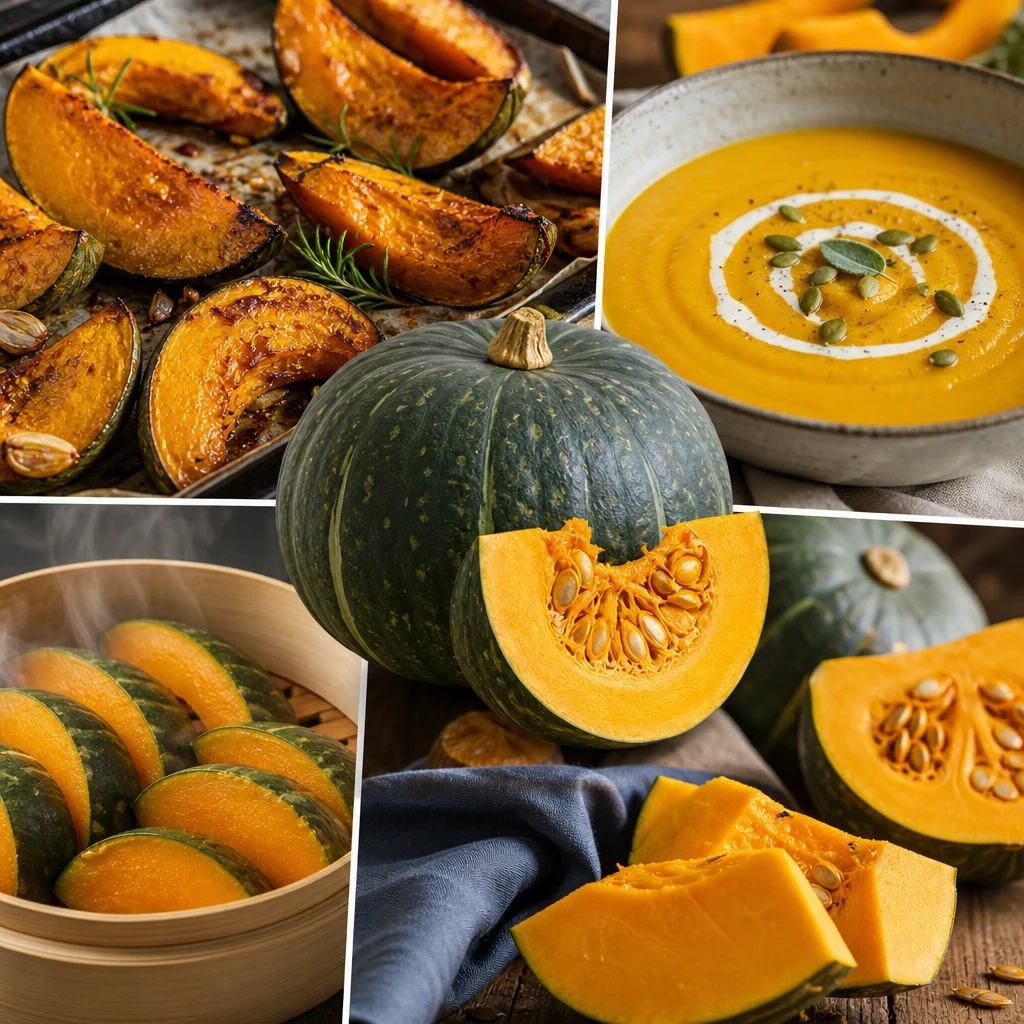
I declare this is it: the best vegetable of all time, the one I could haul home by the armful and still feellike I don’t have enough. If you haven’t cooked with kabocha squash yet, 2026 is definitely the year to start. This humble Japanese pumpkin “sunshine squash” is quietly becoming one of the most talked-about vegetables in budget-conscious kitchens, and once you taste its naturally sweet, creamy flesh, you’ll understand why. In this guide, we’ll cover everything from where kabocha comes from and what makes it so nutritious, to six easy recipes and a full week of meal ideas that will have you reaching for it again and again.
Kabocha squash is that girl, the cozy, sweet, creamy, “oh wow why didn’t I cook this sooner” queen of the produce aisle. If you haven’t cooked with it yet, 2026 is your year of enlightenment.
In this guide, we’re diving into everything: where kabocha comes from, why it’s basically a nutritional overachiever, six easy recipes, and a full week of meal ideas that’ll have you reaching for it again and again.
What Is Kabocha Squash?
It is a winter squash variety in the Cucurbita maxima family, the same family as buttercup and hubbard squash. It has a hard, deep green (occasionally orange or gray-green) rind with bright orange-yellow flesh inside. When cooked, that flesh turns velvety and almost custard-like, with a flavor that lands somewhere between sweet potato, pumpkin, and roasted chestnut.
Originally cultivated in Cambodia, kabocha was brought to Japan by Portuguese traders in the mid-16th century, where it quickly became a kitchen staple. From there it spread throughout Asia, taking on different names and starring roles in different cuisines, known as kabocha in Japan, danhobak in Korea, and fak thong in Thailand. Each culture developed its own way of showcasing the squash’s natural sweetness, from Japanese simmered dishes to Thai curries to Korean porridges and pancakes.
Now, after centuries as a beloved staple across Asia, kabocha is having its moment in American grocery stores. Food forecasters have flagged it as one of the vegetables to watch through 2026 and 2027, right alongside other breakout budget produce like cabbage and broccolini. For home cooks, that means kabocha is becoming easier to find, often sold whole or pre-cut into wedges at mainstream grocery stores — not just specialty Asian markets.
Why it’s trending: Kabocha checks every box that’s driving 2026 food trends, it’s affordable, fits the “fiber-forward” movement, supports the shift away from ultra-processed snacks, and offers natural sweetness without added sugar. It’s basically dessert that’s also a vegetable.
Kabocha isn’t just delicious, it’s a genuinely nutrient-dense food that punches well above its weight for the price. Here’s what a typical 1-cup cooked serving (about 150g) brings to the table:
Calories: Roughly 30-40, lower than most other winter squashes
Fiber: A solid dose that supports digestion and helps you feel full longer
Vitamin A (beta-carotene): Excellent levels, supporting eye health and immune function
Vitamin C: A meaningful contribution toward your daily needs
Potassium: Helps support healthy blood pressure
Antioxidants: Beta-carotene and other flavonoids that help fight oxidative stress
One especially helpful detail for anyone watching blood sugar: kabocha has a lower glycemic impact than sweet potato, meaning it raises blood sugar more slowly and helps maintain steadier energy levels throughout the day. Combined with its fiber content, it’s a smart swap if you’re managing diabetes risk or just trying to avoid the mid-afternoon energy crash.
Kabocha’s deep orange color is a visual cue for its beta-carotene content, which your body converts into vitamin A as needed. This nutrient plays a key role in eye health, immune function, and skin repair — making kabocha a particularly good choice during cold and flu season when your immune system could use the extra support. The combination of vitamin C and beta-carotene also makes kabocha a strong source of antioxidants, compounds that help neutralize the everyday cellular damage caused by stress, pollution, and normal metabolism.
And don’t underestimate the seeds. Like pumpkin seeds, kabocha seeds are rich in healthy fats and a modest amount of plant-based protein, making the “waste” part of this vegetable into a free bonus snack (more on that below).
Kabocha vs. Other Popular Squashes: How Does It Compare?
If you’re standing in the produce aisle trying to decide between kabocha, butternut, acorn squash, or sweet potato, here’s how they stack up:
The biggest advantage kabocha has over the others? You don’t have to peel it. The skin softens completely when roasted and is entirely edible, which means less prep time, less waste, and more of that fiber making it onto your plate. Butternut and sweet potato both require peeling for most preparations, which adds prep time and means you’re throwing away a layer that, in kabocha’s case, is perfectly edible and nutritious.
Texture-wise, kabocha also has the edge for anyone who finds butternut squash a little watery or one-dimensional. Its denser, drier flesh holds up better in stir-fries and curries without turning mushy, and it caramelizes beautifully when roasted thanks to its higher natural sugar content.
How to Pick, Store, and Prep Kabocha Squash
Choosing the Best Squash
Look for one that feels heavy for its size, that’s a sign of high moisture content and good flavor.
The skin should be firm with no soft spots, cracks, or mold around the stem.
A duller, matte skin (rather than glossy) often indicates better ripeness and sweetness.
Don’t worry about a slightly uneven shape or scuffed-looking skin, kabocha is rarely sold for its looks, and minor blemishes don’t affect flavor.
Storing Kabocha
Whole, uncut: Store in a cool, dry place (not the fridge) for up to 1-2 months, similar to how you’d store a pumpkin.
Cut or cooked: Wrap tightly and refrigerate for up to 5 days, or freeze cooked flesh for up to 3 months.
Pre-cut from the store: Use within 2-3 days for best texture and flavor.
Cutting It Open (The Tricky Part)
Kabocha’s thick skin makes it one of the harder squashes to cut into. Here’s the easiest method:
Microwave the whole squash for 2-3 minutes to slightly soften the skin.
Place it on a stable cutting board and use a large, sturdy chef’s knife.
Cut it in half through the stem, then scoop out the seeds and stringy pulp with a spoon (save the seeds, see the tip box below!).
Cut into wedges or cubes as needed for your recipe. No need to peel.
Don’t toss the seeds! Just like pumpkin seeds, kabocha seeds can be rinsed, dried, tossed with a little oil and salt, and roasted at 325°F for 15-20 minutes for a free, crunchy snack. They’re a great way to get extra plant-based protein and healthy fats out of a vegetable you already paid for.
6 Budget-Friendly Kabocha Squash Recipes to Try This Season
Now for the fun part. Here are six ways to put your kabocha squash to work, ranging from a 5-minute side dish to a comforting weeknight curry. Most of these recipes serve 4 and cost well under $2 per serving.
1. Classic Caramelized Roasted Kabocha
Prep: 5 min | Cook: 30 min | Serves: 4
This is the simplest way to fall in love with kabocha. The natural sugars caramelize into golden-brown edges, creating something that tastes almost like dessert.
Ingredients:
1 small kabocha squash, halved, seeded, and cut into 1/2-inch wedges (skin on)
2 tbsp olive oil
1/2 tsp salt
1/4 tsp black pepper
1/2 tsp ground cinnamon (optional, for a sweeter profile)
Instructions:
Preheat oven to 425°F and line a baking sheet with parchment paper.
Toss the squash wedges with olive oil, salt, pepper, and cinnamon if using.
Arrange in a single layer, cut-side down for even caramelization.
Roast for 25-30 minutes, flipping halfway, until edges are deeply golden and the flesh is fork-tender.
Serve this as a side with grilled chicken, fold it into a grain bowl, or eat it straight off the pan as a snack, it’s that good.
2. Creamy Kabocha Squash Soup
Prep: 10 min | Cook: 35 min | Serves: 4-6
A naturally creamy soup that needs no heavy cream, kabocha does all the work itself.
Ingredients:
1 medium kabocha squash, halved and seeded
1 tbsp olive oil or butter
1 yellow onion, chopped
2 cloves garlic, minced
1-inch piece fresh ginger, grated
4 cups vegetable or chicken broth
1/2 tsp salt, plus more to taste
Pinch of nutmeg
Optional garnish: pumpkin seeds, drizzle of coconut milk, fresh herbs
Instructions:
Roast the squash halves cut-side down at 400°F for 35-40 minutes until very soft. Scoop out the flesh.
In a large pot, heat oil and sauté onion until translucent, about 5 minutes. Add garlic and ginger, cook 1 more minute.
Add roasted kabocha flesh, broth, salt, and nutmeg. Bring to a simmer for 10 minutes.
Blend until smooth using an immersion blender (or in batches in a regular blender).
Adjust seasoning, garnish, and serve hot.
This soup freezes beautifully, so consider doubling the batch and portioning leftovers for easy lunches throughout the week.
3. Japanese-Style Simmered Kabocha (Kabocha no Nimono)
Prep: 5 min | Cook: 20 min | Serves: 4
A traditional Japanese side dish — sweet, savory, and ready in under 30 minutes.
Ingredients:
1/2 kabocha squash, seeded and cut into 1.5-inch chunks (skin on)
1 cup water or dashi broth
2 tbsp soy sauce
1 tbsp mirin
1 tbsp sugar or honey
1 tsp sake (optional)
Instructions:
Place kabocha chunks skin-side down in a single layer in a wide pot.
Add water/dashi, soy sauce, mirin, sugar, and sake.
Cover and bring to a simmer over medium heat. Cook for 15-20 minutes, until the squash is tender but still holds its shape.
Gently shake the pot occasionally rather than stirring, to avoid breaking up the squash.
Serve warm or at room temperature as a side dish.
This dish is traditionally served alongside steamed rice and a protein like grilled fish or tofu, but it also makes a great addition to a bento-style lunch box.
4. Kabocha and Chickpea Curry
Prep: 10 min | Cook: 30 min | Serves: 4-6
A hearty, plant-based curry that’s filling, freezer-friendly, and costs just a few dollars per serving.
Ingredients:
1 tbsp coconut oil or vegetable oil
1 onion, diced
3 cloves garlic, minced
1 tbsp curry powder
1/2 tsp turmeric
1/2 small kabocha squash, cut into 1-inch cubes (skin on)
1 can (15 oz) chickpeas, drained and rinsed
1 can (13.5 oz) coconut milk
1 cup vegetable broth or water
Salt to taste
Cooked rice, for serving
Instructions:
Heat oil in a large pot over medium heat. Sauté onion until soft, about 5 minutes.
Add garlic, curry powder, and turmeric. Cook for 1 minute until fragrant.
Add kabocha, chickpeas, coconut milk, and broth. Stir to combine.
Bring to a simmer, cover, and cook for 20-25 minutes until squash is tender.
Season with salt to taste and serve over rice.
For extra protein, stir in cooked lentils or shredded rotisserie chicken in the last 5 minutes of cooking.
5. Stuffed Kabocha with Rice and Ground Turkey
Prep: 15 min | Cook: 45 min | Serves: 4
A complete, protein-packed meal served right inside the squash itself — great for meal prep or a cozy dinner.
Ingredients:
1 medium kabocha squash, halved and seeded
1 tbsp olive oil
1 lb ground turkey (or your protein of choice)
1 cup cooked rice
1/2 cup diced bell pepper
1/4 cup chopped onion
1 tsp dried thyme or Italian seasoning
Salt and pepper to taste
1/2 cup shredded cheese (optional)
Instructions:
Preheat oven to 375°F. Brush the inside of the squash halves with olive oil and place cut-side down on a baking sheet. Bake for 25 minutes to soften.
Meanwhile, brown the ground turkey with onion and bell pepper in a skillet. Season with thyme, salt, and pepper.
Stir in the cooked rice and combine well.
Flip the squash halves cut-side up and fill with the turkey-rice mixture. Top with cheese if using.
Return to the oven for 15-20 minutes until the squash is fully tender and cheese is melted.
Leftover halves reheat well in the microwave or a covered skillet, making this a great make-ahead lunch option.
6. Crispy Oven-“Fried” Kabocha Wedges
Prep: 10 min | Cook: 25 min | Serves: 4
A healthier take on tempura that gets its crunch from the oven instead of a deep fryer.
Ingredients:
1/2 kabocha squash, cut into thin wedges (skin on)
2 tbsp olive oil
1/2 cup panko breadcrumbs
1/4 cup grated parmesan (optional)
1/2 tsp garlic powder
1/2 tsp paprika
Salt to taste
Instructions:
Preheat oven to 425°F and line a baking sheet with parchment paper.
In a bowl, mix panko, parmesan, garlic powder, paprika, and salt.
Toss kabocha wedges in olive oil, then press each wedge into the panko mixture to coat.
Arrange on the baking sheet in a single layer and roast for 20-25 minutes, flipping halfway, until golden and crispy.
Serve with your favorite dipping sauce — a yogurt-based ranch or spicy mayo works great.
Kids tend to love these because they look (and taste) like fries, making them a sneaky way to add a vegetable to picky-eater plates.
A Simple One-Squash Meal Plan
Because kabocha keeps so well and yields so much, a single squash can realistically anchor several meals across a week. Here’s an example of how to stretch one medium squash (roughly 3 pounds) into multiple dishes from this post:
Day 1: Roast the entire squash at once (Recipe 1), eating about a third as a side dish for dinner.
Day 2-3: Use another third of the roasted squash to make Creamy Kabocha Soup (Recipe 2) — blend it straight in, skipping the separate roasting step since it’s already cooked.
Day 4-5: Use the final third in the Kabocha and Chickpea Curry (Recipe 4), adding it toward the end of cooking since it’s already tender.
Snack, anytime: Roasted seeds from the squash, prepared while you’re prepping Day 1’s dinner.
This approach means a single $3-5 squash can provide the base for a side dish, a batch of soup (with leftovers for lunch), and a curry dinner — likely four to six servings total, at a cost of less than $1 per serving for the squash itself.
Why Kabocha Squash Is a Smart Budget Buy
One of the best things about kabocha squash is how far it stretches. A single squash typically weighs 2-4 pounds and, depending on size, can yield enough for two to three separate meals — roast half tonight, save the other half for soup or curry later in the week. At roughly $1-2 per pound, that’s a remarkable amount of nutrition and meals for the price, especially compared to pre-packaged convenience foods.
It’s also worth considering the “cost per nutrient” angle. Because kabocha is so nutrient-dense — high in fiber, vitamin A, vitamin C, and potassium relative to its calorie count — you’re getting more nutritional value per dollar than you would from many lower-fiber, higher-cost convenience vegetables or pre-made sides.
Budget tip: Kabocha squash is typically in season and at its cheapest from early fall through winter, but many grocery stores now carry it nearly year-round thanks to its rising popularity. Stock up when you see it on sale — it stores well for weeks without refrigeration, so there’s no rush to use it all immediately.
Frequently Asked Questions
Do I need to peel kabocha squash? No. The skin becomes tender when roasted, simmered, or baked, and it’s completely edible. Peeling is optional and mostly a matter of preference.
Is kabocha squash the same as pumpkin?
They’re closely related, both part of the Cucurbita family, but kabocha has a denser, sweeter, and less watery texture than most carving or pie pumpkins, making it better suited for savory dishes as well as sweet ones.
Can I substitute kabocha for butternut squash in recipes?
Yes, in most cases. Kabocha is denser and sweeter, so it works especially well in soups, curries, and roasted dishes. You may want to reduce added sugar slightly since kabocha brings more natural sweetness to the table.
Is kabocha squash good for weight management?
Its combination of low calories, high fiber, and lower glycemic impact compared to many other starchy vegetables makes it a satisfying option that can support healthy eating goals without feeling restrictive.
Where can I buy kabocha squash?
Kabocha is increasingly available at mainstream grocery stores, often sold whole or pre-cut into wedges in the produce section near other winter squashes. It’s also commonly found at Asian grocery stores and farmers markets, especially in fall and winter.
Can I eat kabocha squash raw?
While technically edible raw, kabocha’s dense, starchy flesh is much more palatable and digestible when cooked. Cooking also helps release more of its beta-carotene for absorption.
Final Thoughts
Kabocha squash is one of those rare ingredients that delivers on every front: it’s affordable, it stores well, it’s packed with nutrients, it requires minimal prep (no peeling!), and it tastes genuinely delicious whether you roast it simply or turn it into a curry. As it continues to gain popularity in 2026, now is a great time to add it to your regular grocery rotation, your wallet, your taste buds, and your gut health will all thank you.

 I declare this is it: the best vegetable of all time, the one I could haul home by the armful and still feel like I don’t have enough. If you haven’t cooked with kabocha squash yet, 2026 is definitely the year to start. This humble Japanese pumpkin “sunshine squash” is quietly becoming one of the most talked-about vegetables in budget-conscious kitchens, and once you taste its naturally sweet, creamy flesh, you’ll understand why. In this guide, we’ll cover everything from where kabocha comes from and what makes it so nutritious, to six easy recipes and a full week of meal ideas that will have you reaching for it again and again.

 The biggest advantage kabocha has over the others? You don’t have to peel it. The skin softens completely when roasted and is entirely edible, which means less prep time, less waste, and more of that fiber making it onto your plate. Butternut and sweet potato both require peeling for most preparations, which adds prep time and means you’re throwing away a layer that, in kabocha’s case, is perfectly edible and nutritious.