
Postbiotic Foods on a Budget: Simple, Healthy Options That Fit Real Life
Most people have heard of probiotics and prebiotics, but postbiotics rarely get the spotlight, even though they may be one of the easiest and most affordable ways to support gut health. Unlike trendy supplements, postbiotics aren’t something you just buy straight off the shelf, they’re something your body creates, something your body makes when your gut bacteria break down fiber. That simple shift in understanding could completely change how you think about eating for better health. In other words, the real magic of gut health isn’t just what you eat, it’s what your body turns it into.
https://isappscience.org/resource/postbiotics/
https://www.health.harvard.edu/diet-and-nutrition/what-are-postbiotics
https://www.tandfonline.com/doi/full/10.1080/19476337.2024.2386412#d1e457
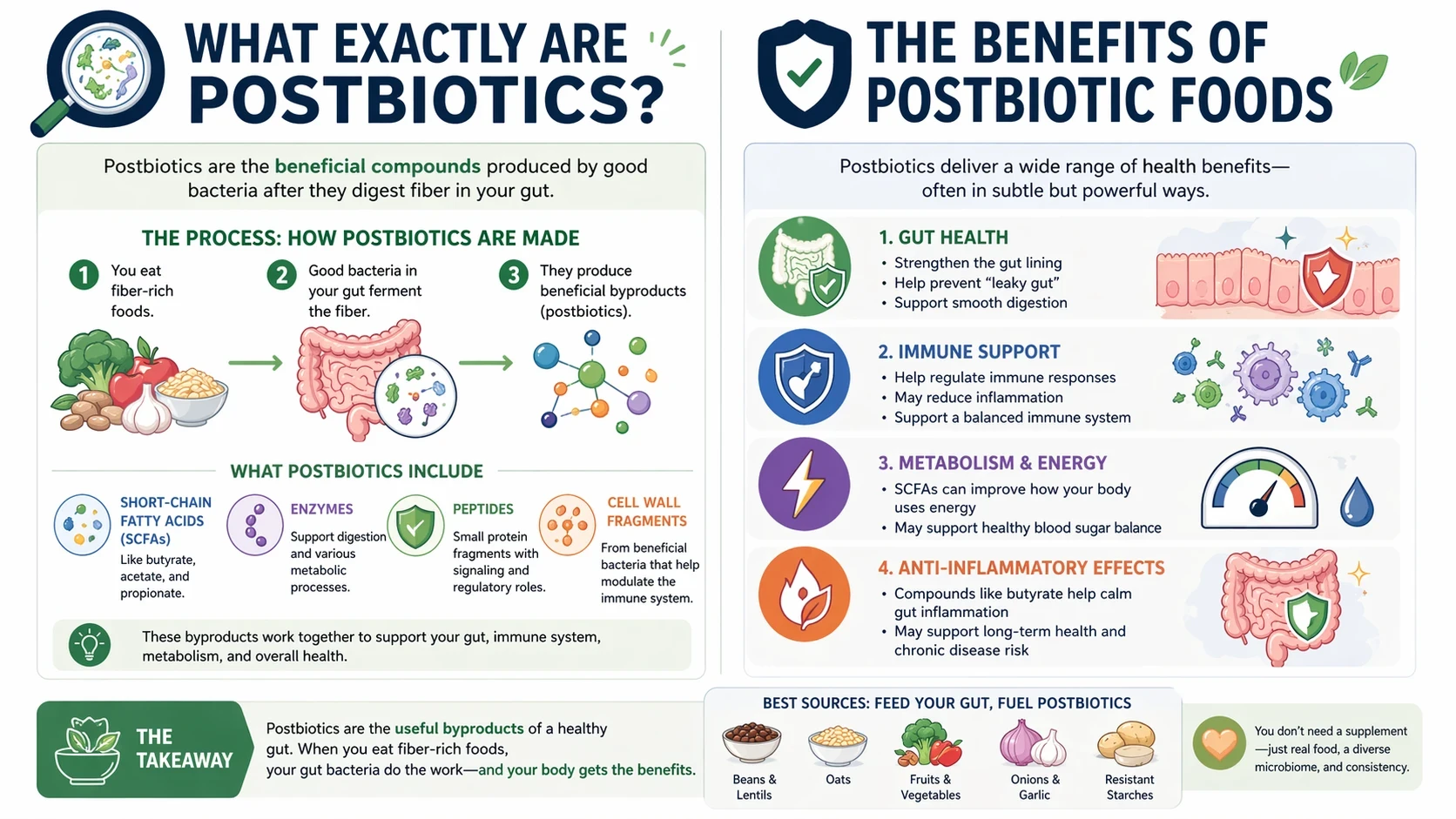
Why Everyone’s Talking About Postbiotics in 2026
Trying to “eat healthy” can get expensive fast. One week it’s powders, the next it’s supplements, and somehow every “simple wellness habit” ends up costing more than a full grocery trip. For anyone on a budget, or anyone with a busy life, that kind of advice just isn’t realistic or acheivable.
That’s where postbiotic foods come in. While probiotics and prebiotics get most of the attention, postbiotics are often the missing piece of the gut‑health conversation. They’re the beneficial compounds created during fermentation — and the good news is that many foods containing them are affordable, easy to find, and simple to use.
Most people don’t need a complicated health routine. They want food that fits their budget, takes little effort, and still offers real benefits. Postbiotic‑rich foods check all those boxes. Think yogurt, kefir, sauerkraut, miso, sourdough bread, and other fermented staples you can grab at any grocery store without overspending.
The best part is that they do not require a complete lifestyle overhaul. You do not need to meal prep for hours, hunt down specialty ingredients, or invest in expensive supplements. In many cases, adding postbiotic foods can be as simple as spooning yogurt into a bowl, adding sauerkraut to a sandwich, or stirring miso into a quick soup at the end of the day. Small, realistic habits; not expensive wellness trends.
What Exactly Are Postbiotics?
Postbiotics are helpful substances your body makes when good bacteria digest food during fermentation. If that feels a bit technical, think of it this way:
- Probiotics are the beneficial bacteria.
- Prebiotics are the fibers and compounds that feed those bacteria.
- Postbiotics are the useful substances created as a result.
These substances can include things like organic acids, enzymes, peptides, and short-chain fatty acids. You do not need to memorize or fully grasp those terms to get the big idea. What matters is that postbiotics are one of the reasons fermented foods are associated with digestive and overall wellness benefits.
One reason postbiotics have been overlooked is that probiotics have been easier to market. People understand the idea of “good bacteria,” and supplement companies have built entire product lines around that message. Postbiotics are less familiar, less flashy, and harder to explain in a quick label claim. But from a practical point of view, they’re often easier to work with because the beneficial compounds are already in the food.
That is especially appealing for people who want simple, low-stress ways to eat better. Instead of obsessing over the perfect supplement, refrigeration requirements, or whether live cultures survive processing, many shoppers can focus on affordable fermented foods that fit naturally into normal meals.
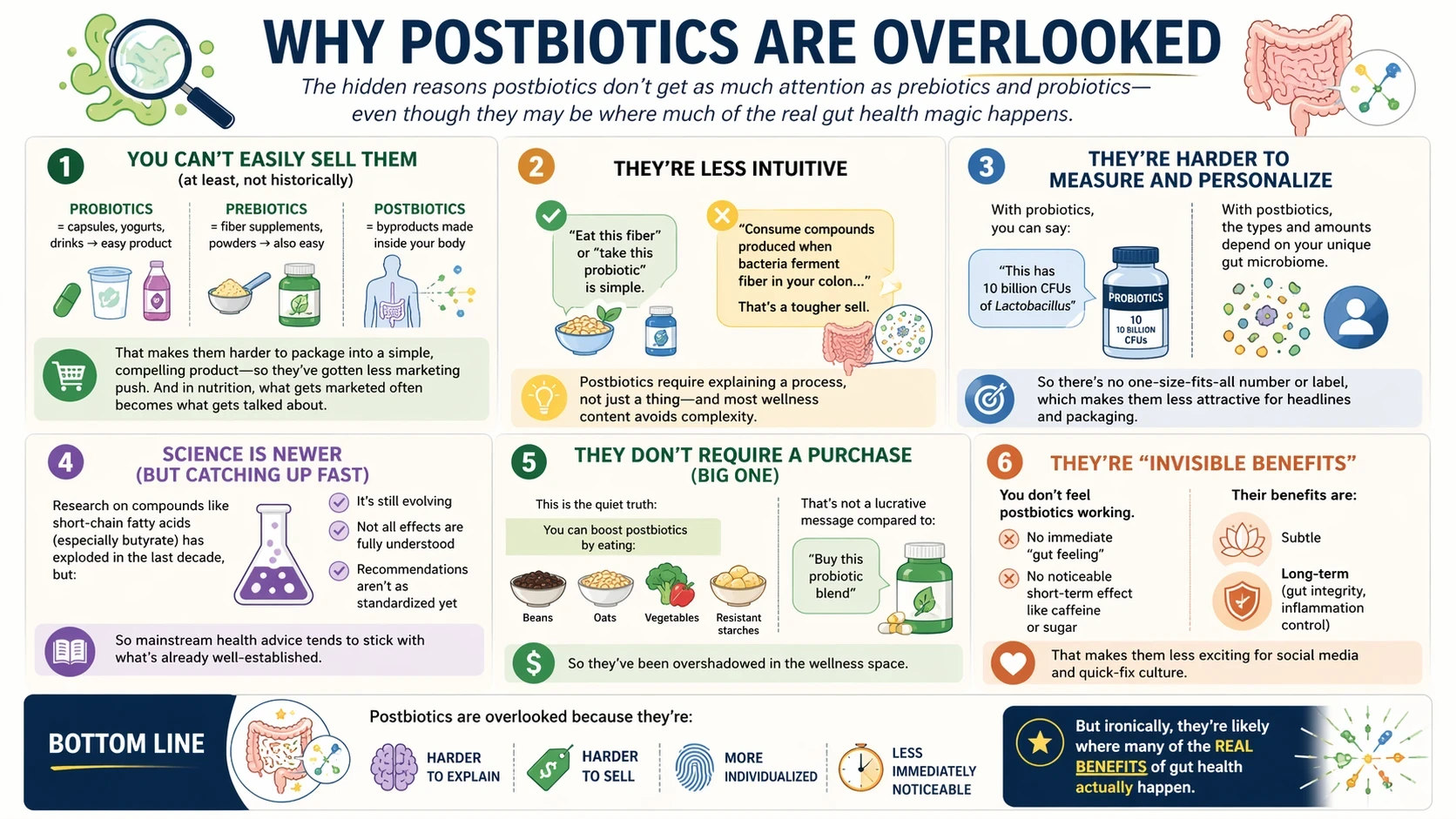
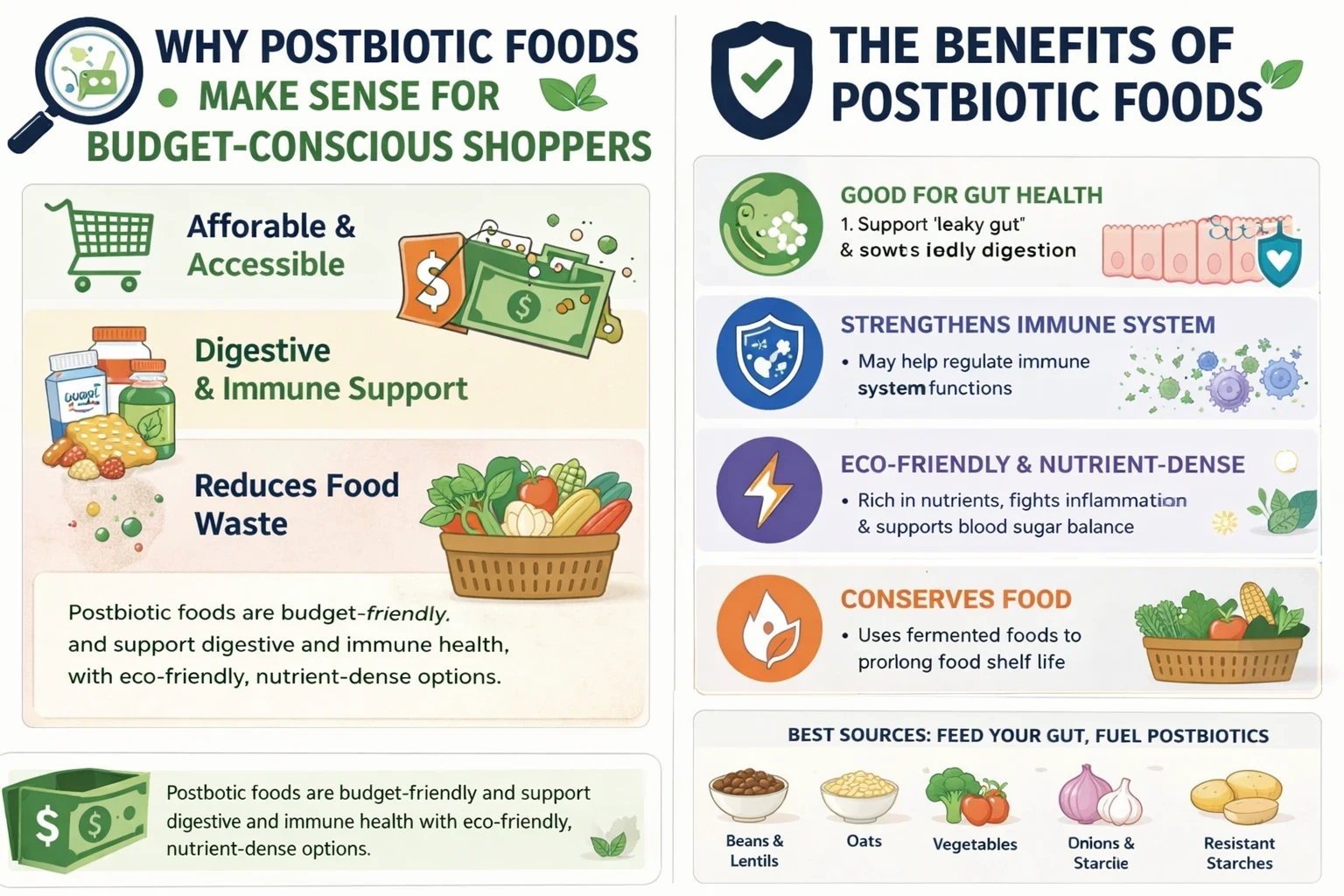
Why Postbiotic Foods Make Sense for Budget-Conscious Shoppers
When most people think about gut health, they picture expensive probiotic capsules, trendy drinks, and refrigerated wellness shots. Those products can drain a budget quickly — and many aren’t necessary for someone who simply wants a healthier, more balanced way of eating.
Postbiotic foods make more sense for budget-conscious shoppers because they are often regular grocery items, not specialty products. A tub of plain yogurt, a loaf of sourdough, a jar of sauerkraut, or a container of miso can stretch across multiple meals for a relatively low cost per serving. That matters more than the sticker price alone. A five dollar item that gives you ten servings can be a better value than a two-dollar snack that only lasts one sitting.
They also help reduce food waste. Foods like miso, vinegar, and fermented vegetables often have a decent shelf life, and many are used a little at a time. That means you are less likely to buy something once, forget it in the back of the fridge, and throw it away a week later. For shoppers on a budget, value is not just about cost. It is also about whether the food is versatile enough to actually get used.
Another advantage is that postbiotic foods can pull double duty. Yogurt can be breakfast, a snack, or part of a sauce. Sourdough can be toast, sandwich bread, or a side with soup. Vinegar can flavor salads, vegetables, marinades, and quick grain bowls. Fermented foods often bring both flavor and function, which makes them more useful than a single-purpose supplement.
That is why they fit so well into affordable healthy eating. They are not glamorous, but they are realistic. And realistic foods are the ones most people actually stick with.
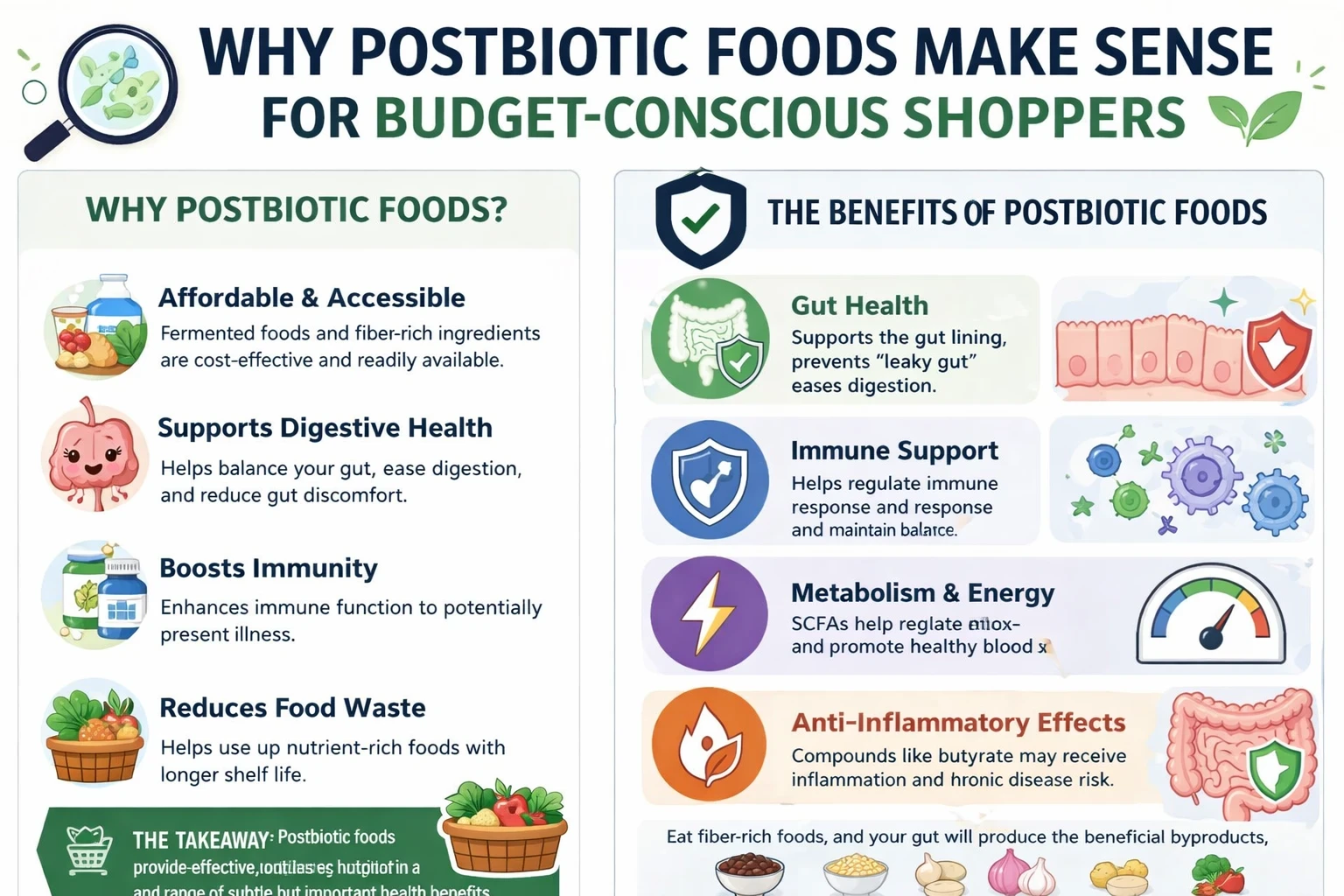
The Benefits of Postbiotic Foods
The biggest reason people are paying more attention to postbiotics is that they appear to support health in practical, everyday ways. This is not magic here and no cure‑all claims, just realistic benefits that come from adding fermented foods to your routine.
One of the main benefits is digestive support. Fermented foods and the compounds created during fermentation are often associated with a healthier gut environment. For people who want to support digestion without overcomplicating things, that makes these foods appealing.
Postbiotics are also linked to gut barrier support. The digestive tract does more than process food. It also plays a key role in protecting the body, and a healthier gut environment may support that barrier function. In plain terms: your digestive system is doing more than just handling lunch.
There is also interest in immune support. A large share of the body’s immune activity is connected to the gut, so anything that supports gut health may also help support overall immune function. This is one reason fermented foods keep coming up in conversations about wellness.
Some research also points to a possible role in managing inflammation and supporting metabolic health, including areas like blood sugar balance. That does not mean one spoonful of sauerkraut will transform your health overnight. It means these foods may be a smart part of a broader eating pattern built around consistency, variety, and whole foods.
Another practical advantage is tolerance. Some people do not love the idea of probiotic supplements or do not want to spend money experimenting with them. Postbiotic foods can feel more approachable because they are simply foods. Instead of adding another pill or specialty product, you are making use of familiar ingredients that can fit naturally into your day.
The Best Postbiotic Foods You Can Buy at Any Grocery Store
Not every fermented food needs to become a weekly staple. The goal is to pick a few affordable options that fit your taste, schedule, and grocery budget. These are some of the easiest ones to start with.
Yogurt
Plain yogurt is one of the simplest and most accessible options. It is easy to find in almost any grocery store, comes in a range of price points, and can work at breakfast, lunch, or snack time. It also feels familiar, which matters when people are trying to build habits they can actually maintain.
For the best value, larger tubs usually cost less per serving than single-serve cups. Plain yogurt also tends to be cheaper and healthier than flavored versions because you are not paying extra for added sugar, packaging, and marketing. You can always add your own fruit, cinnamon, oats, or honey if you want more flavor.
Yogurt is easy to use in a busy life because it requires no prep. You can eat it straight from the container, blend it into a smoothie, use it in a bowl with fruit and oats, or stir it into sauces and dips. It is one of the easiest healthy foods to keep around for rushed mornings.
Kefir
Kefir is a fermented drink that is often described as a drinkable yogurt, though the taste and texture are a little different. It can be a strong option for busy people because it is portable, quick, and requires no cooking at all.
From a budget standpoint, kefir can still be cheaper per serving than many trendy wellness drinks or gut-health supplements. Plain versions are usually the best value and tend to be more flexible. You can drink kefir on its own, blend it with frozen fruit for a quick breakfast, or use it as part of a simple snack.
If mornings are chaotic, kefir is especially useful because it is basically grab-and-go. That kind of convenience matters more than people admit. Healthy foods only help if they are easy enough to use on your busiest days.
Sauerkraut
Sauerkraut is one of the easiest fermented vegetables to start with because it is widely available and relatively inexpensive. A single jar can last for many servings, and you usually only need a small amount at a time.
It is also incredibly easy to use. Add it to sandwiches, serve it alongside eggs, top a rice bowl with it, or use it as a quick side dish with dinner. It brings flavor, crunch, and acidity, so it can make simple meals taste more interesting without requiring extra cooking.
For budget shoppers, sauerkraut is helpful because it stretches. You are not building a meal around it. You are using a spoonful or two to upgrade meals you are already making.
Kimchi
Kimchi works similarly to sauerkraut but often brings a stronger, spicier flavor. Depending on where you shop, it may cost a little more, but it still tends to be economical because small portions go a long way.
It is one of the best examples of a food that helps busy people because it adds instant flavor. Mix it into rice, eggs, noodles, or leftover vegetables, and suddenly a plain meal tastes more interesting. That can help prevent the boredom that often makes healthy eating harder to maintain.
If your local grocery prices are high, international markets often offer better deals on kimchi and other fermented staples. That can be an easy way to stretch your food budget while trying something new.
Miso
Miso is one of the most useful staples for affordable healthy eating. It is a fermented soybean paste, usually sold in tubs or containers, and a little goes a very long way. That makes it cost-effective even if the initial price looks higher than some other items.
A spoonful of miso can turn hot water or broth into a fast soup. It also works in dressings, marinades, and sauces. If you need quick meals that still feel warm and satisfying, miso is a smart ingredient to keep in the fridge.
Its versatility is what makes it valuable. One item can support several meals over the course of a week, which is exactly the kind of food budget-conscious shoppers should look for.
Sourdough Bread
Sourdough bread is another accessible way to include fermented foods in a regular diet. It is familiar, flexible, and easy to use across breakfast, lunch, snacks, and dinner.
A loaf of sourdough can be turned into toast, sandwiches, quick pizzas, soup sides, or simple meals with eggs and vegetables. If you shop carefully, bakery day-old sections can be a great place to find sourdough at a discount. Freezing extra slices can also help reduce waste.
This is a good example of how postbiotic foods do not have to feel niche or intimidating. Sometimes they look like foods people already enjoy and buy anyway.
Fermented Vinegars
Vinegars, including apple cider vinegar and other fermented varieties, are inexpensive pantry staples that can be used in small amounts to bring flavor to meals. They are not a complete meal solution on their own, but they are a simple way to add fermented ingredients into daily eating.
They are especially useful for busy people because they take almost no effort. Stir vinegar into a dressing, drizzle it into a marinade, or use it to brighten roasted vegetables or grain bowls. Small additions like this can make healthy meals more enjoyable, which makes consistency easier.
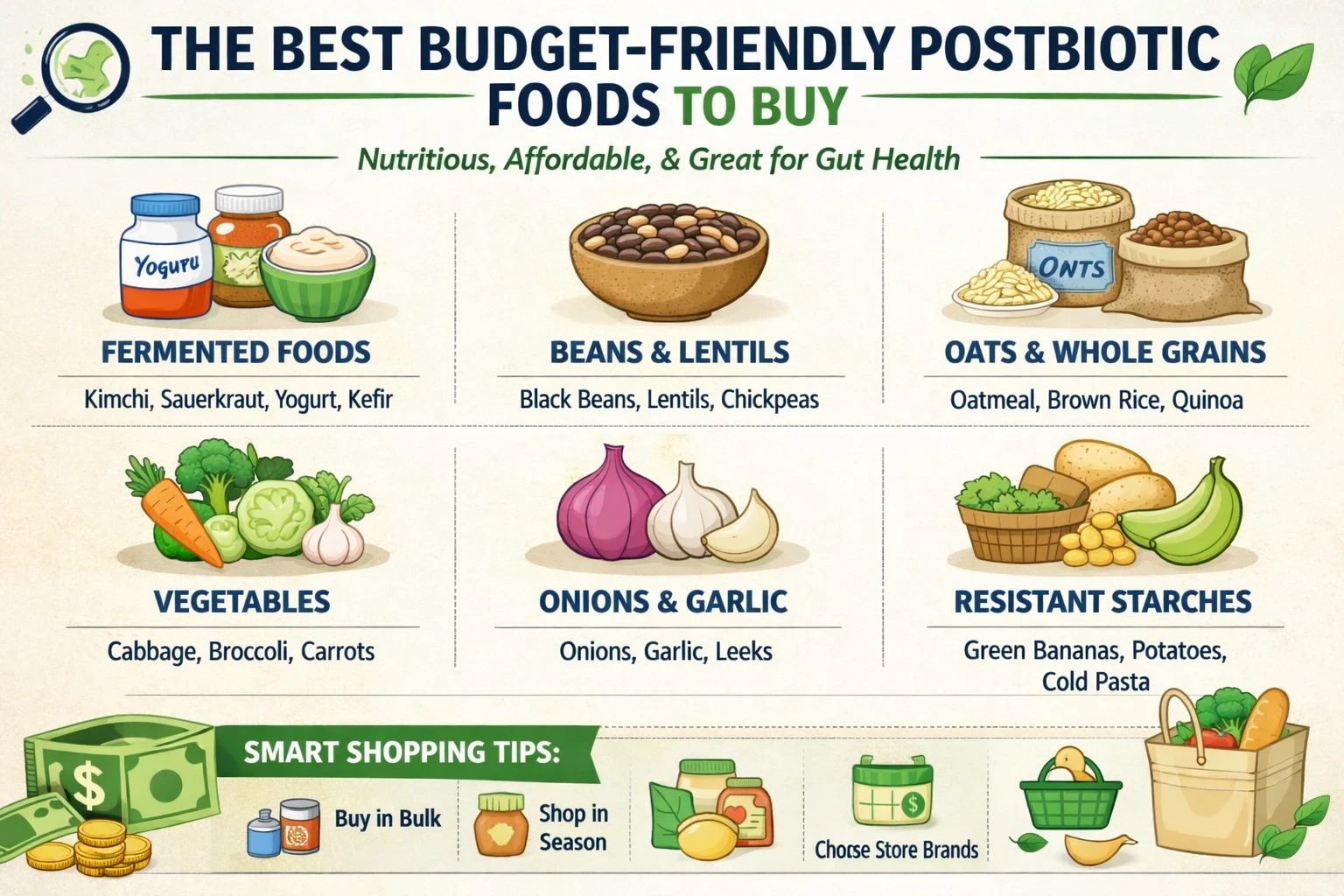
How to Shop Smart Without Overspending
Buying healthy food on a budget usually comes down to strategy, not perfection. The same is true here. If you want postbiotic foods to be practical, focus on value and ease rather than trends.
Start by looking at cost per serving instead of only the price on the shelf. A larger container of yogurt or kefir may seem more expensive upfront, but it often costs much less per portion. The same goes for miso, sauerkraut, and kimchi. If a food will last through several meals, it is often a better buy than small, convenient packages.
Store brands are also worth considering. In many cases, they are just as useful as premium brands, especially for basics like plain yogurt or vinegar. You are often paying extra for packaging and branding, not a dramatically better product.
It also helps to shop where these foods are normal, not trendy. International grocery stores can be excellent for lower-cost miso, kimchi, and other fermented staples. Farmers markets, local bakeries, or discount sections can also be good places to find sourdough and fermented vegetables at lower prices.
Finally, buy foods you will actually use. This sounds obvious, but it is where a lot of food budgets go wrong. A healthy food is only a good value if it fits your taste and routine. If you hate kimchi, skip it and buy yogurt. If you do not eat breakfast, choose sauerkraut or miso instead. The best healthy food is the one that gets eaten.
How to Fit Postbiotic Foods Into a Busy Life
The easiest way to make these foods part of your life is to stop thinking of them as a separate health project. They do not need their own schedule, recipe system, or complicated rules. They can simply be add-ons to meals you already eat.
That is what makes them so practical. A spoonful of yogurt does not require meal prep. A splash of vinegar does not require planning. A little sauerkraut on a sandwich takes seconds. When healthy eating is built around small upgrades instead of major changes, it becomes much more realistic.
It also helps to keep a short list of go-to uses. If you always know that yogurt equals breakfast or snack, miso equals quick soup, and sauerkraut equals sandwich topping, there is less friction. People are more likely to stick with foods when the use is obvious and repeatable.
Convenience also matters more than ambition. You do not need ten postbiotic foods in your kitchen. Two or three is enough. In fact, keeping it simple usually works better because you build familiarity and reduce waste. Repetition is not boring when it makes healthy eating easier.
Easy Ways to Use Postbiotic Foods Every Day
Here are a few realistic ways to work these foods into an ordinary routine.
Breakfast
Breakfast is one of the easiest places to start because convenience matters so much in the morning.
- Plain yogurt with oats, banana, or frozen berries
- Kefir blended with fruit and peanut butter
- Sourdough toast with eggs or nut butter
- Yogurt with granola for a no-cook option
Lunch
Lunch often ends up rushed, so simple add-ins work best.
- Sandwich topped with sauerkraut
- Grain bowl with kimchi
- Salad with vinegar-based dressing
- Leftovers with a side of fermented vegetables
Dinner
Dinner does not need to become elaborate.
- Stir miso into warm broth for a quick soup
- Add kimchi or sauerkraut to rice bowls
- Serve sourdough alongside soup or eggs
- Use vinegar to brighten roasted vegetables or beans
Snacks
Snacks are a good place for easy wins.
- A small bowl of yogurt
- A glass of kefir
- Toast with hummus
- Crackers and a side of fermented vegetables
Simple Weekly Habits That Make This Easier
Healthy eating is easier when it becomes automatic. Instead of relying on motivation, build a few habits that make postbiotic foods convenient by default.
Buy one or two staples each week. For example, you might get a tub of plain yogurt and a jar of sauerkraut every Sunday. That gives you easy options for several meals without overloading the fridge.
Keep foods visible and easy to grab. Put yogurt where you will see it first. Keep sauerkraut near sandwich ingredients. Store sourdough in the freezer if you do not use it quickly, then toast slices as needed.
Use one prep shortcut. Mix a simple vinegar dressing once a week or keep miso ready for fast soup. Tiny systems like these reduce effort later, which is what makes habits stick.
Most importantly, start small. You do not need to overhaul every meal. Add one postbiotic food to one meal each day and let that become normal before doing more.
Common Myths About Postbiotic Foods
A lot of people assume healthy gut-supporting foods are expensive, niche, or hard to use. Most of that comes down to marketing, not reality.
One common myth is that you need supplements to get meaningful benefits. In reality, foods can be a practical starting point for many people. If your goal is to eat better in a sustainable, affordable way, food-first habits often make more sense than supplement routines.
Another myth is that fermented foods are strange or difficult. Some are unfamiliar, but many are already common foods. Yogurt, sourdough, vinegar, and even certain pickled foods are part of normal eating patterns for a lot of households.
People also assume these foods require a major lifestyle change. They do not. Most can be added to meals you are already making. The goal is not to become a different kind of eater overnight. The goal is to make your current routine a little healthier and a little more useful.
Finally, there is the idea that healthy eating only works if it is perfect. That mindset usually makes things harder. In real life, small and repeatable habits are what last. A bowl of yogurt three times a week is more valuable than an expensive wellness plan you abandon after ten days.
Start Small: One Week of Easy Postbiotic-Friendly Eating
To show how easy this can be, here is a simple example of how postbiotic foods might fit into a normal week.
Day 1
Breakfast: plain yogurt with oats and banana
Lunch: turkey sandwich on sourdough with sauerkraut
Dinner: rice bowl with vegetables and kimchi
Snack: kefir
Day 2
Breakfast: kefir smoothie with frozen berries
Lunch: salad with vinegar dressing and toast
Dinner: miso broth with noodles and vegetables
Snack: plain yogurt
Day 3
Breakfast: sourdough toast with peanut butter
Lunch: leftovers with a spoonful of kimchi
Dinner: eggs, roasted potatoes, and sauerkraut
Snack: yogurt with cinnamon
Day 4
Breakfast: plain yogurt with apple and oats
Lunch: grain bowl with beans, rice, and kimchi
Dinner: quick soup with miso stirred in at the end
Snack: kefir
Day 5
Breakfast: sourdough toast with eggs
Lunch: sandwich with sauerkraut and a piece of fruit
Dinner: roasted vegetables with a vinegar-based dressing and bread
Snack: yogurt
Day 6
Breakfast: kefir with granola
Lunch: leftovers with fermented vegetables on the side
Dinner: rice, vegetables, and miso dressing
Snack: sourdough toast with hummus
Day 7
Breakfast: yogurt bowl with frozen fruit
Lunch: salad with vinegar dressing and toast
Dinner: simple grain bowl topped with kimchi
Snack: kefir or yogurt
This kind of plan is not meant to be rigid. It is meant to show that postbiotic foods can fit into meals people already eat. You are not creating a special wellness menu. You are making practical upgrades to ordinary food.
Final Thoughts
Postbiotic foods may not get as much attention as prebiotics or probiotics, but for many people, they are the more practical choice. They are affordable, easy to find, simple to use, and realistic for busy schedules. That combination matters because the best healthy habit is usually the one you can actually keep doing.
Many people want to eat healthier but feel overwhelmed by the cost of specialty foods, so I appreciate your budget-friendly approach. I also like that the article focuses on practical options people can realistically include in their routines. That makes healthy habits much easier to maintain long term. What is one simple postbiotic food you think gives the best value for someone starting out?
Thanks Monica! I see prebiotics and probiotics everywere, but never anything about postbiotics. Luckily for me I love a lot of these foods and was already eating plenty. I like yogurt for early in the day, saurkraut to add for a side and the fermented vinegars with salad or condiment. Plenty of good fermented food options
I found this really interesting because most of the time you only hear about probiotics, not postbiotics. It’s helpful to see the bigger picture of gut health explained in a way that actually makes sense.
I like that you included budget-friendly ideas too, because eating for your health shouldn’t feel out of reach. I’ve been trying to improve my diet lately, and this gave me a new perspective on how to do that without overcomplicating things. One thing I’m wondering are there certain cooking methods that help preserve or increase postbiotics in food?
Also, for someone just starting out, what would you say is the easiest postbiotic food to add into daily meals?
Thanks for sharing this, it was a great read and super practical!
Thanks Monica! I love saurkraut and kimchi as a side with dinner, they are my go tos for helping digetstion. Fun to try all these options though, still trying to appreciate kombucha. Sourdough has become a great new fad to try to bake and experiment with as well.