
Swicy vs. Fricy: The Sweet-Spicy Food Trend Taking Over 2026 (And Is It Actually Healthy?)
Picture this: you’re scrolling through your feed, minding your own business, when you see someone drizzling hot honey over a watermelon slice dusted in chili-lime seasoning. The comments are absolute chaos. Half the people are typing “swicy!!” and the other half are typing “that’s fricy, keep up.” You close the app more confused than when you opened it.
Welcome to one of the weirder, more delicious corners of the internet right now. Two flavor words, swicy (sweet + spicy) and its 2026 sequel, fricy (fruity + spicy), have taken over restaurant menus, condiment aisles, and TikTok “what I eat in a day” videos. Fricy is officially one of the breakout culinary terms of the year, and it was even added to the dictionary back in February, which is the internet’s equivalent of a trend getting its diploma.
But here at BudgetBite, we don’t just chase a trend because it’s trending. We want to know: is this actually good for you? Can you eat this way without blowing your grocery budget? And is there a real, science-backed reason chili and fruit taste so ridiculously good together, or is this just clever marketing from a hot sauce company? Let’s dig in.

Wait, What’s the Difference Between Swicy and Fricy?
Think of swicy as the older sibling and fricy as the trendier younger one who just discovered fresh produce.
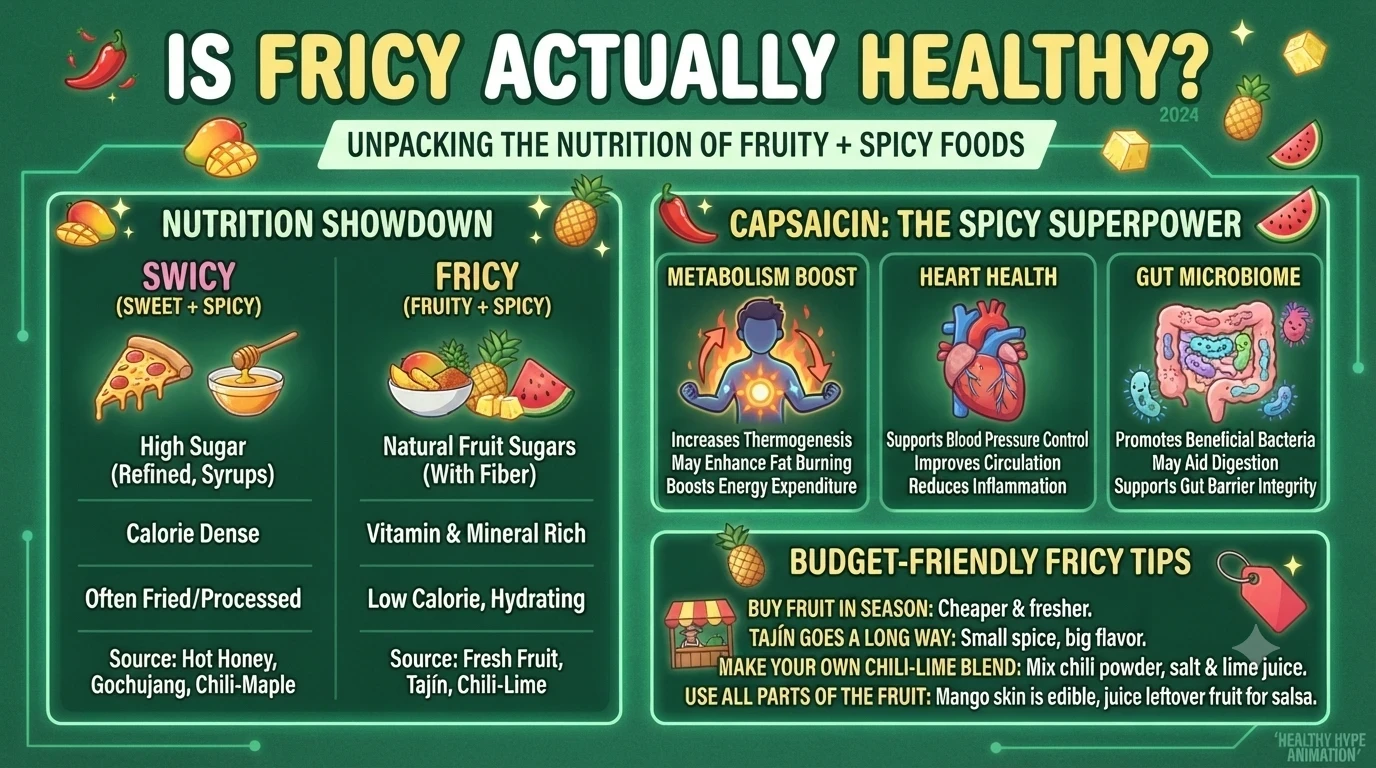
- Swicy = sweet + spicy, and the “sweet” part usually comes from refined sugar, honey, or syrup. Think hot honey drizzled on pizza, spicy-sweet potato chips, or a chili-infused simple syrup in your iced coffee.
- Fricy = fruity + spicy, and the sweetness comes specifically from real fruit, mango, watermelon, pineapple, passion fruit, citrus, instead of added sugar. The heat remains the same; the source of sweetness is what changed.
In other words, fricy is swicy’s glow-up. The industry didn’t invent a brand-new flavor combination out of thin air here, it just finally gave a name to something that’s existed in kitchens around the world for centuries. Fruit and chili have been best friends for a very long time: mango or melon with lime and chili powder is a staple in Mexican street food, Thai green papaya salads pair citrus and chili with sour fruit, and Japanese yuzu kosho blends citrus zest with chili into a punchy condiment. Fricy is really just a contemporary rebrand of practices that have been around forever, dressed up in a portmanteau built for hashtags.
How This Actually Went Viral
Swicy had its moment starting around 2024 and 2025, when hot honey became inescapable, Mike’s Hot Honey turned into a genuine cultural phenomenon, McDonald’s rolled out an entire Hot Honey menu, Shake Shack brought back a sweet-and-spicy gochujang glaze, and Lay’s went as far as trademarking the word “Swicy” for a limited-run chip flavor. Sweet-and-spicy stopped being a niche flavor profile and became a default menu option almost everywhere.
Fricy is the 2026 evolution of that same energy, but it swaps refined sugar for real fruit while keeping the heat. Watermelon sprinkled with Tajín, mango with chili powder, spicy pineapple margaritas, chamoy-covered fruit cups, and fruit-forward hot sauces started popping up everywhere once the weather warmed up, and TikTok did what TikTok does best: took a flavor combination that’s existed forever and turned it into a full-blown 2026 food moment.

Why Do Fruit and Spice Actually Taste So Good Together? (The Science Part)
This isn’t just a happy accident of marketing. There’s real sensory science behind why your brain loses it a little when fruit and chili show up on the same bite.
Capsaicin, the compound that makes chili peppers hot, doesn’t actually trigger your taste buds the way sweet or sour flavors do. Instead, it activates a heat-and-pain receptor called TRPV1, the same receptor your body uses to detect literal physical heat. Your brain interprets that activation as a burning sensation, which triggers a small stress response, a dopamine release, and sometimes a rush that people genuinely find pleasurable. Meanwhile, fruit is doing the opposite job: hitting your sweet and sour taste receptors with sugar and acidity. When you combine the two, you get a genuine push-pull sensory experience, cooling sweetness and juicy acidity contrasting against building heat, which is a big part of why “fricy” bites feel so much more dynamic than plain sweet or plain spicy on their own.
There’s also a flavor-balancing effect happening. Acidity and sweetness both tend to soften the perceived intensity of capsaicin, which is why a spicy mango salsa doesn’t feel as aggressively hot as straight hot sauce, even if the pepper content is similar. Your brain is essentially getting a flavor rollercoaster instead of a flat flavor line, and rollercoasters are more fun than flat lines. That’s the appeal in a nutshell.
Okay, But Is It Actually Healthy?
Here’s where fricy pulls ahead of swicy in a meaningful way, and it’s worth understanding why.
The case for fricy being the healthier sibling
Swicy, by definition, usually leans on added sugar, honey, syrup, brown sugar glazes; stacked on top of spice. That’s not inherently evil in moderate amounts, but it does mean a “swicy” snack is often also a high-added-sugar snack, and those calories add up fast if you’re drizzling hot honey on everything in sight.
Fricy swaps that added sugar for whole fruit, which changes the nutritional math substantially. Whole fruit brings fiber, water content, vitamin C, potassium, and antioxidants along with its natural sugars, and the fiber in particular slows down how quickly that sugar hits your bloodstream compared to the free sugars in honey or syrup. So a plate of chili-lime mango is doing a fundamentally different job in your body than a plate of hot honey wings, even though both would get called out as trendy in a TikTok comment section.
What the research says about the chili half of the equation
Capsaicin itself has a growing body of research behind it, and it’s more interesting than “spicy food is exciting, that’s it.” Some of what’s been found:
- Metabolism: Several studies suggest capsaicin can modestly boost metabolic rate and support fat oxidation, and a systematic review of randomized controlled trials found meaningful effects on lipid oxidation and stored fat, particularly in people with higher body fat levels. The effect isn’t dramatic enough to build a diet plan around, but it’s a real, measurable metabolic nudge.
- Heart health: Capsaicin appears to have anti-inflammatory properties that researchers believe contribute to many cardiovascular benefits, one three-month study found it meaningfully improved heart disease risk factors in adults with low “good” cholesterol.
- Gut microbiome: Emerging research shows capsaicin can shift gut bacteria populations in favorable ways, including boosting beneficial strains like Akkermansia, and may help regulate bile acids, blood sugar, and insulin sensitivity through those microbiome changes.
- Appetite: Some research suggests capsaicin can help blunt appetite and increase feelings of fullness, which is part of why it’s popped up in weight-management supplements, though experts note more research is still needed here.
None of this means you should start dumping hot sauce on everything for your health. Capsaicin doesn’t have calories or nutrients of its own, it’s a functional compound, not a superfood — and your tolerance to it actually increases with repeated exposure, meaning the same amount of heat produces less of an effect over time. But paired with genuinely nutrient-dense fruit instead of refined sugar, fricy is a trend that happens to line up reasonably well with what nutrition science already recommends: more whole produce, less added sugar, and a little metabolic and cardiovascular boost along for the ride.
Where it can go sideways
A few honest caveats before you go full fricy for every meal:
- Chamoy and pre-made spicy fruit condiments are often loaded with added sugar and sodium, which undercuts the “healthier than swicy” advantage. Read the label — some bottled fricy sauces have more sugar per serving than the fruit they’re drizzled on.
- Spice tolerance is real and personal. If you’re not used to capsaicin, digestive upset, acid reflux, and that classic burning sensation are common. Start light and build up.
- It’s easy to overdo sodium with chili-lime seasoning blends, which often contain a lot of salt in addition to chili powder.
- Fruit is still sugar, even if it’s the “good” natural kind with fiber attached. If you’re managing blood sugar closely, portion still matters, even with whole fruit.
How to Eat Fricy (and Swicy) on a Budget
This is the part that makes fricy such a good fit for BudgetBite: almost every ingredient in this trend is cheap, shelf-stable, or already sitting in a produce aisle near you. You don’t need a fancy hot sauce subscription box to participate.
Budget-friendly fricy combinations to try
- Chili-lime mango or watermelon: Cut up whatever seasonal fruit is on sale, squeeze fresh lime over it, and sprinkle with a chili-lime seasoning blend (or just chili powder and a pinch of salt if you want to keep it simple and cheap).
- Spicy pineapple salsa: Canned pineapple in juice, diced jalapeño, red onion, cilantro, and lime. Canned pineapple is a budget MVP here and works just as well as fresh.
- Hot honey drizzle: Warm regular honey with a pinch of red pepper flakes for a few minutes on the stove. This is dramatically cheaper than buying a bottle of pre-made hot honey and takes about five minutes.
- Frozen fruit + chili powder: Frozen mango or pineapple chunks are often cheaper than fresh and work perfectly here — let them thaw slightly, toss with chili powder and lime juice.
- DIY chamoy: A blended mix of dried chilies (or chili powder), a little sugar or honey, lime juice, and a splash of vinegar gets you most of the way to store-bought chamoy for a fraction of the price.
- Citrus and chili on grilled anything: Orange or grapefruit segments with a chili-lime finish over grilled chicken or fish is an easy way to bring this trend into a full dinner instead of just a snack.
Cheap staples to stock up on
Chili powder, cayenne, red pepper flakes, Tajín-style seasoning, limes, and honey are the backbone of nearly every fricy and swicy recipe floating around right now, and every single one of them is inexpensive and keeps for a long time in your pantry. Buy seasonal fruit when it’s on sale, keep a bag of frozen mango or pineapple in the freezer as backup, and you’re set up to jump on this trend without a special grocery trip.
Where You’ll Actually See This on Menus
If you want proof this isn’t just a niche internet thing, look at how fast it’s spread through the food industry. Starbucks leaned into the sweet-spicy space with spicy Refreshers, McDonald’s built an entire limited-time menu around a hot honey sauce (Hot Honey Sausage Egg Biscuit, Hot Honey Snack Wrap, Hot Honey McCrispy), and Shake Shack brought back a sweet-and-spicy gochujang glaze. On the fricy side, grocery shelves are filling up with mango amba sauce, chili-infused fruit condiments, and spicy tropical cocktail mixers, and trend forecasters have flagged pineapple habanero, hatch chile, and Calabrian chili as the next ingredients to watch. Once a flavor combination shows up on a Starbucks menu and a Delish roundup in the same season, you know it’s not going away anytime soon.
The Bottom Line
Fricy isn’t a gimmick dressed up as nutrition advice, and it isn’t a miracle health food either, it’s somewhere in the honest middle. Swapping refined sugar for real fruit while keeping the metabolism-friendly, gut-supporting benefits of capsaicin is a genuinely reasonable upgrade over swicy’s sugar-heavy approach, and the science behind why fruit and spice taste so good together is legitimately interesting. As long as you watch the sodium and added sugar in pre-made sauces and build your own combinations from whole fruit and pantry spices, this is one food trend you can enjoy guilt-free, and cheaply.
FAQ
Is fricy healthier than swicy?
Generally, yes. Fricy relies on whole fruit for sweetness, which brings fiber, vitamins, and antioxidants along with its natural sugar, while swicy typically relies on added sugar like honey or syrup with fewer nutritional benefits attached.
Does spicy food actually boost metabolism?
Research suggests capsaicin can modestly increase metabolic rate and support fat oxidation, though the effect is small and shouldn’t be relied on as a weight-loss strategy on its own.
What’s the cheapest way to try the fricy trend?
Frozen fruit, fresh lime, and basic chili powder or a Tajín-style seasoning blend will get you 90% of the way there for just a few dollars, no specialty products required.
Is chamoy healthy?
Store-bought chamoy is often high in added sugar and sodium, so it’s worth checking the label or making a simple homemade version if you’re eating it regularly.
Can spicy food upset my stomach?
Yes, especially if you’re not used to capsaicin. Start with smaller amounts of chili and build tolerance gradually, milk or bread can help neutralize the burning sensation if you overdo it.
Try It Yourself: The 7-Day Fricy Challenge
Ready to see if this trend earns a permanent spot in your kitchen? For the next week, try adding one fricy combination to your day: chili-lime fruit as a snack, a hot honey drizzle on breakfast, or a spicy fruit salsa alongside dinner. Keep it simple, keep it budget-friendly, and notice how it changes your usual meals. Tag your creations and let us know which combo was your favorite, we just might feature it in a future BudgetBite roundup.

