
The Surprising History of Succotash, America’s Most Engineered Superfood
If there’s one dish sitting out quietly the edges of American food memory that nutrition scientists, gut health researchers, and plant-based diet advocates would go absolutely wild for, if only they remembered it existed. Succotash.
It has a funny name. It’s been reduced to a cartoon punchline. It’s been relegated to church potlucks and dusty community cookbooks. And it is, by almost any serious nutritional measure, one of the most cleverly engineered plant-based meals in the history of North American food.
The name is succotash. And it’s now time that we talked about it seriously.

What Actually Is Succotash?
Before we get into the science, let’s settle the history, because this dish has one of the most interesting origin stories in American cuisine, and almost nobody has heard it.
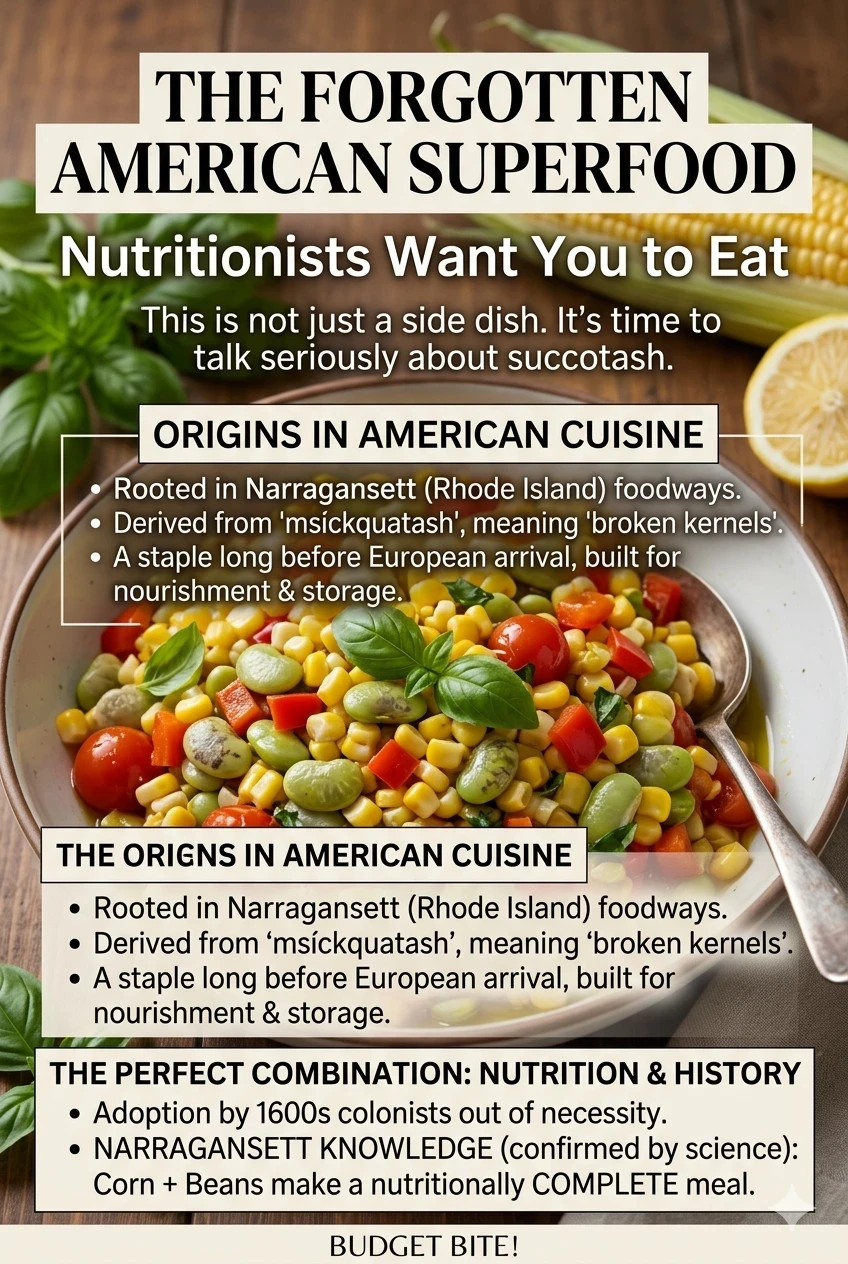
Succotash is a traditional dish rooted in the foodways of Native American tribes in New England, most notably the Narragansett people of what is now Rhode Island. The word itself comes from the Narragansett word msíckquatash, meaning “broken corn kernels” or “boiled whole kernels of corn.” It was a staple food long before European settlers arrived, practical, nourishing, shelf-stable in dried form, and built around ingredients that grew together in the same soil.
When English colonists first arrived in the 1600s, they adopted the dish out of necessity. Fresh corn and beans were abundant, the combination was deeply satisfying, and the Native people who knew this land understood something that took nutritional science centuries to confirm: corn and beans together make a nutritionally complete meal in a way that neither can achieve alone.
The dish evolved over the following centuries. Southern variations added okra, tomatoes, and bacon fat. Midwestern versions incorporated whatever vegetables were available at peak harvest. By the 20th century, succotash had become a humble side dish, then a frozen grocery staple, and eventually the punchline of a certain lisping cartoon cat.
That’s a shame. Because what was lost in the cultural forgetting is a dish that a modern nutritionist would be thrilled to put on a meal plan.
The Nutritional Case for Succotash
Let’s look at what’s actually in this bowl.
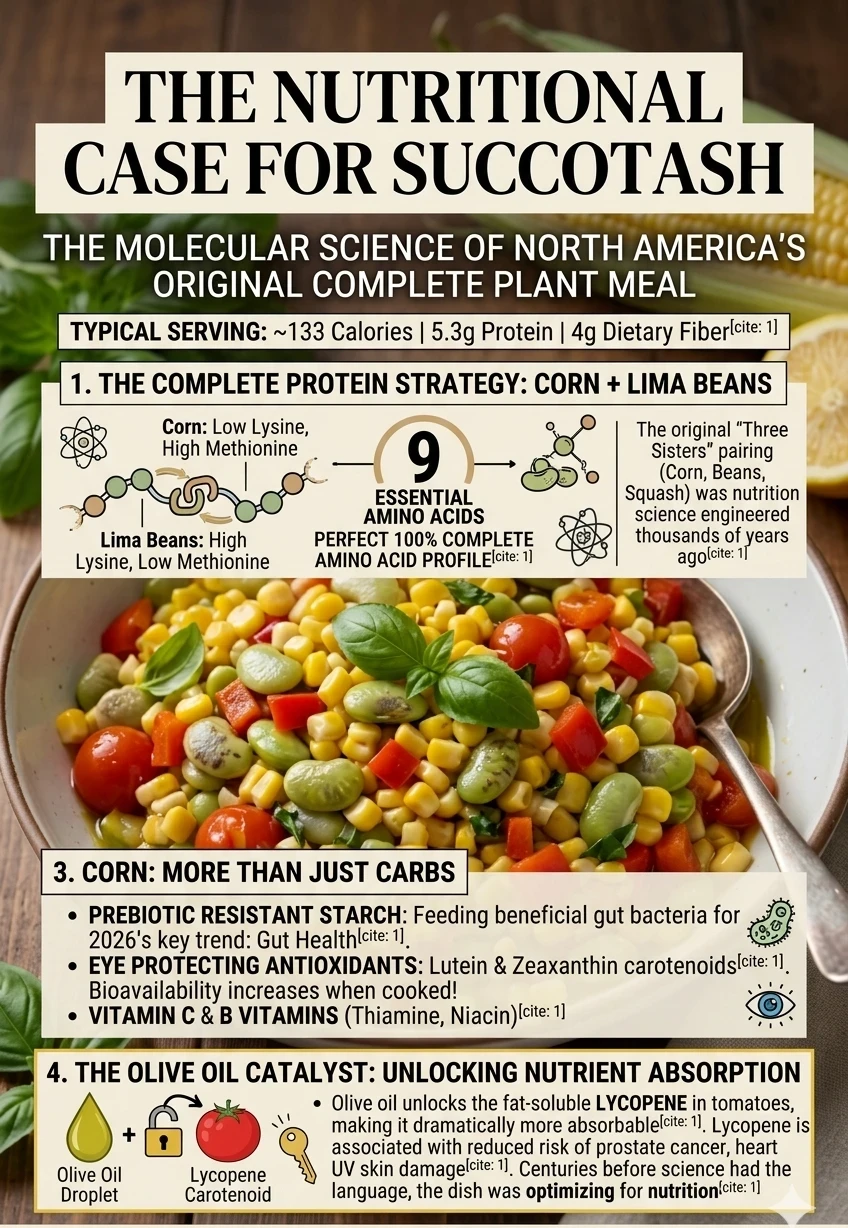
A typical serving of succotash, corn, lima beans, a drizzle of olive oil, some tomatoes or bell pepper, comes in at roughly 133 calories per serving, with 5.3 grams of protein, 4 grams of dietary fiber, meaningful amounts of vitamin C, calcium, and iron. For a dish this simple, that’s a remarkable nutritional return.
But the real story isn’t in the macros. It’s in what the combination of corn and lima beans achieves at a molecular level — and that story is genuinely fascinating.
https://www.budgetbytes.com/succotash
The Complete Protein Secret
Here’s something most people don’t know: most plant foods are “incomplete” proteins. They contain some essential amino acids but not all nine that the human body cannot produce on its own. Corn, for example, is low in the amino acid lysine. Lima beans are low in methionine. Each one, eaten alone, gives you an incomplete amino acid profile.
Together, they fill in each other’s gaps perfectly.
The corn provides what the beans lack, and the beans provide what the corn lacks. The result is a complete amino acid profile from two whole plant foods, no processing, no protein powder, no supplementation required. This is exactly the kind of “complementary protein” pairing that nutrition scientists describe in graduate textbooks, and it’s been sitting in indigenous American cooking for thousands of years.
This is not a coincidence. The same principle is at the heart of the “Three Sisters” agricultural system, corn, beans, and squash, which Native American farmers cultivated together because the plants support each other in the soil (the corn stalk supports the bean vine, the bean fixes nitrogen, the squash shades the ground) and they support each other on the plate. Succotash is, in its purest form, the Three Sisters made edible.
Lima Beans: The Underestimated Nutritional Anchor
Lima beans are not glamorous. They don’t have the trendy reputation of chickpeas or the social media presence of black beans. But look at the micronutrient profile and you’ll find something quietly impressive.
Lima beans are an excellent source of manganese, a trace mineral that acts as a powerful antioxidant and plays a critical role in metabolic health, helping the body process carbohydrates, amino acids, and cholesterol. They’re high in copper, which supports immune function and is increasingly studied for its role in brain health. They provide meaningful amounts of magnesium, the mineral involved in over 300 enzymatic reactions in the body, including energy production and muscle function. They contain vitamin K1, essential for the repair of body tissue and bone health. And they’re rich in folate, vitamin B9, which is associated with reduced risk of macular degeneration and is critical for cell repair and cardiovascular health.
Folate deserves a particular mention here. Many Americans are folate-deficient without knowing it, and the consequences range from elevated homocysteine levels (a cardiovascular risk marker) to increased risk of certain cancers. Lima beans are one of the best whole-food folate sources available, and a cup of succotash delivers a genuinely significant portion of your daily requirement.
Corn: More Than Just Carbs
Corn gets a bad reputation in low-carb circles, and while it’s true that it’s higher in starch than most vegetables, fresh summer corn is a nutritionally different animal than the processed corn that shows up in packaged food.
Fresh corn at peak season is a meaningful source of vitamin C, B vitamins (particularly thiamine and niacin), and the antioxidants lutein and zeaxanthin — two carotenoids that are among the best-studied nutrients for protecting eye health and reducing the risk of macular degeneration. Interestingly, cooking corn briefly actually increases the bioavailability of its antioxidants — so a quick sauté is better than eating it raw.
Corn also contributes resistant starch when cooled after cooking, which acts as a prebiotic, feeding beneficial gut bacteria and supporting a healthy microbiome. Given that 2026’s biggest nutrition trend is gut health, fresh summer corn is more relevant than ever.
The Tomato Factor
Most succotash recipes include tomatoes, and from a nutrition standpoint this is worth celebrating. Tomatoes are one of the richest food sources of lycopene, a carotenoid antioxidant associated with reduced risk of prostate cancer, heart disease, and UV-related skin damage — particularly relevant in summer when sun exposure increases. And critically, lycopene is fat-soluble, meaning it’s absorbed dramatically better when paired with a fat source.
Which brings us to olive oil. A modest drizzle of olive oil in your succotash isn’t just a flavor choice — it unlocks the lycopene in the tomatoes and the fat-soluble vitamins in the vegetables, making the entire dish measurably more nutritious than if you’d cooked it in water alone.
The dish, as traditionally prepared with a fat source, was already optimizing for nutrient absorption. Centuries before nutrition science had the language to explain why.

Why Succotash Is Perfect for Summer
This is not a dish you make in February with frozen ingredients and wonder why it’s underwhelming. Succotash is a summer dish at its bones, and eating it at peak season transforms it from a humble vegetable side into something genuinely vibrant.
Fresh corn hits its nutritional and flavor peak in July and August. The sugars in fresh-picked corn begin converting to starch within hours of harvest, which is why farmers’ market corn, bought the morning it was picked, tastes almost nothing like the corn you’ll find at a grocery store three days later. At peak season, fresh corn is sweet, tender, and loaded with the carotenoids and B vitamins that make it nutritionally worthwhile.
Lima beans follow a similar seasonal arc. Fresh shell beans, including limas, edamame, and butter beans, are available at farmers’ markets from midsummer through early fall. Freshly shelled beans have a creamier texture and a more nuanced flavor than their dried or canned counterparts, and they cook in a fraction of the time.
Add in summer tomatoes (which have significantly higher lycopene content when vine-ripened in actual sunlight), fresh bell peppers, zucchini, and basil, and you have a dish that is, in July and August, arguably at the peak of its nutritional potential.
This is what “eat seasonally” actually means in practice. Not just for environmental reasons or local economy reasons, though those matter, but because the food is measurably better for you when it’s grown right and eaten right away.
The Gut Health Angle
One more reason to revisit succotash through a 2026 lens: it’s a fiber delivery system of the first order.
A cup of succotash provides between 4 and 8 grams of dietary fiber depending on preparation, coming from both the lima beans (soluble fiber, which slows glucose absorption and feeds gut bacteria) and the corn (insoluble fiber, which supports digestive transit and bowel regularity). The combination of soluble and insoluble fiber in a single dish is exactly what gut health researchers point to as ideal — diversity of fiber sources leads to diversity of gut microbiome, which is increasingly understood as a foundation of overall health.
Registered dietitians in 2026 are calling “fibermaxxing” — maximizing daily fiber intake through whole foods, one of the year’s most important nutrition strategies. Most Americans consume roughly half the recommended daily fiber intake. A generous bowl of succotash moves the needle meaningfully.
How to Buy, Store, and Prepare It for Maximum Nutrition
Buying: At the farmers’ market, look for corn with bright green husks that feel slightly damp — a sign it was picked recently. The silk should be golden, not brown and dried out. For lima beans, look for plump pods without yellowing. If you can’t find fresh, frozen lima beans are an excellent substitute — they’re typically frozen within hours of harvest and retain most of their nutritional value.
Storing: Fresh corn is best eaten the day you buy it. If you must store it, keep it unhusked in the refrigerator and use within two days. Fresh lima beans should be shelled and used within a day or two, or frozen immediately after shelling.
Cooking for nutrition: The biggest mistakes people make with succotash are overcooking the corn (which degrades the vitamin C) and using too much added sodium, especially with canned ingredients. Cook fresh corn briefly — two to three minutes in a hot pan is plenty. Add olive oil rather than butter for the fat-soluble vitamin absorption benefit. Finish with fresh herbs, lemon juice, and black pepper, which increases the bioavailability of certain antioxidants.
What to avoid: Canned succotash with cream-style corn is a nutritionally different product — higher in sodium, higher in sugar, lower in fiber, and stripped of the enzymes and some of the vitamins present in fresh ingredients. Read labels carefully. If using canned corn or beans, look for no-salt-added versions and rinse thoroughly.
A Simple Summer Succotash Worth Making Right Now
This is not a complicated recipe. That’s the point.
Ingredients (serves 4):
- 4 ears of fresh corn, kernels cut from the cob
- 1.5 cups fresh or frozen lima beans
- 1 cup cherry tomatoes, halved
- 1 red bell pepper, diced
- 1 small zucchini, diced
- 3 cloves garlic, minced
- 2 tablespoons olive oil
- Juice of half a lemon
- Fresh basil, salt, and black pepper to taste
Method: Heat olive oil in a wide pan over medium-high heat. Add the bell pepper and garlic, cook two minutes. Add the lima beans and cook three minutes until just tender. Add the corn kernels and zucchini, cook another two minutes. Remove from heat, stir in the tomatoes, lemon juice, and fresh basil. Season and serve warm or at room temperature.
Total time: under 20 minutes. Nutritional return: extraordinary.

The Bigger Picture
Here’s what makes succotash more than just a nutritional curiosity: it’s a reminder that the most sophisticated dietary wisdom doesn’t always come in a supplement bottle or a scientific paper published last month.
Sometimes it comes from people who spent thousands of years learning to eat the land they lived on — who understood, without the language of amino acids or antioxidants or the microbiome, that certain foods belong together, that eating with the seasons matters, that a simple dish of corn and beans and summer vegetables is, in the deepest sense, exactly what the body needs.
The Three Sisters fed nations. Succotash nourished settlers through their first winters in a new world. And in 2026, as nutrition science catches up to what indigenous American farmers knew centuries ago, it might be time to bring it back to the center of the table where it belongs.
Not as a side dish. Not as a punchline. As the quietly brilliant, nutritionally complete, peak-summer, gut-feeding, brain-supporting whole food that it actually is.
Sufferin’ succotash indeed.

I remember succotash mostly as an old-fashioned dish that people did not talk about much anymore, so it is nice seeing it explained beyond just being corn and beans mixed together. Simple meals like this are sometimes the ones that make the most sense because they use basic ingredients and don’t require anything fancy.
I have always liked dishes where vegetables, beans, and healthy fats come together because they leave you full without feeling heavy. It reminds me that many traditional recipes survived for a reason. People figured out good food combinations long before we had all the modern nutrition information.
Succotash seems like one of those meals worth bringing back, especially with fresh summer vegetables.
Thanks Bob! I had thought of succostash as almost endangered any more. But a fun, simple, easy, new and healthy meal idea, and even better home cooked.
I must admit that this is the first time that I have heard of Succotash and it does sound both delicious and healthy. I often do corn in a variety of ways as the family love corn, and now I have another recipe to try so thank you for that.
I see it is a dish that originated in America, which is probably why I haven’t heard of it yet being from Africa, but I am sure it is a dish that can be adopted in any part of the world, as who doesn’t love corn?
The tomatoes is something I would definitely add, as not only are they super healthy, but tomatoes add that something that no other food can add.
Thanks Michel! Yes succotaswh has been one of my avorite dishes to enjoy by a late summer campfire.