
The 30-Plants-Per-Week Challenge: A Simple Guide + Free Printable Checklist
Okay, real talk: how many different plants did you eat this week? Not just did I eat any vegetables, but how many and which different ones, such as that lonely bag of spinach, the onion in your stir fry, the almonds you snacked on, the black beans in your burrito bowl. If you’re sitting there doing the mental math and struggling, you’re definitely not alone. Most people eat the same 8–10 plant foods on repeat, week after week, without ever really noticing, the same salad mix, the same two fruits, the same side of rice.
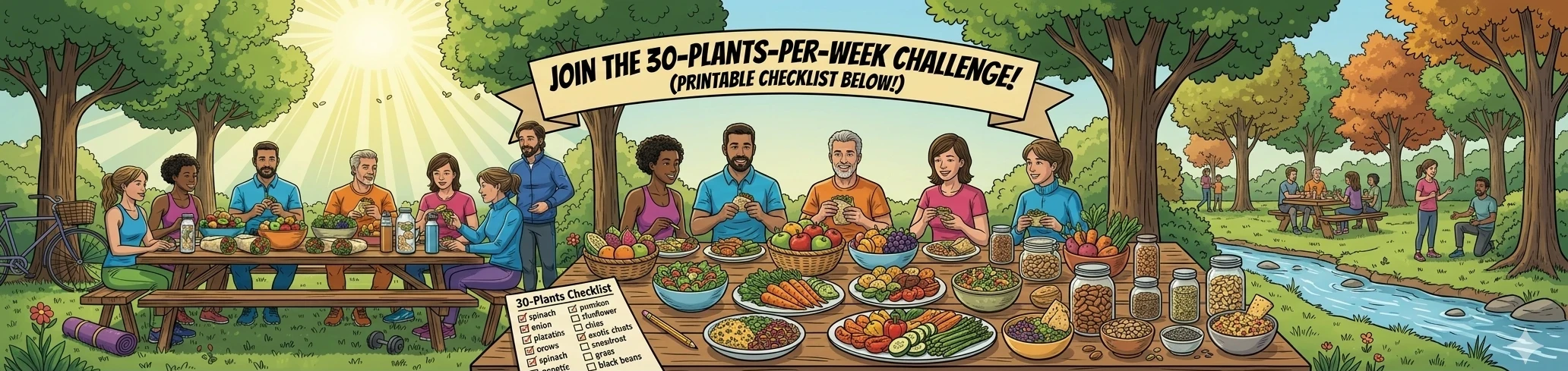
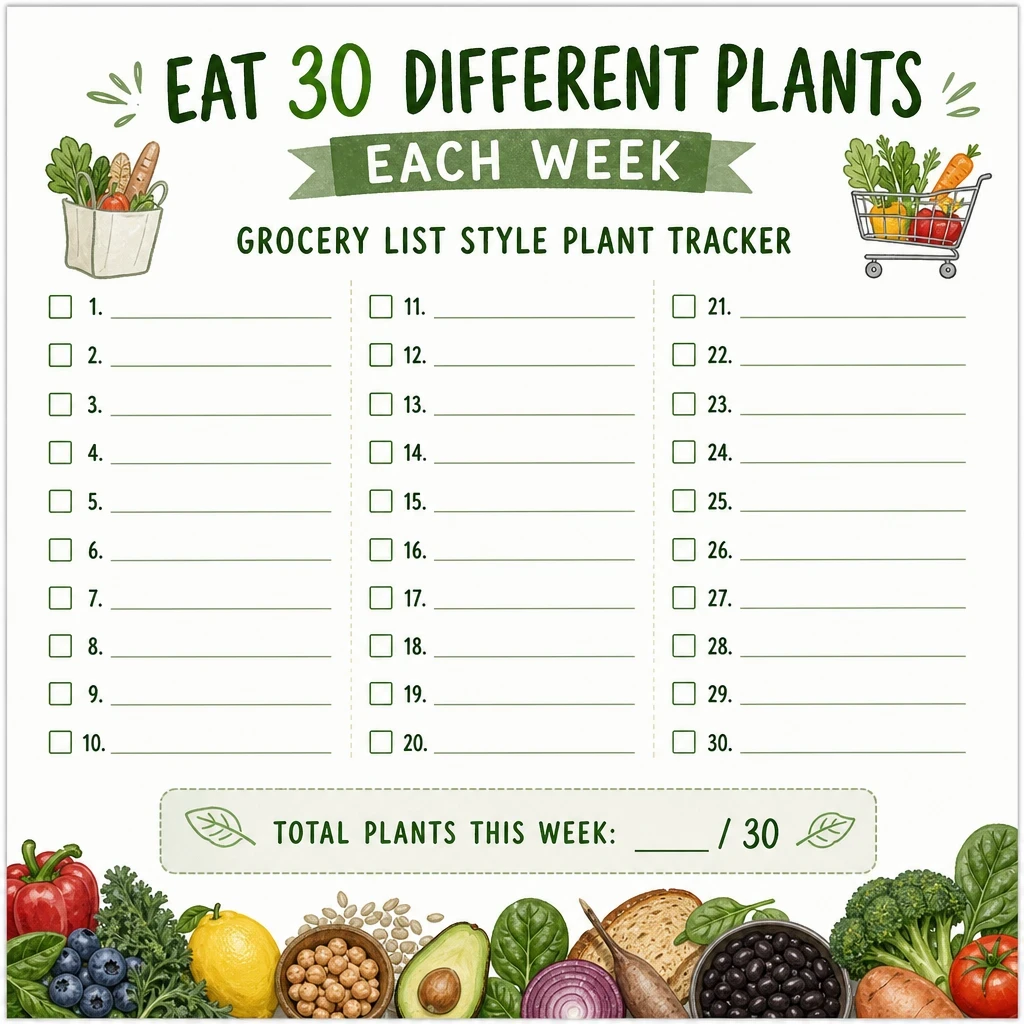
That’s exactly the problem that the 30-Plants-Per-Week Challenge is trying to fix, and it’s become one of those rare nutrition trends that dietitians actually love instead of quietly side-eyeing. No calorie counting, no macros, no “cut this out forever.” Just… eat more of different plants. It sounds almost too simple to work. But there’s real science behind it, it’s genuinely fun once you get into it, and it turns grocery shopping and meal planning into a little bit of a treasure hunt instead of a chore. We’ve got a printable checklist at the end so you can start tracking today.
Wait, What Even Is This Challenge?
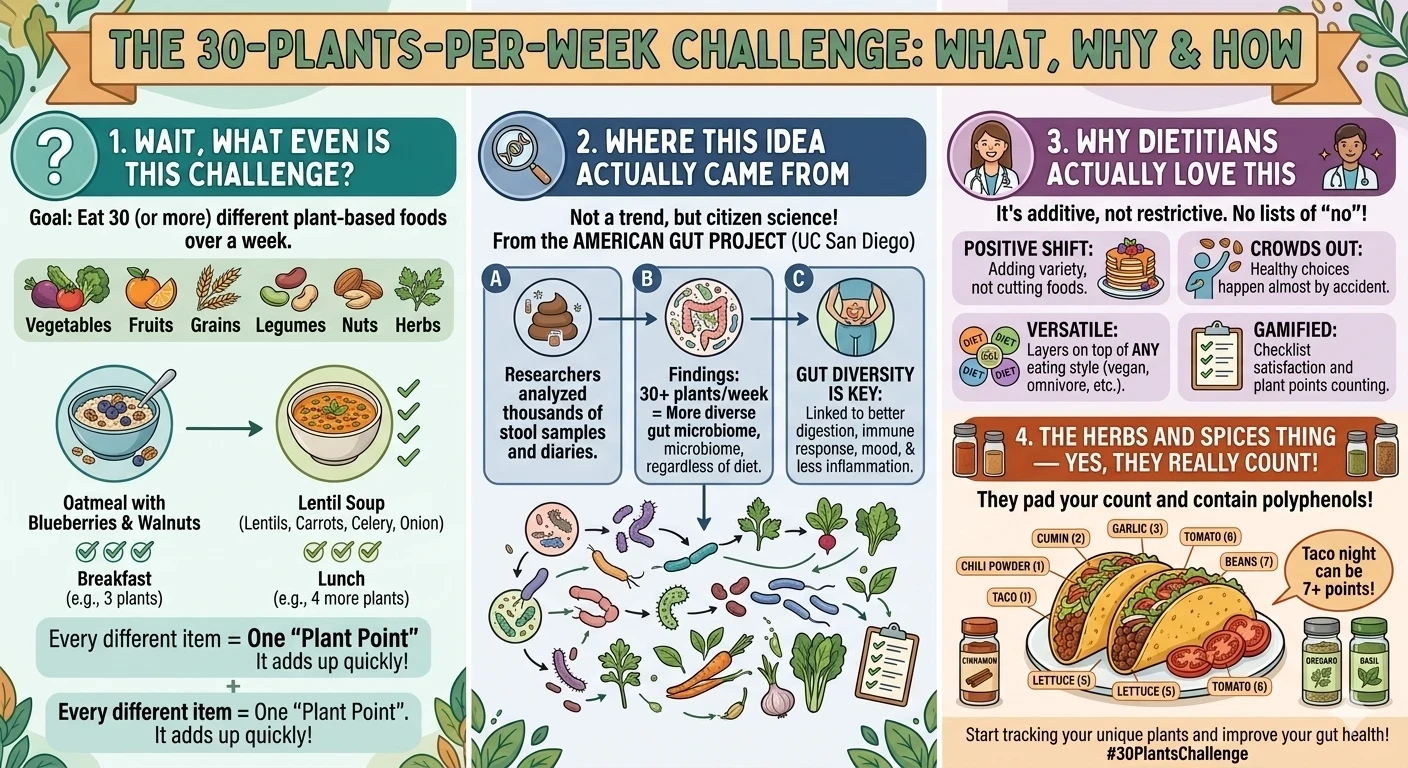
The 30-Plants-Per-Week Challenge is exactly what it sounds like: the goal is to eat 30 (at minimum) various plant-based foods over the course of a week. To include:
- Vegetables (fresh, frozen, canned; all count)
- Fruits
- Whole grains (oats, quinoa, brown rice, whole wheat bread)
- Legumes (beans, lentils, chickpeas, peas)
- Nuts and seeds
- Herbs and spices (yes, really, more on that below)
Every different item counts as one “plant point.” So if you had oatmeal with blueberries and walnuts for breakfast, that’s already three plants before 9 a.m. Add a lentil soup with carrots, celery, and onion for lunch, and you’re at seven. It adds up faster than you’d think, which is honestly the whole appeal.
Where This Idea Actually Came From
This isn’t some influencer’s made-up rule. The 30-plants concept traces back to the American Gut Project, one of the largest citizen-science microbiome studies ever done, run out of University of California San Diego. Researchers analyzed thousands of stool samples alongside detailed food diaries, looking for patterns between what people ate and the diversity of bacteria living in their gut.
What they found was striking: people who ate more than 30 different plant types per week had noticeably more diverse gut microbiomes than people who ate 10 or fewer, regardless of whether they were vegan, vegetarian, or ate meat. Diversity of plants mattered more than any single “superfood” or strict diet label.
And gut diversity isn’t just a fun biology fact. A more diverse microbiome has been linked to better digestion, a stronger immune response, improved mood regulation (a huge chunk of your serotonin is actually produced in your gut), and lower markers of inflammation. Basically, your gut bacteria are like a garden, and different plants feed different species of “good bugs.” The more variety you feed them, the more diverse and resilient that ecosystem becomes.
Why Dietitians Actually Love This One
A lot of nutrition trends make dietitians grimace a little or a lot. This one however, gets genuine enthusiasm, and here’s why:
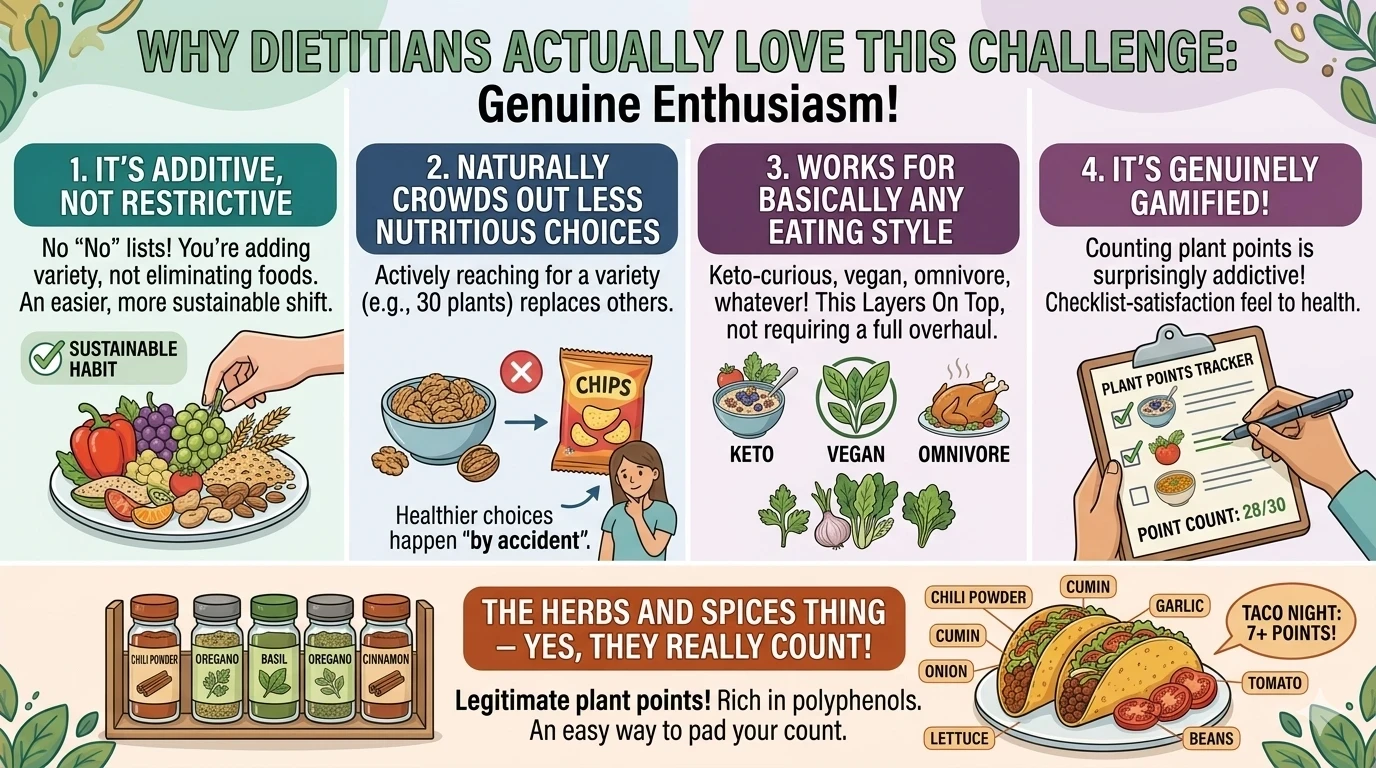
It’s additive, not restrictive. Nobody’s telling you to cut out sugar, dairy, gluten, or carbs. You’re not eliminating anything, you’re just adding more variety. That’s a much easier, more sustainable mental shift than restrictive lists, and it tends to stick because it doesn’t feel like punishment.
It naturally crowds out less nutritious choices. When you’re actively trying to hit 30 different plants, you start reaching for a handful of walnuts instead of chips, or tossing extra veggies into a dish just to bump your count. The healthier choices happen almost by accident.
It works for basically any eating regimen. Vegan, omnivore, keto-curious, whatever, this challenge layers on top of how you already eat rather than requiring a full diet overhaul.
It’s genuinely gamified and meant to be fun. Dietitians love anything that makes healthy eating feel like a game instead of a chore, and counting up your plant points at the end of the day has a surprisingly addictive, checklist-satisfaction feel to it.
The Herbs and Spices Thing: Yes, They Really Count
This is everyone’s favorite loophole once they learn about it, and it’s not cheating, it’s legitimate. Herbs and spices are plants, and they contain many of the same beneficial plant compounds (called polyphenols) found in fruits and vegetables, just in more concentrated form. A shake of cinnamon, a pinch of oregano, fresh basil on your pasta, garlic in your sauce, they all count as separate plant points.
This means a well-seasoned taco night can rack up chili powder, cumin, garlic, and onion as four plant points before you even count the lettuce, tomato, and beans on top. It’s a legitimately easy way to pad your count on busy days when you don’t have time for an elaborate vegetable-forward meal.
How to Actually Hit 30 Without Losing Your Mind
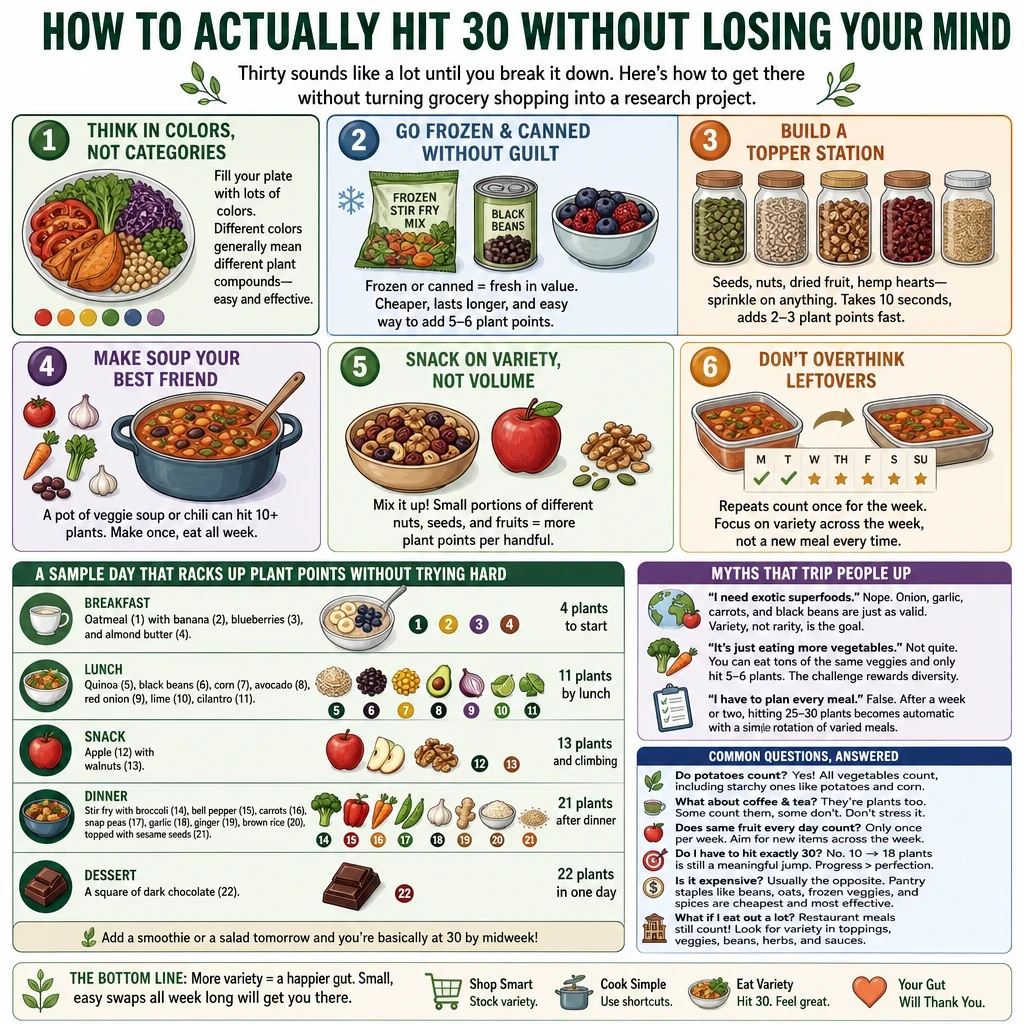
Thirty sounds like a lot until you take a step back and look. Here’s how to get there without turning grocery shopping into a research project.
1. Think in Colors, Not Categories
Instead of thinking “I need more vegetables,” think “I need more colors on my plate.” Red bell peppers, purple cabbage, orange sweet potato, dark leafy greens, different colors generally mean different plant compounds, and it’s a much easier mental trick than trying to remember a shopping list.
2. Go Frozen and Canned Without Guilt
Frozen mixed vegetables, canned beans, frozen berries, they all count exactly the same as fresh, and they’re usually cheaper and last way longer. A bag of frozen “stir fry mix” can single-handedly add five or six plant points to a meal.
3. Build a “Topper Station”
Keep a few small jars or containers on hand, pumpkin seeds, sunflower seeds, chopped walnuts, hemp hearts, dried cranberries, and sprinkle them on salads, oatmeal, or yogurt. It takes ten seconds and can add two or three plant points to a single bowl.
4. Make Soup Your Best Friend
A big pot of vegetable soup or chili is basically a plant-point machine. Onion, carrot, celery, garlic, canned tomatoes, two kinds of beans, and a handful of spices can hit ten or more plants in a single pot, and it reheats all week.
5. Snack on Variety, Not Volume
Instead of one big bag of the same snack, try a small trail mix with two or three nuts, a dried fruit, and some seeds. You get more plant points out of the same handful.
6. Don’t Overthink Leftovers
Eating the same soup two days in a row only counts those ingredients once for the week, the goal is variety across the week, not a new meal every single time. Repeats are totally fine; you’re just aiming for new additions elsewhere in the week to keep climbing toward 30.
A Sample Day That Racks Up Plant Points Without Trying Hard
Breakfast: Oatmeal (1) with banana (2), blueberries (3), and a spoonful of almond butter (4), 4 plants before you’ve even left the kitchen.
Lunch: A grain bowl with quinoa (5), black beans (6), corn (7), avocado (8), red onion (9), and a lime-cilantro dressing (10, 11 for the lime and cilantro), you’re already at 11.
Snack: An apple (12) with a handful of walnuts (13).
Dinner: A stir fry with broccoli (14), bell pepper (15), carrots (16), snap peas (17), garlic (18), ginger (19), and brown rice (20), topped with sesame seeds (21).
Dessert: A square of dark chocolate (22), yes, cacao counts, it’s a plant.
That’s 22 plants in one completely normal, not-especially-effortful day. Add a smoothie or a salad tomorrow and you’re basically there by Wednesday.
Myths That Trip People Up
“I need to eat exotic and expensive superfoods to get to 30.” Nope. Onion, garlic, carrots, and canned black beans are just as valid as dragon fruit and goji berries. The whole point is variety, not rarity. In fact, some of the easiest plant points come from stuff already sitting in your pantry, a jar of mixed dried herbs alone can knock out five or six different plants in one shake of the wrist.
“This is basically just eating more vegetables.” It’s related, but it’s not quite the same thing. You could technically eat a huge pile of vegetables every day and still only be hitting 5 or 6 different plants if it’s always the same broccoli and carrots. The challenge specifically rewards variety over volume, which is a subtle but important difference, quantity isn’t the goal, overall diversity is.
“I have to plan every meal around this.” Also not necessary. Most people who try this challenge find that after a week or two of paying attention, hitting 25–30 plants becomes almost automatic, because they’ve naturally built a rotation of quick, varied meals without needing to consciously plan for it every single day.
Common Questions People Have
Do potatoes count? Yes! All vegetables count, including starchy ones like potatoes, corn, and peas, though it’s worth balancing them with plenty of non-starchy veggies too for overall nutrition.
What about coffee and tea? Coffee beans and tea leaves are technically plants, and some versions of the challenge do count them. It’s a minor detail, don’t stress over it either way.
Does it matter if I eat the same fruit every day? The apple you eat on Monday and the apple you eat on Friday only count as one toward your weekly total. The challenge is about variety across the full week, so it’s worth actively looking for one or two new items to try rather than leaning on the same reliable five.
Do I have to hit exactly 30? Not at all. Thirty is a research-backed target, but going from 10 to 18 different plants a week is still a meaningful jump for your gut health. Progress over perfection.
Is this going to be expensive? Actually, it tends to be the opposite. A lot of the cheapest foods in the grocery store, dried beans, frozen vegetable mixes, oats, canned lentils, bulk spices, are exactly the ingredients that rack up plant points fastest. You don’t need pricey specialty produce to hit 30; a well-stocked pantry of budget staples will get you there just as easily, if not more easily, than a cart full of fresh exotic produce.
What if I eat out a lot? Restaurant meals can still contribute plant points, especially anything with a varied topping bar (think burrito bowls, salad bars, or noodle dishes loaded with vegetables). Just try to notice what’s actually in your dish rather than assuming it doesn’t count because someone else cooked it.
The Bottom Line
The 30-Plants-Per-Week Challenge is one of those rare healthy-eating trends that doesn’t ask you to give anything up. You’re not banning foods or counting calories, you’re just chasing variety, which turns out to be one of the simplest, most science-backed things you can do for your gut and overall health. Start by just noticing what you already eat in a normal week, then look for easy ways to sneak in a few new colors, a new bean, or an extra spice here and there.
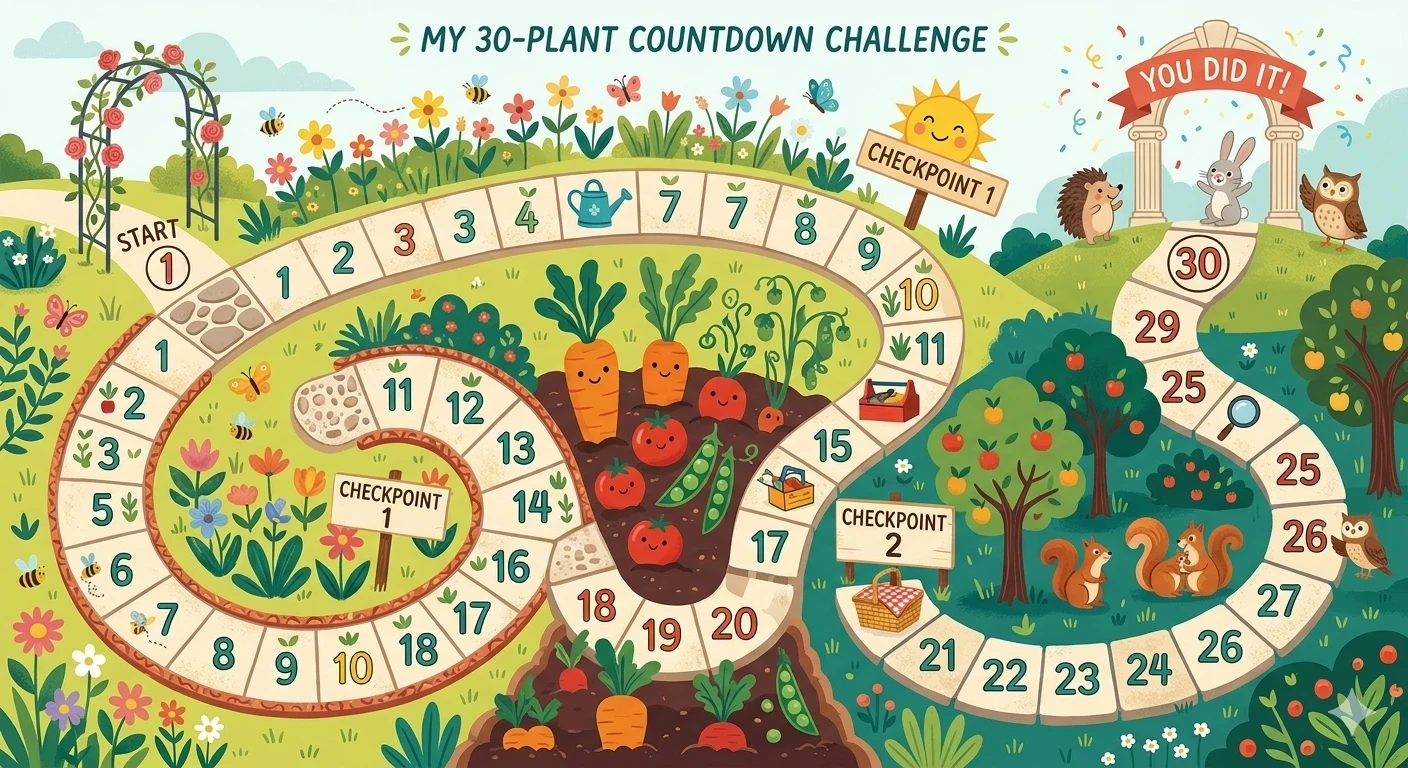
Print the checklist, stick it somewhere you’ll actually see it, and treat it like a game rather than a chore. You might be surprised how close to 30 you already are, and how easy it is to push past it once you start paying attention.
